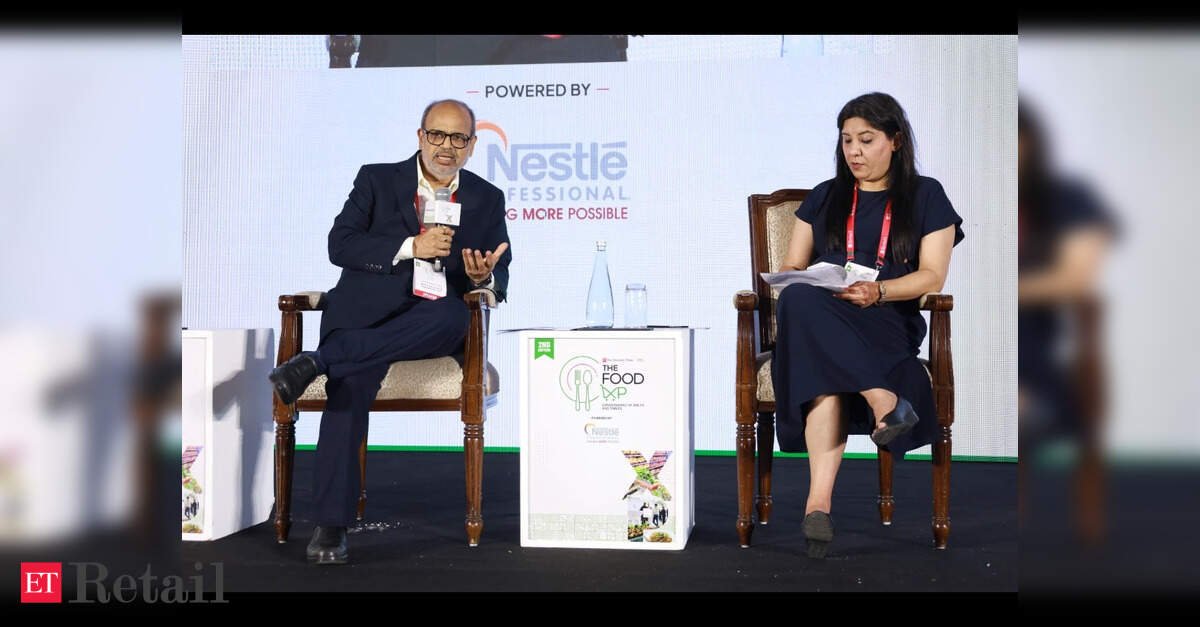
India’s next phase of fast-moving consumer goods (FMCG) growth will be shaped by a combination of affordability, premiumisation and product innovation, according to Jayatheertha Chary, Managing Director of Mother Dairy Fruit & Vegetable. Speaking at the second edition of ET FoodXP 2026, Chary highlighted how changing consumer preferences are creating new opportunities for dairy companies to expand established categories while developing products that address specific nutritional and lifestyle needs.
The discussion, titled The Great Indian Consumer Reset: What It Takes to Win the Next Phase of FMCG Growth?, examined the evolving relationship between price, nutrition, convenience and product differentiation. For India’s dairy industry, the central message was that future growth will require companies to serve diverse consumer segments rather than rely on a uniform shift towards either premium products or lower-priced alternatives.
Diverse Consumer Preferences Are Reshaping Dairy Demand
India’s dairy market is becoming increasingly segmented as purchasing decisions vary according to income, age, location, lifestyle and household requirements. While price remains a critical consideration for everyday dairy products, consumers are also showing interest in offerings that provide specific benefits, including higher protein content, improved taste and convenience.
According to Chary, consumers can prioritise affordability in one category while paying more for another product that delivers a meaningful benefit. This selective spending creates opportunities for dairy manufacturers to maintain competitively priced staples while introducing differentiated products for emerging consumer segments.
The trend extends beyond metropolitan markets. Consumers in tier-two and tier-three cities are also experiencing changing aspirations and consumption habits, opening additional opportunities for organised dairy businesses. Companies must therefore balance broad market accessibility with product development tailored to different regional and demographic requirements.
Affordable Nutrition Remains a Core Dairy Industry Priority
Chary emphasised the importance of keeping nutrition accessible, identifying dairy as an important source of nutrition for Indian consumers. For Mother Dairy, this means maintaining a portfolio of everyday dairy essentials while developing specialised products for consumers seeking additional nutritional benefits.
Higher-protein milk is one example of this strategy. As fitness awareness and interest in protein-rich diets increase, dairy companies can respond by incorporating higher-protein options into familiar consumption routines. Such products allow consumers to seek additional nutritional value without necessarily changing their established food habits.
However, affordability remains essential to achieving wider adoption. Products designed for health-conscious or premium consumers cannot replace the need to serve households that depend on competitively priced milk and other basic dairy products.
Chary also discussed A2 milk, which occupies a premium position in certain market segments. He noted that its expansion is constrained partly by the availability of suitable milk supplies at a scale capable of supporting significantly broader distribution. This highlights a wider challenge for the dairy industry: translating niche demand into commercially sustainable growth without compromising supply requirements.
Value-Added Dairy Products Create New Growth Opportunities
Product innovation is emerging as an important growth driver alongside geographic expansion. Rather than relying exclusively on increased sales of conventional milk, dairy companies can create new consumption occasions through products that address specific nutritional, functional or taste preferences.
Mother Dairy’s higher-protein milk offerings illustrate how manufacturers can develop differentiated products within established categories. This approach allows companies to build on familiar consumer behaviour while offering additional value.
The same principle applies to curd, yoghurt and other fermented dairy products. As more households choose packaged curd instead of preparing it at home, organised dairy companies have opportunities to expand their portfolios with convenient, consistent and differentiated offerings.
Mother Dairy has introduced premium curd variants, including probiotic curd, to address evolving consumer preferences. Chary reported that the company’s curd category, which had previously been growing at approximately 16–18%, reached growth of around 25% following the introduction of additional variants.
The experience demonstrates how innovation can support category expansion by encouraging consumers to explore products beyond conventional offerings.
Taste and Perceived Value Will Determine Premiumisation
Chary stressed that nutritional claims and premium positioning alone cannot guarantee long-term success. Taste remains central to consumer acceptance, even when a product offers additional functional or nutritional benefits.
Consumers may be willing to pay an additional ₹5 for a dairy product when they recognise a meaningful improvement in quality, taste, nutrition or convenience. For manufacturers, the implication is that higher prices must be supported by tangible benefits rather than branding alone.
This is particularly relevant as dairy companies introduce products aimed at fitness-conscious consumers, premium households and customers seeking convenient nutrition. Successful products must deliver benefits that consumers can understand, experience and justify through repeat purchases.
Quick Commerce and Innovation Will Influence Future Growth
The ET FoodXP discussion also examined quick commerce as an influence on product innovation and changing consumption patterns. Faster access to packaged food products can help brands respond to emerging needs and make differentiated dairy offerings more accessible in urban markets.
For dairy businesses, opportunities will depend on product suitability, reliable cold-chain management, distribution efficiency and the ability to maintain quality while meeting consumer expectations.
Ultimately, Chary’s outlook points towards a dual strategy for India’s dairy industry: protect the affordability of essential products while investing in differentiated offerings that create additional value. Companies that combine accessible nutrition, reliable supply, appealing taste and relevant innovation will be better positioned to serve India’s increasingly diverse consumer market.