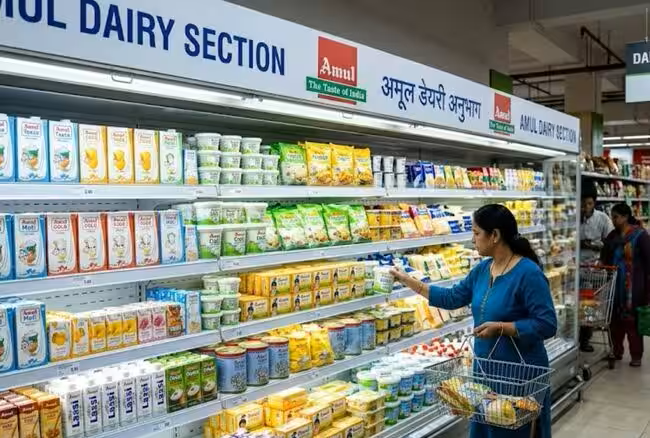
Amul has increased the prices of select butter and ghee products ahead of the Diwali festive season, adding to consumer expenditure amid growing demand for dairy products and reported supply shortages in several markets. The latest revision affects multiple pack sizes of Amul ghee, pure ghee and table butter, with increases ranging from ₹3 to ₹50.
According to the revised maximum retail prices (MRPs) reported by The Economic Times, a 1-kg carton of Amul ghee is now priced at ₹680, compared with ₹630 earlier. The 500-gm pouch of pure ghee has increased from ₹325 to ₹345. Butter prices have also been revised, with the 100-gm pack rising from ₹63 to ₹66 and the 500-gm pack increasing from ₹310 to ₹325.
The price revision comes at a time when demand for branded dairy products, particularly ghee, is increasing ahead of Diwali, when households and food businesses typically purchase larger quantities for sweets and traditional food preparations.
Amul Ghee and Butter: Revised Prices
The latest price changes cover four key product categories, with the 1-kg ghee carton recording the highest absolute increase.
| Amul product | Earlier price | Revised price | Increase |
|---|---|---|---|
| Ghee, 1-kg carton | ₹630 | ₹680 | ₹50 |
| Pure ghee, 500-gm pouch | ₹325 | ₹345 | ₹20 |
| Butter, 100-gm pack | ₹63 | ₹66 | ₹3 |
| Butter, 500-gm pack | ₹310 | ₹325 | ₹15 |
The revised prices represent increases across both household and larger consumer pack sizes, potentially affecting retail purchases as well as demand from food-service businesses.
Rising Demand and Reported Ghee Shortages
One of the factors influencing the current market situation is the growing demand for branded ghee. Reports indicate that enforcement action against adulterated dairy products in Gujarat and neighbouring Rajasthan has encouraged some consumers to shift towards established brands.
A cooperative leader associated with Amul reportedly stated that approximately 2 lakh kg of duplicate ghee had been seized across the two states over the preceding six months. This development, alongside seasonal consumption patterns, has reportedly contributed to increased demand for branded ghee.
Retailers in Ahmedabad and Vadodara have also reported limited availability of certain Amul products, particularly cow ghee. Supply-related concerns have reportedly extended to other markets, including Pune and Kolkata.
The festive season further increases pressure on the dairy supply chain. According to the cooperative leader cited in the report, nearly 45% of annual ghee consumption generally takes place during the festive period, creating additional demand for processing, distribution and retail inventory.
Milk Production Costs and the Impact of GST Changes
Rising milk production costs are another important consideration in the latest price revision. In a separate report, Amul attributed its revision of the maximum retail prices of table butter, ghee and cow ghee to increased milk production costs. The revised rates were reported to take effect from October 2, 2026.
The latest increases also follow the GST reduction introduced in September 2025, when the applicable tax rate on these dairy products was reduced from 12% to 5%. Amul had subsequently announced price reductions across approximately 700 dairy products.
At that time, the price of a one-litre ghee carton was reduced from ₹650 to ₹610, while a five-litre tin declined from ₹3,275 to ₹3,075. The 100-gm butter pack fell from ₹62 to ₹58, and the 500-gm pack decreased from ₹305 to ₹285.
Implications for India’s Dairy Market
The latest price revision highlights the relationship between milk procurement costs, seasonal demand, product availability and retail pricing in India’s dairy industry.
For dairy processors, maintaining a balance between farmer procurement prices, manufacturing expenses and consumer affordability remains essential. Ghee and butter production also depends on milk-fat availability and efficient processing, making raw material management particularly important.
With festive consumption driving demand, dairy companies must ensure adequate inventory, efficient distribution and consistent product availability across retail markets.
Amul’s latest price changes underline the importance of managing input costs and supply-chain requirements while responding to changing market conditions. The coming festive period will be an important phase for the dairy industry as manufacturers and retailers navigate higher demand and consumer price sensitivity.