Anand, a city in Gujarat, holds a distinctive position in India’s agricultural and dairy landscape. Widely recognised as the Milk Capital of India, the city has become synonymous with dairy cooperatives, milk production and the development of one of the world’s largest dairy sectors. Its reputation is closely connected to the growth of Amul, the White Revolution and the institutions that helped reshape India’s dairy industry.
Unlike cities known primarily for their historical landmarks or food traditions, Anand’s identity has been built around the dairy sector. Over the decades, it has emerged as an important centre for milk producers, cooperative development and rural progress.
The cooperative movement that transformed Anand
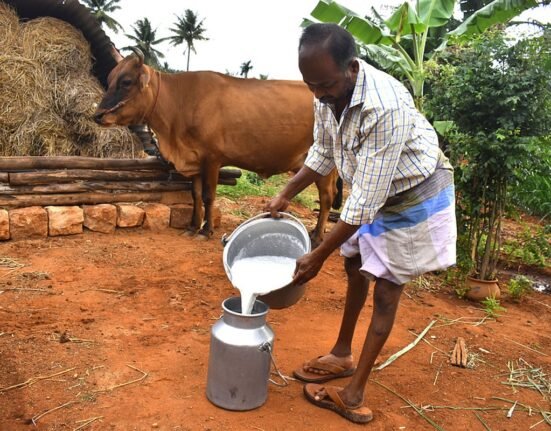
Anand’s rise as a major dairy centre began with the expansion of India’s cooperative dairy movement during the 20th century. The cooperative model brought milk producers together, allowing farmers to collectively organise milk collection, processing and marketing.
This system created a more structured route to market for dairy farmers. By working collectively, producers gained improved access to buyers and opportunities to strengthen their livelihoods. It also helped establish a framework in which farmers could participate more directly in the dairy value chain.
The success of this approach gradually positioned Anand as a significant centre for India’s dairy development. Its cooperative model later became an important example for other regions seeking to strengthen milk production and distribution.
Amul’s role in establishing Anand’s dairy identity
Anand’s association with the dairy industry is closely linked to Amul, one of India’s most recognised dairy brands. The brand emerged from a farmers’ cooperative established in Gujarat and gradually expanded its presence across the country.
Amul’s growth demonstrated the potential of a cooperative-led dairy business to serve a large consumer market while maintaining strong links with milk producers. Its product portfolio includes milk, butter, cheese, curd and several other dairy products.
The brand’s development also helped bring national attention to Anand and the cooperative system established in the region. Over time, Amul became an important example of how organised dairy production and collective farmer participation could support the growth of a major dairy enterprise.
Anand’s contribution to India’s White Revolution
Anand also occupies an important place in the history of India’s White Revolution, a movement that significantly changed the country’s milk production and distribution systems.
The movement focused on expanding dairy cooperatives, improving milk collection networks and strengthening the availability of milk for consumers. The cooperative model developed in Gujarat provided an example of how farmers could be connected with organised markets through an integrated dairy system.
These developments helped establish a stronger foundation for India’s dairy sector. Anand’s experience became closely associated with the wider transformation of the country’s milk economy and the increasing importance of organised dairy production.
Verghese Kurien and the legacy of dairy development
Anand’s dairy history is closely associated with Dr Verghese Kurien, widely known as the Father of India’s White Revolution.
Based in Anand, Kurien played a pivotal role in expanding the cooperative dairy model and supporting its adoption across India. His contribution helped strengthen the position of milk producers within the dairy industry and demonstrated the potential of farmer-led institutions.
His work remains an important part of Anand’s identity. The city’s association with Kurien also reflects its wider contribution to cooperative development, rural management and the modernisation of India’s dairy sector.
Institutions strengthening India’s dairy ecosystem
Anand’s significance extends beyond dairy brands and milk cooperatives. It is also home to important institutions involved in dairy development and rural progress.
The National Dairy Development Board (NDDB), headquartered in Anand, has played a significant role in strengthening India’s dairy sector. Its presence reflects the city’s importance as a centre for dairy development and cooperative institutions.
The city is also home to the Institute of Rural Management Anand (IRMA), which focuses on rural management and development. Together, these institutions contribute to Anand’s position as a centre for agricultural cooperation, rural development and dairy-sector knowledge.
Why Anand remains India’s Milk Capital
Anand’s reputation as the Milk Capital of India is the result of several interconnected developments: the growth of dairy cooperatives, the expansion of Amul, the contribution of the White Revolution and the establishment of institutions dedicated to dairy and rural development.
Its story demonstrates how collective farmer participation and organised dairy systems can influence an entire industry. More than simply being associated with milk production, Anand represents a significant chapter in India’s dairy transformation and the cooperative movement that helped shape it.