Lucidome Bio has secured $9 million in funding to accelerate the development of an innovative livestock methane vaccine, marking a significant step forward in efforts to reduce greenhouse gas emissions from cattle farming. The investment will support antigen formulation, scientific validation and an 18-month programme of controlled and on-farm cattle trials.
The development could have important implications for the global dairy industry, which faces increasing pressure to reduce its environmental footprint while maintaining milk production, farm profitability and supply-chain efficiency.
Investment Supports Methane Reduction Research
The funding will enable Lucidome Bio to advance its immunological approach to reducing methane emissions from livestock. The company’s vaccine development programme focuses on targeting the biological processes responsible for methane production during enteric fermentation in cattle.
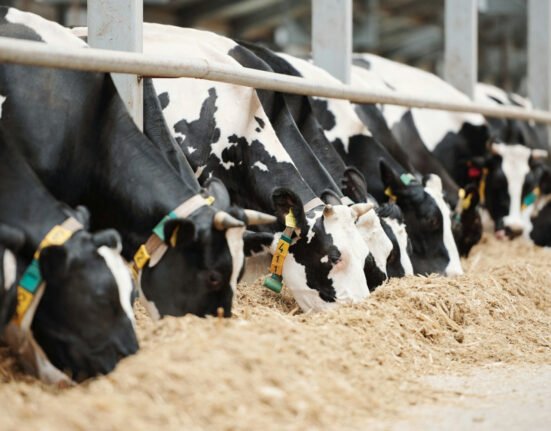
Methane is generated primarily through the digestive activities of microorganisms in the rumen. These microorganisms break down feed and produce methane as a by-product, which cattle release mainly through belching.
For dairy and beef producers, enteric methane represents a major source of agricultural greenhouse gas emissions. Developing effective mitigation technologies has therefore become an important research priority for livestock scientists, agricultural businesses and policymakers.
The investment will help Lucidome Bio strengthen its research capabilities and generate the scientific evidence required to assess the vaccine’s effectiveness and safety.
18-Month Trial Programme to Evaluate Vaccine Performance
A central component of the funding programme is an 18-month research and validation pipeline. During this period, the company plans to advance antigen formulation and conduct structured trials involving cattle under controlled research conditions and on farms.
These trials are expected to generate important data on vaccine efficacy, animal safety and its potential suitability for commercial livestock production.
The findings will also support the regulatory registration process, an essential requirement before the technology can be introduced commercially.
Successful validation would represent an important milestone for immunological methane mitigation. However, the vaccine’s actual impact on methane emissions, duration of effectiveness, dosing requirements and suitability across different cattle production systems will need to be established through scientific trials.
Industry Support Highlights Growing Interest in Methane Mitigation
The New Zealand Agricultural Greenhouse Gas Research Centre has highlighted the importance of developing a diverse range of mitigation technologies that can help farmers meet environmental targets without compromising profitability.
Its executive director, Naomi Parker, noted that a broader toolkit of solutions would be essential to supporting economically sustainable farming while addressing agricultural emissions.
Lucidome Bio’s selection as a global finalist at the Animal Health, Nutrition and Technology Innovation Showcase in Boston has also brought international attention to its research programme.
The recognition reflects growing interest among investors and the agricultural technology sector in innovative approaches to livestock emissions reduction.
Potential Implications for the Global Dairy Industry
A successful methane vaccine could offer significant opportunities for dairy-producing countries, particularly those with pasture-based production systems.
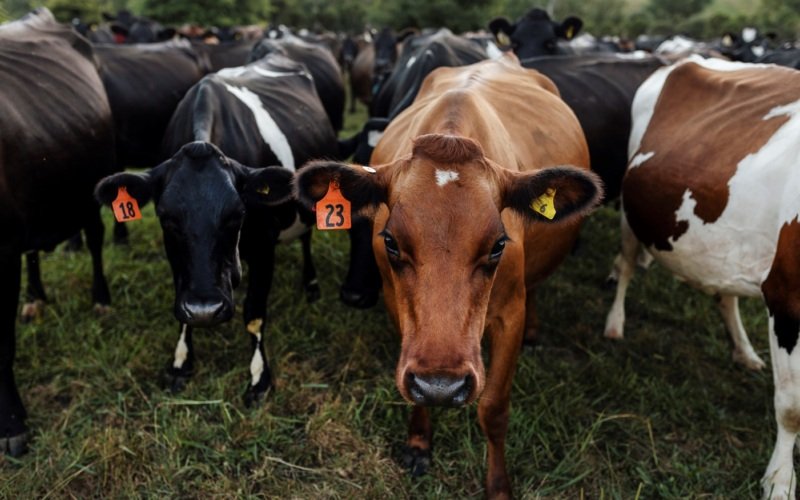
New Zealand, Australia, Ireland and several South American countries have substantial dairy and livestock sectors where cattle depend heavily on grazing systems. For these producers, introducing a vaccination-based methane reduction technology could potentially provide an alternative to interventions requiring regular changes to animal diets or additional feed-management practices.
For dairy processors, the technology could also support efforts to reduce supply-chain greenhouse gas emissions. Milk companies increasingly face pressure from customers, regulators and sustainability reporting frameworks to demonstrate measurable progress in reducing emissions across their procurement networks.
An effective vaccine could eventually become part of broader farm-level sustainability programmes, alongside improved feed efficiency, manure management, pasture optimisation and animal health initiatives.
However, its commercial value will depend on factors such as vaccination frequency, cost per animal, effectiveness across different breeds and production environments, and the practical requirements of administering it to large herds.
Balancing Environmental Targets and Dairy Farm Economics
Methane reduction has become an increasingly important consideration in the economics of modern dairy farming. Producers must balance environmental commitments with feed expenses, labour availability, animal productivity and milk revenue.
Technologies that reduce emissions without negatively affecting milk yield, reproductive performance or animal health could provide an attractive pathway for farmers.
Lucidome Bio’s $9 million funding represents another development in the expanding market for agricultural methane mitigation technologies. The upcoming 18-month trial programme will be particularly important in determining whether its vaccine can deliver measurable emissions reductions under practical farming conditions.
As the global dairy industry moves towards lower-emission production systems, scientifically validated and economically viable solutions will play an increasingly important role in shaping the future of sustainable livestock farming.