China’s dairy industry is witnessing a gradual shift in its growth strategy as weak consumer demand for packaged milk pushes major producers towards business-to-business (B2B) markets. While traditional retail consumption continues to face challenges, demand from tea beverages, coffee shops, bakeries and foodservice businesses is creating new opportunities for dairy manufacturers.
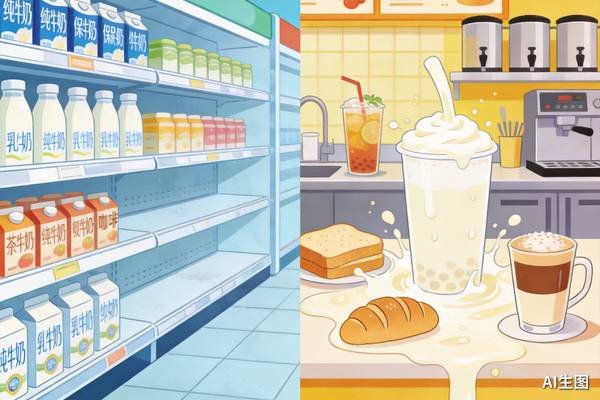
The shift comes as the industry approaches the limits of conventional consumer-facing growth. In July 2026, raw milk prices in China turned positive for the first time after 53 consecutive months of decline. However, the recovery in raw milk prices has not yet translated into a significant improvement in consumer demand. Supermarkets continue to offer discounts on premium UHT milk, while near-expiry dairy products are frequently sold at reduced prices, indicating persistent pressure on retail sales.
In contrast, the B2B segment is emerging as an increasingly important growth driver. According to the source report, Yili’s business-to-business deep-processing segment recorded double-digit growth during the first three quarters of 2026. Its domestic cream, cheese and butter businesses each reported growth exceeding 20%. Miaokelanduo also recorded more than 20% growth in its B2B catering business, while Junlebao expanded its partnership with Mixue Bingcheng through the establishment of the Snow King Pasture joint venture.
Foodservice Demand Creates New Growth Opportunities for Dairy Producers
China’s dairy consumption patterns are gradually evolving from direct milk consumption towards the use of dairy ingredients in prepared foods and beverages. Traditionally, dairy industry growth was driven by packaged milk, household consumption and nationwide distribution networks. However, changing dietary preferences and the expansion of foodservice businesses are creating additional demand for processed dairy products.
Tea beverages, freshly prepared milk coffee, bakery products and desserts are becoming important consumption channels for milk, cream, butter and cheese. According to figures cited in the report, China’s freshly made milk coffee sales volume is expected to reach 5 billion cups in 2025. The retail markets for freshly prepared tea beverages and baked food are also projected to expand significantly over the coming years.
This shift provides dairy manufacturers with opportunities to supply ingredients directly to foodservice operators rather than depending entirely on household purchases.
The B2B dairy market in China exceeded RMB 40 billion in 2024 and is projected to reach RMB 70.3 billion by 2028, according to research cited from Huatai Securities. The expansion of organised tea and coffee chains is further strengthening demand for consistent, high-quality dairy ingredients.
Domestic Dairy Companies Strengthen B2B Capabilities
Major Chinese dairy companies are increasing investments in product development, processing capabilities and strategic partnerships to capture this growing market.
Yili has expanded its product portfolio to include customised cream, cheese, butter and other dairy ingredients for baking, tea beverages, coffee and foodservice applications. The company is also leveraging its milk sourcing and processing infrastructure in China and New Zealand to improve production efficiency and supply reliability.
Its strategic partnerships with Synear Food in March 2026 and Qianwei Central Kitchen in May 2026 demonstrate its efforts to strengthen integration with food manufacturers and catering supply chains.
Other companies, including Mengniu, Feihe, Miaokelanduo and Junlebao, are also developing their B2B businesses. Meanwhile, Junlebao’s partnership with Mixue Bingcheng highlights the growing importance of direct collaboration between dairy producers and large beverage chains.
China’s trade policy is also influencing the competitive landscape. In December 2025, the Ministry of Commerce announced temporary countervailing duties of up to 42.7% on certain dairy products originating from the European Union. This development could create additional opportunities for domestic manufacturers to strengthen their market positions.
Supply Chain Strength and Product Customisation Become Competitive Priorities
Despite the growing opportunities, the B2B dairy market is not equally accessible to all suppliers. Large foodservice chains increasingly prioritise consistent product quality, dependable milk sourcing, nationwide distribution and food safety compliance.
Unlike the consumer market, where branding and promotional campaigns can influence purchasing decisions, B2B customers evaluate suppliers based on measurable operational capabilities. These include production capacity, batch consistency, traceability, customised formulations and uninterrupted deliveries.
Large dairy companies have an advantage because of their established processing infrastructure, diversified product portfolios and distribution networks. Smaller manufacturers may find it difficult to meet the procurement requirements of national beverage and foodservice chains.
The industry is therefore entering a phase in which competition will increasingly depend on technical expertise, processing efficiency and long-term supply partnerships.
For China’s dairy sector, the growing B2B market represents an important opportunity to diversify revenue sources beyond conventional packaged milk. As tea beverages, coffee, bakery and foodservice businesses expand, dairy ingredients are becoming increasingly integrated into everyday food consumption.
The next phase of growth may therefore depend less on persuading consumers to drink more milk and more on supplying the dairy ingredients that power China’s expanding foodservice industry.