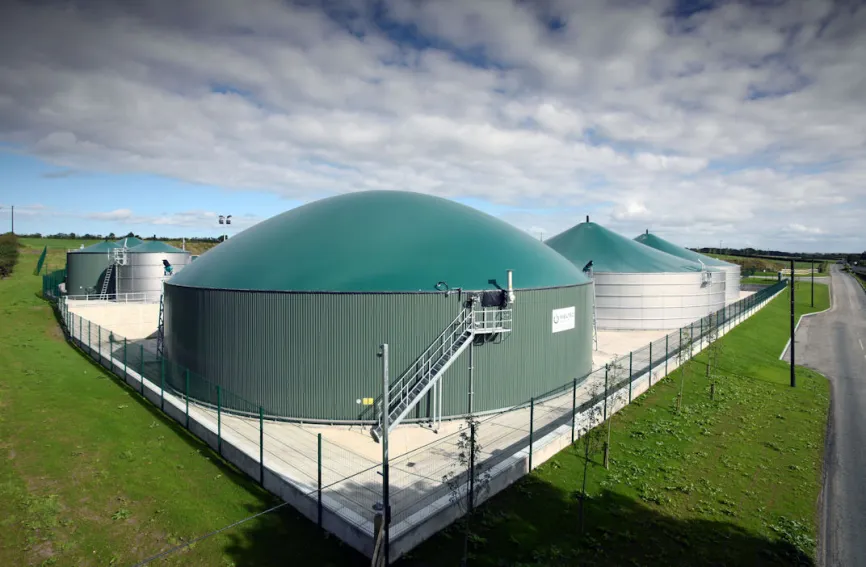
India’s push towards clean energy is increasingly intersecting with its dairy economy. Biogas is emerging as a practical solution that links renewable energy, rural livelihoods and environmental sustainability. Speaking at the World Biogas Association Annual Meet (India Congress 2025) in New Delhi, NDDB Chairman Dr Meenesh Shah outlined how biogas can reshape rural India through cooperative-led models.
A Vision Anchored in Farmers
NDDB’s vision centres on small and marginal dairy farmers, who remain the backbone of India’s rural economy. According to Dr Shah, the goal is not limited to increasing milk production. Instead, it focuses on building sustainable prosperity at the village level.
Through cooperative institutions and technology adoption, NDDB aims to create a self-reliant dairy sector. This model supports nutritional security, stable incomes and environmentally responsible growth. As a result, economic benefits flow directly to farmers rather than remaining concentrated in urban markets.
Why Biogas Fits the Dairy Ecosystem
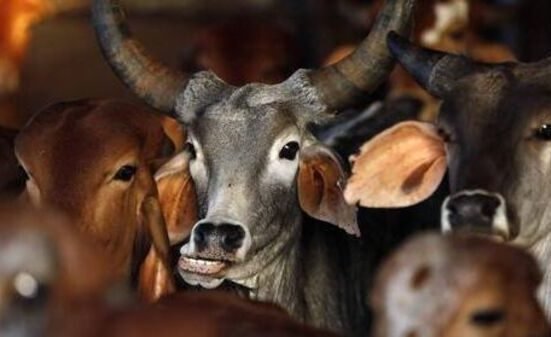
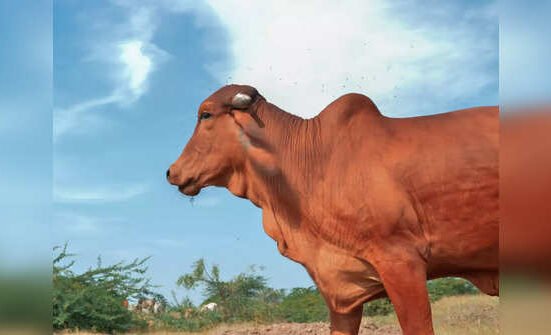
Biogas aligns naturally with dairy development. Cattle dung, available in abundance across rural India, provides a steady feedstock for renewable energy. NDDB is integrating dairy cooperatives, gaushalas and rural households into structured waste-to-energy systems.
Importantly, biogas is no longer viewed only as a clean cooking fuel. It now represents an additional income stream, a climate solution and a tool for energy security. Therefore, dairy and renewable energy are evolving together rather than competing for resources.
Manure Management as an Economic Opportunity
The Manure Management Initiative (MMI) reflects this shift in thinking. NDDB treats dung as a valuable input rather than agricultural waste. Under MMI, farmers supply dung to household, community and cooperative biogas plants and receive direct payments.
In addition, the process generates bio-slurry, which farmers reuse as organic manure. This improves soil health and reduces dependence on chemical fertilisers. Consequently, the initiative strengthens farm economics while supporting circular agriculture.
Scaling Across Village, Cooperative and Commercial Levels
NDDB supports biogas infrastructure at multiple scales. Small digesters meet household energy needs. Medium plants operated by cooperatives serve clusters of villages. Large Bio-CNG plants under the SATAT programme supply transport-grade fuel and industrial energy.
This layered approach ensures efficient utilisation of dung and slurry. It also spreads economic benefits across regions, making the biogas ecosystem resilient and inclusive.
Dairy Cooperatives as Energy Hubs
Dairy cooperatives play a central role in this transition. Milk societies now act as collection points for dung, distribution centres for biogas and marketing hubs for organic slurry. By integrating energy services with milk procurement, cooperatives retain value within rural communities.
As a result, farmers gain multiple income streams while cooperatives strengthen their financial sustainability. This community-owned energy model encourages participation and long-term adoption.
Policy Alignment Enables Scale
NDDB works closely with the central and state governments under schemes such as SATAT and GOBAR-Dhan. Coordination with ministries ensures feedstock availability, financial viability and assured offtake for compressed biogas.
Such alignment is critical. Without policy support and institutional coordination, biogas projects struggle to scale beyond pilot stages.
Looking Ahead
Biogas offers India a rare opportunity to address energy access, climate goals and rural incomes through one integrated framework. NDDB’s cooperative-led approach demonstrates that the next rural energy revolution will emerge from villages, not just power plants.
If this model continues to scale, dairy farmers will move beyond milk production to become active participants in India’s clean energy transition.