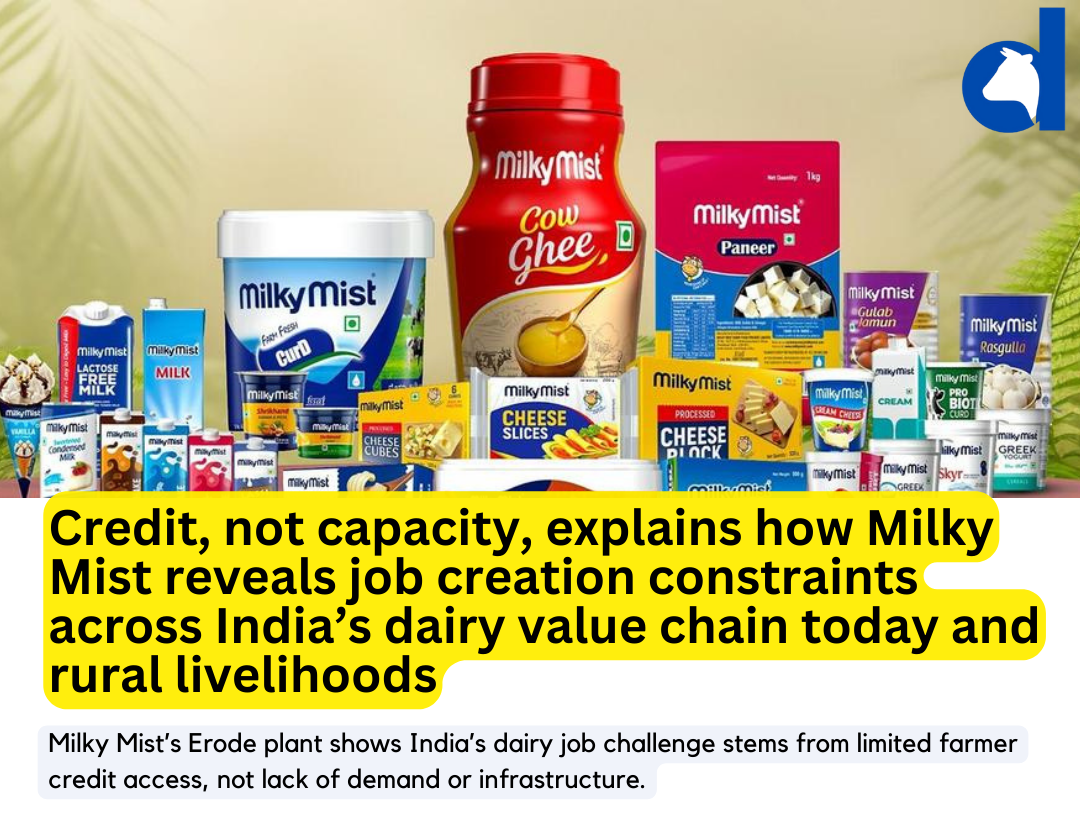
India’s employment challenge often appears in television debates and headline statistics. However, real insight emerges at the enterprise level. A visit to Milky Mist’s dairy processing facility in Erode, Tamil Nadu, offers a grounded lesson in how job creation actually works in the dairy economy.
Erode and the Dairy Growth Story
Erode has shaped Tamil Nadu’s economic growth for decades. Its dairy and agro-processing clusters combine entrepreneurship with strong market demand. Milky Mist reflects this strength. The company operates a modern, capital-intensive processing plant and reports annual revenues of over ₹2,500 crore. This is not a case of weak demand or outdated infrastructure. The company has already invested in scale.
When Processing Capacity Outpaces Milk Supply
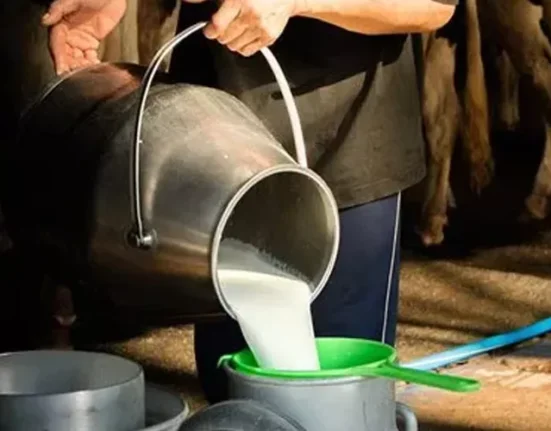
Milky Mist currently sources milk from around 2,000 farmers. Management estimates that the existing plant could process milk from nearly 70,000 farmers without major additional investment. This gap reveals a deeper structural issue. The factory stands ready. The market exists. Yet milk volumes remain limited.
Credit as the Binding Constraint
Small dairy farmers struggle to expand production because they lack access to affordable and reliable credit. Many cannot invest in better cattle, quality feed, or veterinary care. High borrowing costs and weak institutional lending restrict growth. As a result, farmers cannot increase supply even when assured buyers exist. Processors then operate below capacity. Employment potential across the value chain remains unrealised.
Job Creation Beyond the Factory Gate
Dairy jobs do not sit only inside processing plants. Each additional farmer in an organised supply chain supports employment in transport, feed supply, animal health services, and rural logistics. When farmers cannot scale, these indirect jobs also disappear. This reality reframes the employment debate. Industrial capacity alone does not create jobs. Financial inclusion does.
Policy Lessons for White Revolution 2.0
Milky Mist’s experience aligns closely with the goals of White Revolution 2.0. The infrastructure already exists. Demand continues to grow. What policy must now address is the financial barrier at the producer level. Improved credit access, stronger cooperative financing, and simplified lending processes could unlock rapid employment growth. Without these measures, even the most efficient dairy plants will remain underused.
Conclusion: Unlocking Jobs at the Farm Level
The lesson from Milky Mist is clear. India’s dairy job challenge does not stem from a lack of enterprise or investment. It stems from the failure to enable farmers to participate fully in growth. If policymakers focus on credit as seriously as they focus on capacity, dairy can become one of India’s most powerful employment engines.