
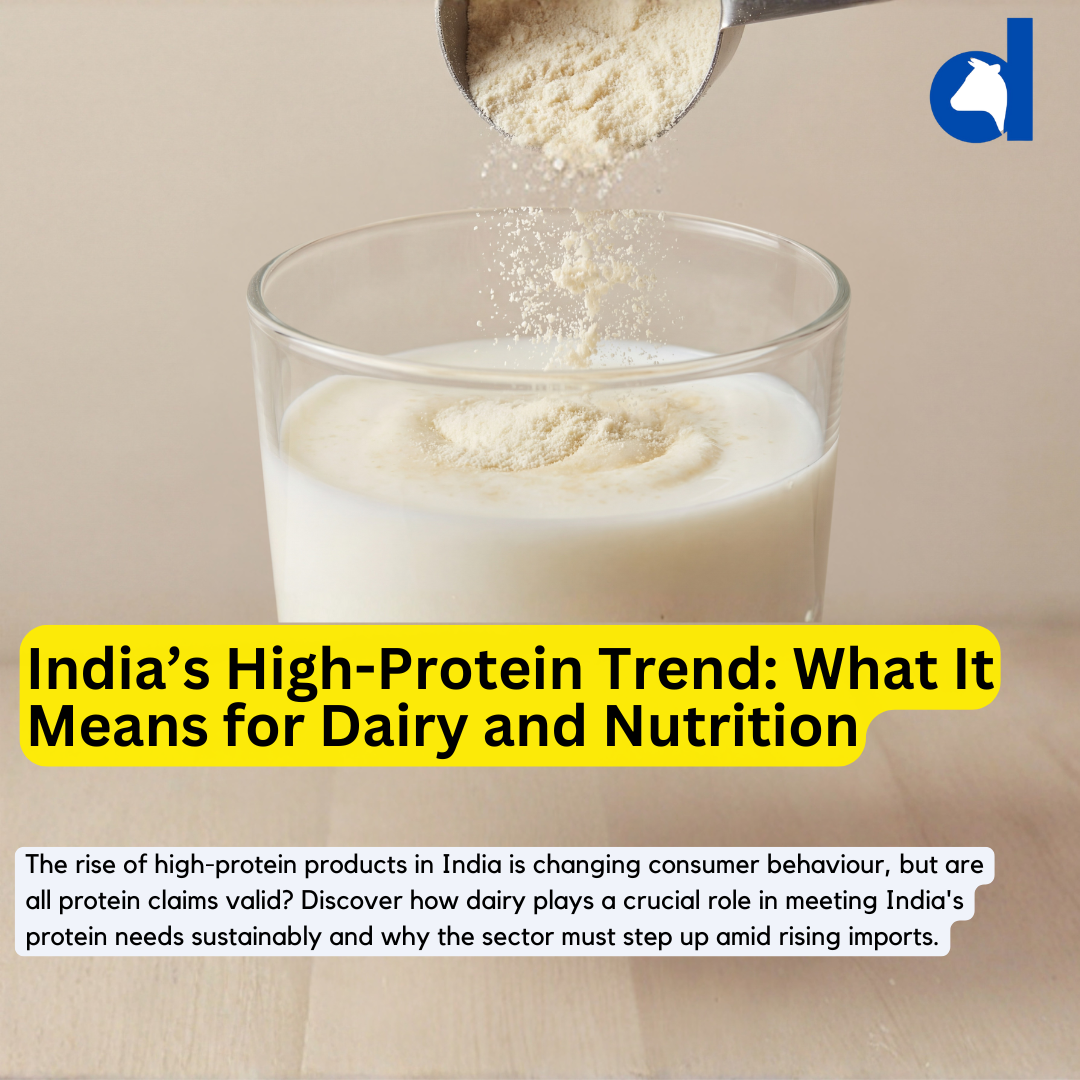
India’s urban retail shelves are increasingly dominated by high-protein-labelled products — from fortified milk and yoghurt to protein-enriched bars, biscuits and shakes. Brands proudly display claims of “20g protein” or “30g protein per serve”, tapping into the consumer desire for fitness, weight control, and fast nutrition. But beyond the marketing noise lies a more complex reality — especially for the dairy sector, which has long been the natural custodian of high-quality protein in Indian diets.
Why Protein Claims Are Gaining Ground
The demand for high-protein products in India has grown sharply over the past five years, driven by fitness trends, growing health awareness, and urban lifestyle shifts. A large segment of Indian consumers still struggles to meet the recommended daily protein intake, making protein supplementation appear appealing. This gap is especially visible among vegetarians and lower-income groups with limited access to diversified diets.
For food and beverage companies, this unmet need has become a lucrative space. Quick-to-market packaged goods offer the promise of convenience and nutrition — a seemingly perfect fit for time-starved consumers.
The Dairy Sector’s Silent Contribution
Despite the growing noise around “high protein”, dairy remains the most accessible and culturally accepted source of complete protein in India. Milk, paneer, curd and buttermilk offer natural protein with high bioavailability. As Dr. R.S. Sodhi, former MD of Amul, once noted, “Milk is the most democratic source of high-quality protein in India — available across income groups, regions and age segments.”
However, even with India being the world’s largest milk producer, the country continues to import protein isolates, especially whey protein, caseinates and soy derivatives, to meet the demands of the sports nutrition and processed food sectors. This reliance on imports raises questions about quality control, pricing, and self-sufficiency — particularly at a time when domestic dairy processing capacity is increasing.
Are High-Protein Packaged Foods Always Effective?
Nutritionists caution that the “grams of protein” on product labels don’t always reflect the nutritional quality. Many processed products include hydrolysed proteins, amino acid blends or soy isolates — cheaper and easier to add, but often less effective than complete proteins from milk or eggs. Additionally, fillers, thickeners and sweeteners are common in flavoured high-protein drinks and bars.
A study by Consumer VOICE in 2023 found discrepancies between claimed and actual protein content in several high-protein products sold in India, especially in the imported segment. While regulations are improving, the market still lacks strict enforcement on protein source disclosure.
Balancing Traditional Nutrition with Modern Convenience
For the average Indian, daily protein needs are best met through traditional foods like dal, dairy, eggs and millets. Dairy, in particular, offers a complete amino acid profile, along with calcium and other micronutrients. Fortified milk products and value-added dairy innovations like Greek yoghurt, whey drinks, and protein-enriched lassi are emerging as superior alternatives to artificially enhanced bars or imported powders.
That said, urban professionals, athletes and those with higher protein demands may benefit from selectively incorporating high-protein products — provided they’re chosen judiciously. Dairy cooperatives and startups are already innovating in this space, offering clean-label, protein-rich options grounded in natural dairy.
The Hidden Costs of Excess Protein
Overconsumption of protein — particularly from ultra-processed sources — can pose health risks, including digestive issues and kidney strain. For the Indian population, which traditionally consumes lower protein diets, the focus should remain on achieving adequate, not excessive, intake. Moreover, excessive dependence on protein isolates and imports diverts attention from strengthening domestic dairy protein supply chains.
The Way Forward: Protein with Purpose
As the Indian dairy industry explores newer value-added products, there’s a clear opportunity to reclaim leadership in the high-protein nutrition space — by offering clean, tested, and transparent dairy-based alternatives. With proper labelling, education, and innovation, dairy can help bridge India’s protein gap more sustainably than imported or synthetic products.






1 Comment