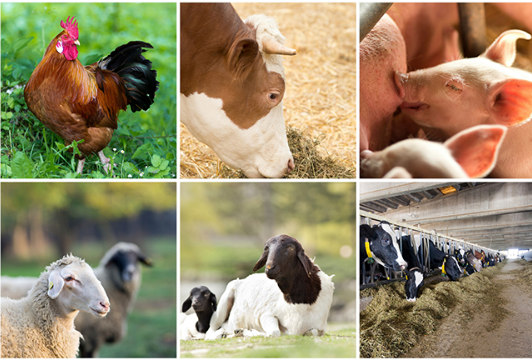
India’s Basic Animal Husbandry Statistics 2025, released jointly by the Ministry of Fisheries, Animal Husbandry & Dairying and the Ministry of Panchayati Raj, highlights steady expansion across all major livestock categories, reinforcing the sector’s growing importance in national nutrition, employment and rural incomes. The latest figures show that India has further strengthened its global leadership in milk production, while also posting healthy gains in eggs, meat and wool.
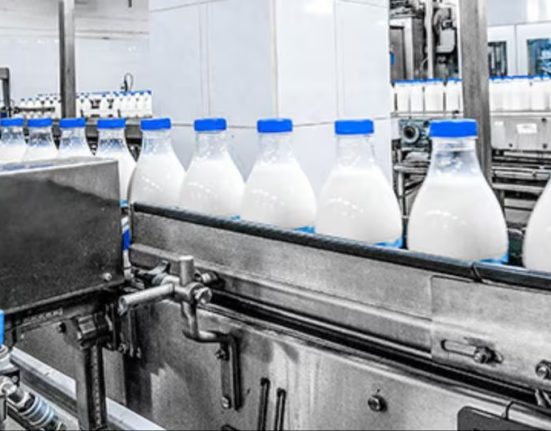
India produced 247.87 million tonnes of milk in 2024–25, a 3.58% increase, with per capita availability rising to 485 g/day. The bulk of national output came from Uttar Pradesh, Rajasthan, Madhya Pradesh, Gujarat and Maharashtra, which together contributed over half of India’s milk supply. Growth was recorded across all animal groups, led by crossbred cattle at 4.97%, followed by indigenous cattle (3.51%) and buffaloes (2.45%), reflecting broad-based improvement across dairy systems.
Egg production reached 149.11 billion, up 4.44%, cementing India’s position as the world’s second-largest egg producer. Per capita availability increased to 106 eggs per year. The sector continues to be driven by commercial poultry, accounting for 84.49% of total output, while backyard poultry remains a vital support for rural households. Andhra Pradesh, Tamil Nadu, Telangana, West Bengal, and Karnataka collectively accounted for 64.37% of the country’s eggs.
India also retained its ranking as the fourth-largest global meat producer, with output rising by 2.46% to 10.50 million tonnes, nearly half of which came from poultry. Key meat-producing states, including West Bengal, Uttar Pradesh, Maharashtra, Andhra Pradesh and Telangana, contributed 57.55% of total production. Wool production increased by 2.63% to 34.57 million kg, led overwhelmingly by Rajasthan, which accounted for 47.85% of national output, followed by Jammu & Kashmir, Gujarat, Maharashtra and Himachal Pradesh.
These gains reaffirm India’s growing strength in livestock-based nutrition and rural economic resilience, with dairy continuing to anchor the sector’s performance.