The Shift from Loose Milk to Packaged Trust
India, the world’s largest milk producer, is witnessing a sweeping transformation in its dairy sector, fuelled by the growing dominance of branded players, health-conscious consumers, and innovations in product development and supply chains. The shift from loose milk to packaged, branded dairy is redefining how Indian households consume dairy, with urban middle-class preferences driving much of this change.
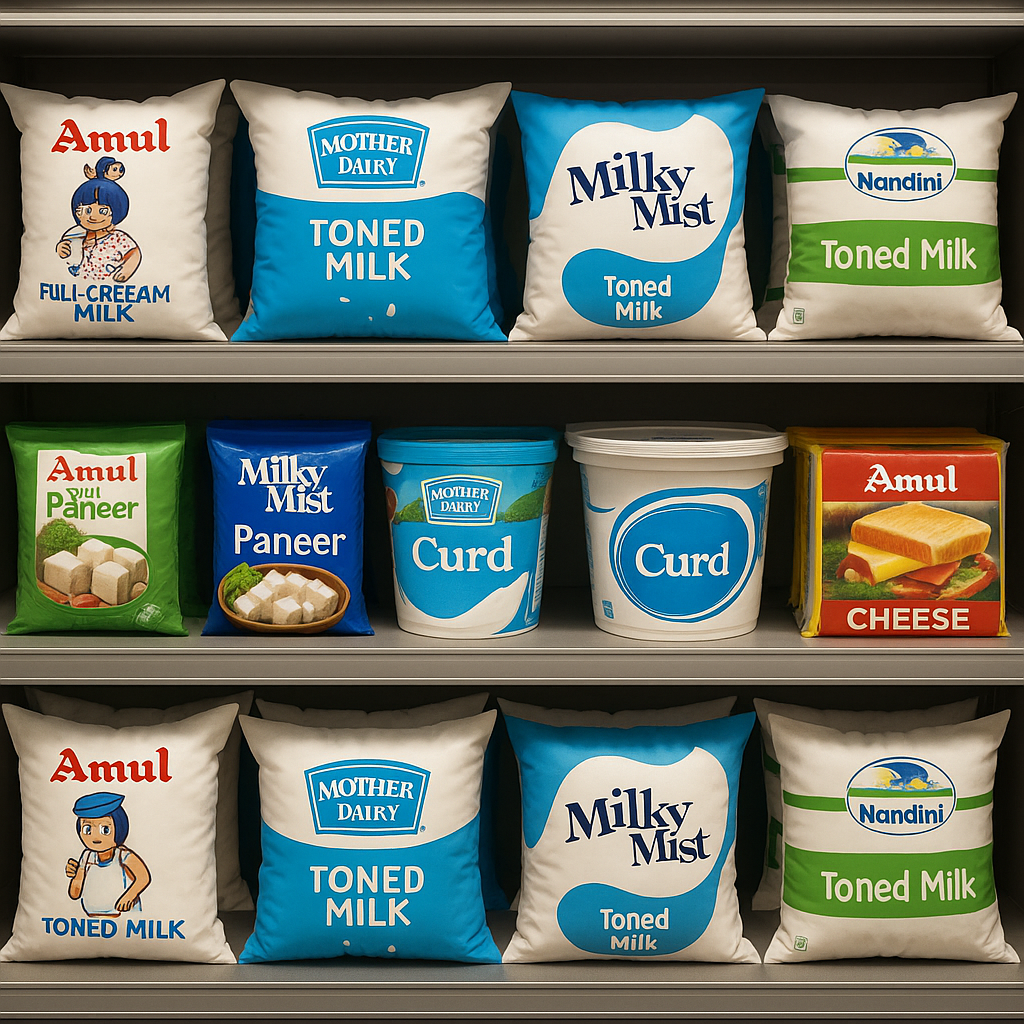
Cooperative giants such as Amul, Mother Dairy, and Nandini have become household names through their unwavering commitment to safety, consistency, and farmer-centric supply chains. These organisations have created models that offer not only reliable products but also rural empowerment. Private players like Milky Mist, Parag Milk Foods, and Ananda Dairy are introducing high-growth value-added dairy products (VAPs), tapping into modern retail, e-commerce, and new-age nutrition trends.
The Rise of Branded Dairy
Amul, India’s largest dairy brand, with a cooperative network of 3.6 million farmers, recorded a turnover of ₹80,000 crore in FY24. Mother Dairy, dominant in Delhi-NCR, and Nandini, Karnataka’s cooperative force, continue to gain ground with strong procurement and expanding footprints. Nandini’s entry into the Delhi market marks a new chapter of regional players scaling nationally. Together, these cooperatives are displacing unorganised milk vendors, ensuring pasteurised, quality-controlled milk reaches more consumers.
Modern retail and quick commerce are pivotal to this transformation. Branded dairy products are now commonplace on supermarket shelves and online platforms, ranging from milk and curd to high-protein shakes and cheese slices. Companies like Amul and Mother Dairy have invested in direct-to-consumer channels, while others, like Milky Mist, have opened exclusive retail outlets, offering complete control over the consumer experience.
Value-Added Products Drive Growth
India’s dairy sector is undergoing premiumisation, with value-added dairy products gaining significant traction. From flavoured yoghurts and lactose-free milk to protein-enriched beverages and artisan cheeses, the consumer palate is evolving. CRISIL Ratings projects 16–18% growth in the value-added segment in FY25, compared to 10% for liquid milk.
Amul’s high-protein range and lactose-free offerings, Mother Dairy’s Pro range, and Milky Mist’s innovation in dairy desserts and UHT products highlight how leading brands are catering to health-conscious, convenience-seeking consumers. Parag Milk’s success with Go Cheese and its premium Pride of Cows subscription milk service reflects the growing appetite for quality, traceability, and indulgence.
Inclusion and Supply Chain Modernisation
India’s dairy growth story remains deeply rooted in rural livelihoods. Over 80 million dairy farmers, many of them women, contribute to India’s milk supply. Cooperatives like Amul and Nandini ensure these producers benefit from industry growth. New procurement models, supported by NDDB and government initiatives such as Dairy Sahakar and the Rashtriya Gokul Mission, are modernising the supply chain by promoting bulk milk cooling, testing, and digital payment systems.
Even private dairies are engaging deeply with farmer networks, offering training, veterinary services, and fair procurement prices. Hybrid models such as contract farming and vertically integrated mega farms (e.g., Pride of Cows) are emerging, offering scalability while maintaining quality.
Bridging Urban-Rural Divide
Urban India is driving premiumisation, but rural India is catching up fast. While cities dominate consumption of VAPs like cheese and probiotic drinks, rural consumers are beginning to embrace packaged and branded options. The gap is narrowing, thanks to improved cold-chain infrastructure and distribution by both cooperatives and private players.
Regional differences persist, with high dairy consumption in Punjab, Gujarat, and Haryana, and traditionally lower levels in eastern states. However, changing demographics, nutrition awareness, and government schemes are driving convergence.
Trust and Packaging: The Pillars of Brand Loyalty
With food safety a top concern, brands have built robust systems for quality control, traceability, and secure packaging. Whether it is Amul’s ISO-certified plants or Mother Dairy’s rigorous milk testing protocols, these efforts have strengthened consumer confidence. Innovative packaging formats, such as aseptic cartons and tamper-evident caps, have furthered food safety and shelf life.
Strong brand legacies and emotional storytelling (e.g., Amul girl, Mother Dairy’s “Maa jaisi”) have created deep trust. Even newer entrants like Milky Mist leverage quality and transparency to win consumers. Handling of quality concerns, customer engagement, and educational initiatives continue to reinforce this trust.
Conclusion: Blending Tradition with Innovation
India’s dairy sector stands at a transformative point, where inclusive rural development meets aspirational urban demand. Branded players, both cooperative and private, are investing in high-margin, health-focused products, expanding into new markets, and strengthening farmer linkages. With organised players handling only about 25% of India’s milk output, the scope for growth is immense.
The future is likely to see more tech-enabled transparency, health-personalised products, export opportunities, and continued infrastructure development. But at its heart, India’s dairy story remains one of trust, inclusion, and innovation – delivering nutrition and livelihoods from the village to the city, and perhaps soon, to the world.