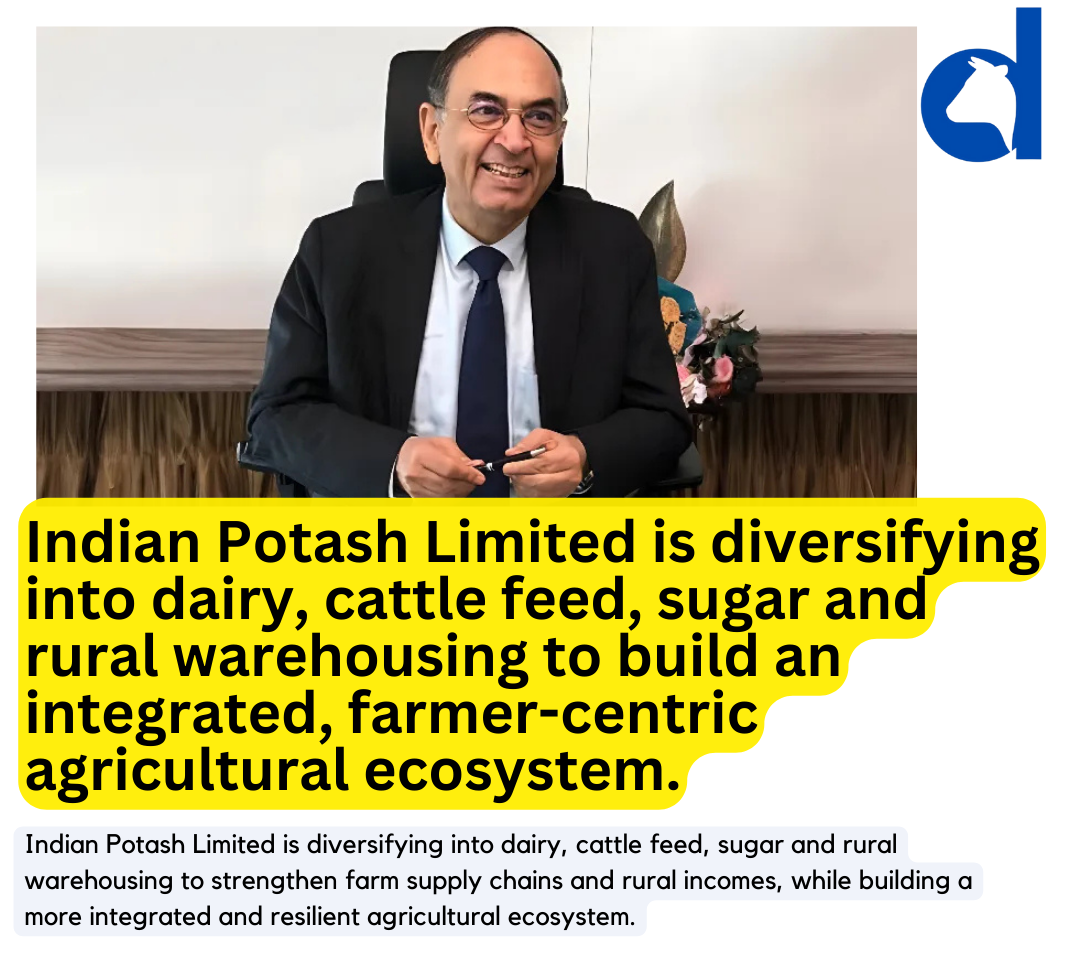
Indian Potash Limited (IPL), long recognised as a foundational force in promoting balanced fertiliser use across India, is undergoing a strategic transformation that reflects broader shifts within the agricultural economy. Moving beyond its historical identity as a fertiliser distribution giant, the company is steadily building a diversified, farmer-centric ecosystem spanning dairy, cattle feed, sugar manufacturing and rural warehousing.
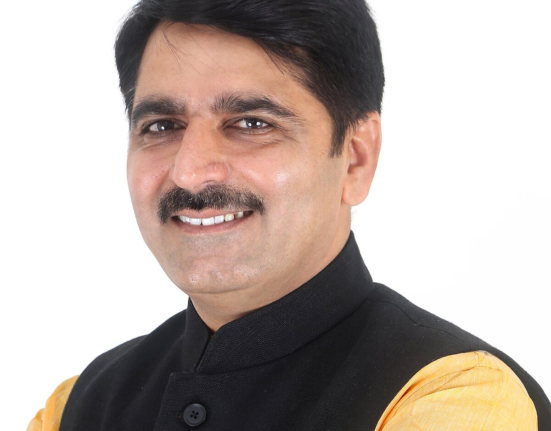
Under the leadership of Managing Director Parvinder Singh Gahlaut, IPL’s expansion appears less like diversification for scale alone and more like a deliberate attempt to integrate multiple agricultural value chains into a cohesive rural support framework.
From Fertilisers to Full-Farm Integration
IPL’s legacy lies in ensuring the widespread availability of potash and other fertilisers across India’s farming belt. Handling nearly three million tonnes of fertilisers annually and servicing an extensive network that reaches approximately six lakh villages, the organisation developed deep expertise in logistics, port operations and last-mile rural distribution.
This infrastructure advantage now underpins IPL’s entry into rural warehousing, where over 300 inland godowns are being positioned as multi-functional agri-input hubs. Beyond simple storage, these facilities aim to streamline the distribution of fertilisers, seeds and other essentials, addressing long-standing inefficiencies in rural supply chains. Improved warehousing reduces transit delays, minimises losses and ensures the timely availability of inputs, a factor directly linked to farm productivity.
Dairy Expansion: Strengthening Rural Cash Flow
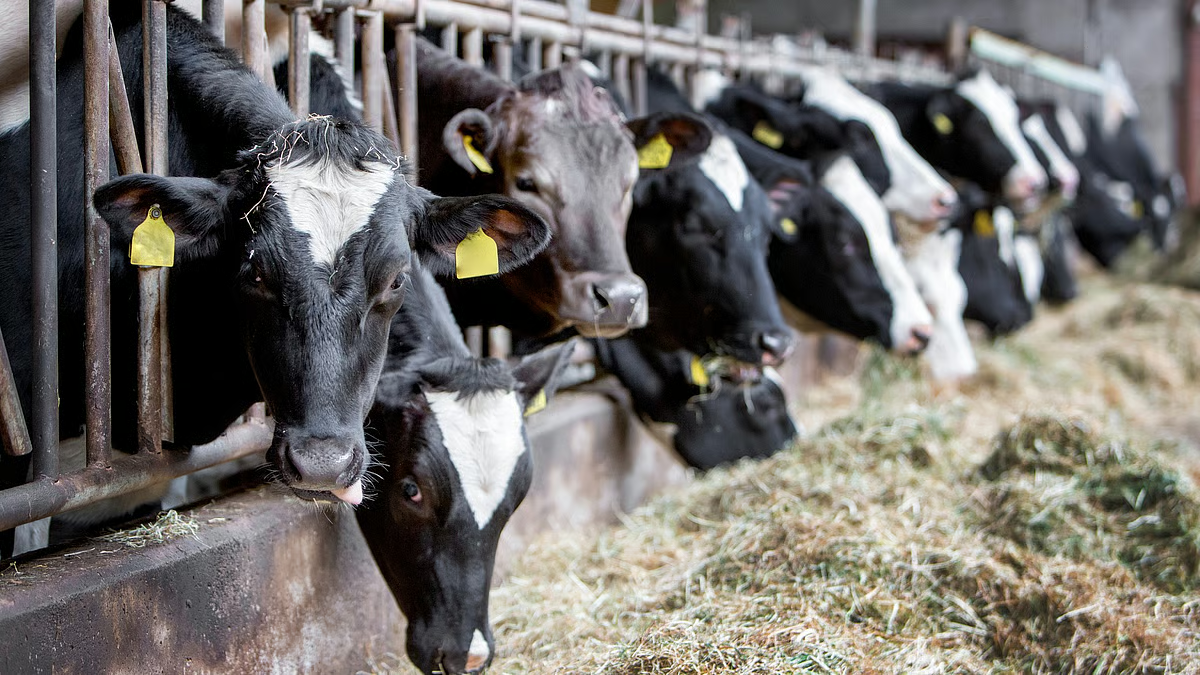
IPL’s move into the dairy sector represents a logical extension of its farmer engagement model. With processing capacity reaching around seven lakh litres of milk per day, the company is building a structured procurement and processing system anchored in village-level sourcing.
By offering reliable milk offtake under the “Dairy Fresh” brand, IPL helps stabilise incomes for smallholders, for whom dairy often serves as a vital secondary revenue stream. Investments in modern processing facilities and value-added products such as ghee and paneer indicate a shift towards higher-margin segments, while also meeting rising consumer demand for quality-assured dairy products.
Strategically, dairy integrates well with IPL’s broader agricultural footprint. Improved livestock productivity depends heavily on balanced nutrition, an area where IPL’s technical background in soil and crop nutrition offers synergy when extended to animal health.
Cattle Feed: Nutritional Link in the Ecosystem
The company’s cattle feed operations in Sikandrabad (Uttar Pradesh) and Renigunta (Andhra Pradesh) further reinforce this integrated approach. By producing scientifically formulated feed that enhances milk yield, fertility and animal health, IPL connects its fertiliser expertise with livestock nutrition principles.
This closed-loop model benefits farmers in two ways: higher dairy productivity and better utilisation of farm resources. The approach also reflects a growing industry trend where input companies evolve into comprehensive agri-service providers rather than single-product suppliers.
Sugar and Distillery: Expanding the Rural Economic Base
IPL’s entry into the sugar sector, including the revival of multiple mills in Uttar Pradesh with a combined crushing capacity of 9,700 tonnes per day, adds another income pillar for rural communities. Ensuring timely cane payments and modernising processing operations support thousands of cane farmers, while efficient by-product utilisation strengthens local agro-industrial linkages.
The acquisition of a distillery unit in Odisha producing ethanol and Extra Neutral Alcohol (ENA) signals alignment with India’s biofuel and value-addition policies, offering further revenue diversification beyond traditional agricultural cycles.
Warehousing as the Structural Backbone
At the centre of IPL’s diversification lies logistics. The company’s warehousing push is not merely about infrastructure creation but about controlling a critical node in the agri-value chain. Efficient storage and distribution systems reduce supply chain volatility, improve inventory management and support smoother integration of fertilisers, feed, dairy procurement and sugar operations. This integrated logistics framework allows IPL to manage risk across multiple agricultural segments while maintaining a consistent engagement with farmers throughout the year.
A Shift Towards Ecosystem Thinking
Gahlaut’s articulation of IPL’s strategy underscores a broader industry evolution: transforming from a product supplier into a multi-service agricultural ecosystem enabler. Fertilisers support crops, crops support livestock feed, livestock strengthen dairy income, and sugar operations provide additional seasonal cash flow. Warehousing ties these components together operationally. Such diversification not only spreads business risk but also deepens farmer loyalty by embedding the company across multiple stages of rural livelihoods.
Conclusion
Indian Potash Limited’s diversification illustrates how legacy agri-input firms can reposition themselves within a modern, integrated rural economy. By linking soil nutrition, animal health, food processing and logistics, IPL is constructing a multi-layered support system that enhances resilience for both the company and the farming communities it serves.
If successfully scaled and efficiently managed, this model could serve as a blueprint for the next phase of India’s agricultural value chain evolution, one built not on isolated sectors, but on interconnected rural ecosystems.