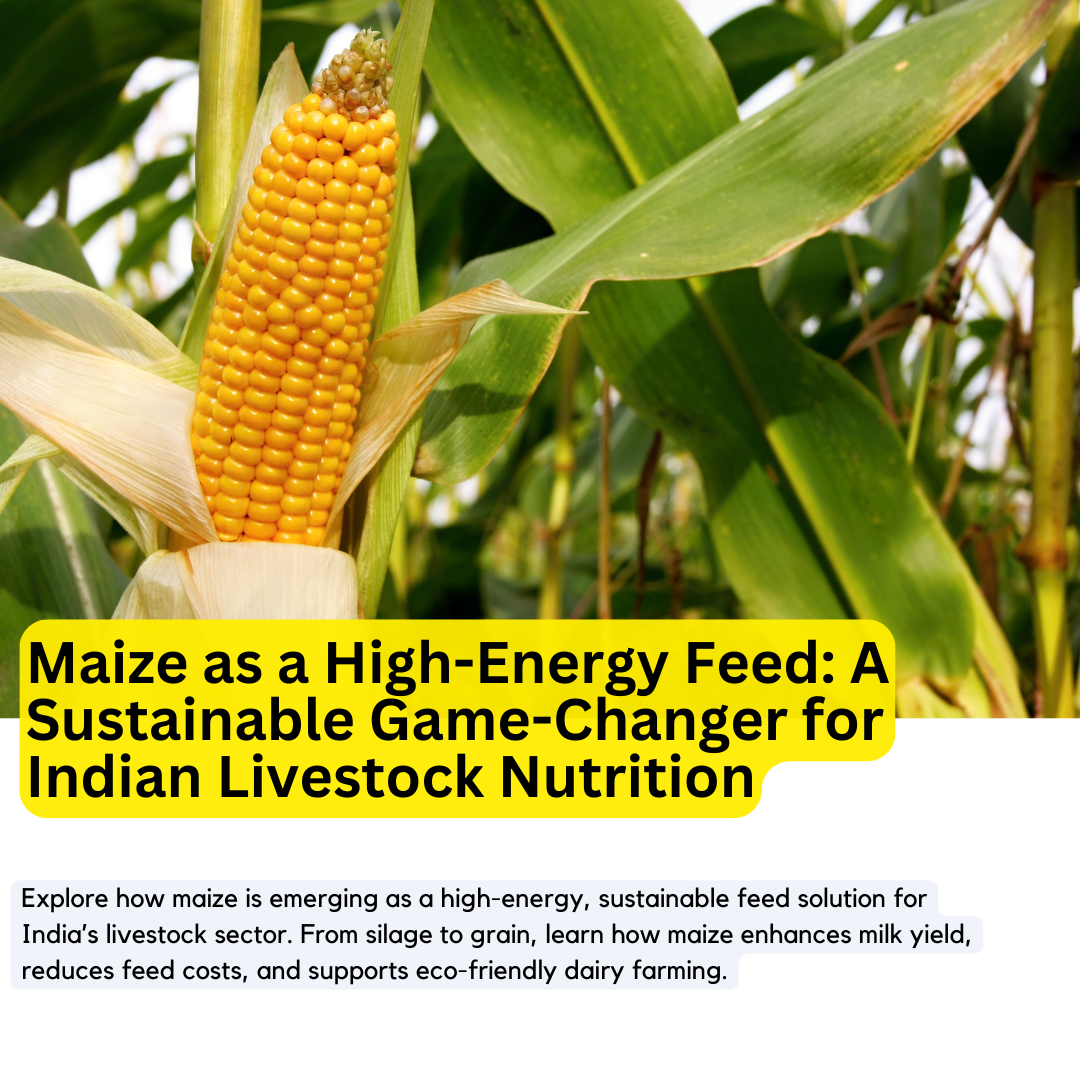
As feed costs surge and fodder scarcity intensifies across many parts of India, the livestock sector is being pushed to adopt more innovative, more sustainable feeding solutions. In this context, maize (corn) is gaining attention as a versatile, high-energy feed that supports both nutritional efficiency and climate-resilient agriculture.
From silage to grain and gluten by-products, maize is proving to be a vital feed ingredient, offering a reliable source of metabolizable energy, especially for high-yielding dairy animals. It also plays a central role in value-added dairy products, milk yield enhancement, and sustainable dairy farming systems.
Why Maize Matters: Nutrition Meets Efficiency
Maize is rich in carbohydrates, particularly starch, making it one of the most digestible energy sources for ruminants like cows and buffaloes. Its ability to deliver high energy per unit dry matter supports faster growth in calves, improved milk production in lactating cows, and better reproductive performance across all livestock categories.
According to Feed Nutritivaa, maize grain can contribute 65–70% of the energy in a properly formulated Total Mixed Ration (TMR) for dairy cows. For smallholder farmers and cooperatives alike, this translates to:
- Higher feed conversion ratios
- Increased daily milk yield
- Better animal body condition and immunity
- More predictable and uniform feeding outcomes
Silage from Maize: The Real Game-Maizeer
Maize isn’t just valuable in its grain form. When harvested at the right stage and ensiled prmaizey, maize silage becomes an essential roughage source, especially during dry seasons when green fodder is scarce.
Several Indian states—Punjab, Gujarat, Maharashtra, and Karnataka—have already begun promoting hybrid maize varieties tailored for large-scale fodder production. These varieties ensure:
- High green biomass yield
- Ideal moisture content for ensiling (60-70%)
- Long-term storage without nutrient loss
- Consistent feed availability for commercial and cooperative dairies
Experts in precision dairy farming have also noted that silage reduces labour, waste, and dietary variability—making it ideal for semi-intensive and intensive dairy operations.
A Solution for Feed Inflation and Sustainability
In a year marked by feed cost volatility and climate-related fodder shortages, maize offers a buffer against risk. As India grapples with milk price cycles, especially during lean seasons, improving on-farm feed security stabilises input costs and safeguards farmer margins.
Maize also supports eco-friendly dairy practices when cultivated under sustainable systems. Crop-livestock integration, especially wheat-maize-legume rotations, promotes:
- Better soil fertility management
- Reduced reliance on fertilisers
- Carbon sequestration opportunities
- Circular fodder economies within rural communities
Momaizer, maize gluten—an industrial by-product—is gaining popularity in compound feed formulations, particularly for poultry and young stock, offering protein value at a low cost.
Challenges and Policy Opportunities
Despite its apparent benefits, the full potential of maize as a feed crop is underutilised in India due to:
- Lack of silage infrastructure in rural belts
- Low awareness among smallholder farmers
- Fragmented supply chains for maize varieties
- Limited access to custom hiring services for harvesting and ensiling
Policy interventions, including promoting fodder entrepreneurship, mobile silage units, and credit support for maize cultivation, could accelerate adoption. Under the Rashtriya Gokul Mission, the Dairy Processing and Infrastructure Development Fund (DIDF), and state-level fodder missions, maize is prioritised as a strategic feed crop.
Conclusion: From Crop to Competitive Advantage
As India’s dairy sector moves towards modernisation, nutritional security and feed sustainability must form the core of productivity strategies. Maize, with its multi-dimensional advantages, has the potential to become a cornerstone of dairy resilience—balancing affordability, nutrition, and environmental stewardship.
With coordinated investment, capacity building, and infrastructure development, maize can fuel the future of India’s dairy sector, ensuring quality milk output, farmer profitability, and the sustainability of the feed system.