In Rajasthan’s Sirohi district, early mornings are changing for thousands of women dairy farmers. The introduction of solar-powered milk chillers has begun to transform how milk is collected, cooled and transported, significantly improving quality while reducing losses across the Asha Mahila Milk Producer Organisation.
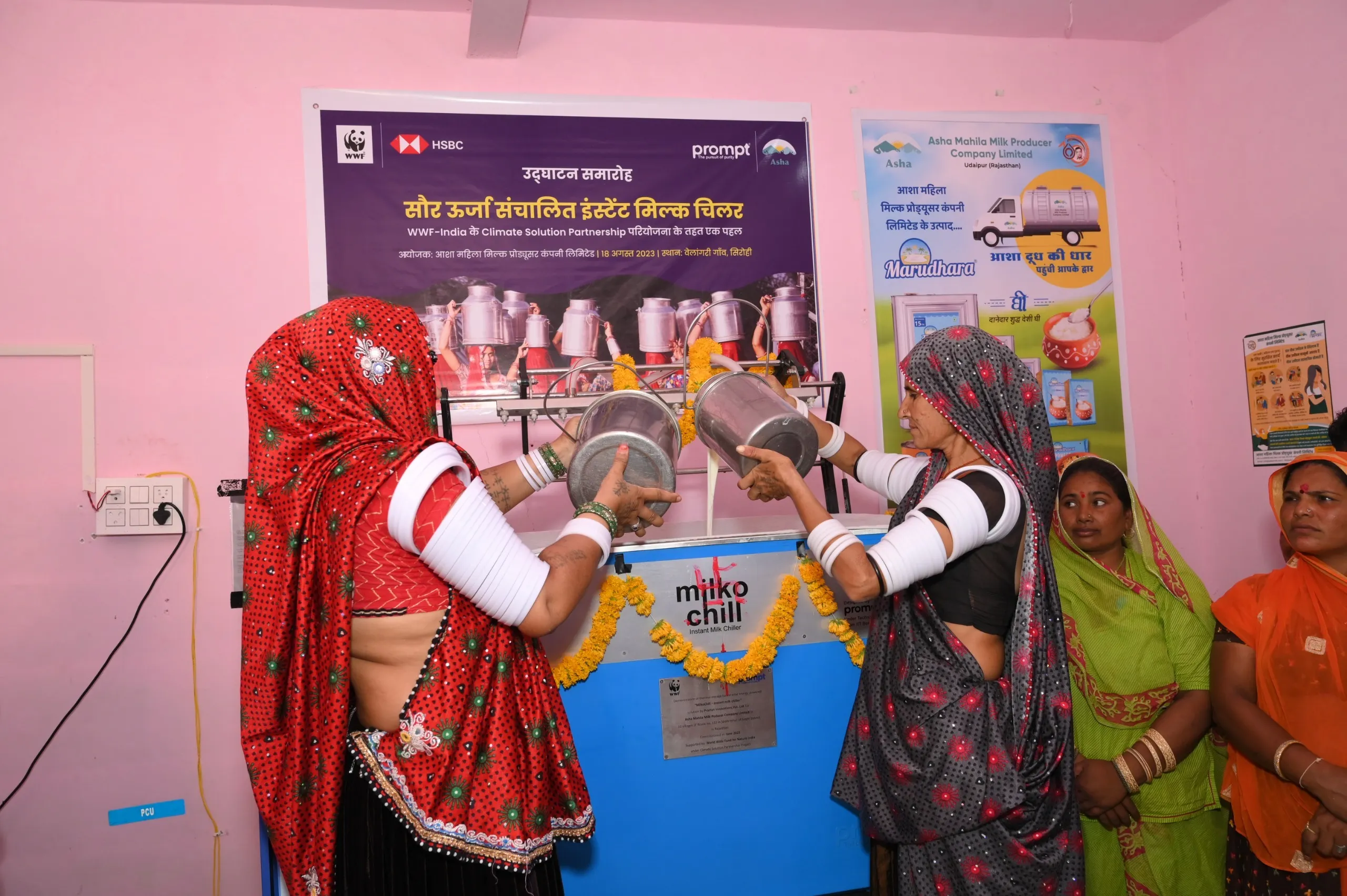
For years, women like Gokri Devi from Khambal village struggled to preserve milk in the intense summer heat. Delays in transportation caused spoilage, financial loss and rejection at bulk centres. But the arrival of decentralised solar-driven “MilkoChill” units, introduced through a collaboration between Asha Mahila and WWF India, has altered this reality.
Decentralised Cooling at the Village Level
Ten chillers, each with a 500-litre capacity and powered by a 3.5 kW rooftop solar system, now serve villages across Sirohi. With a combined 33.5 kWp solar capacity, they can chill 5,000 litres of milk daily. The thermopack technology rapidly cools milk to 4–6°C immediately after collection, preventing bacterial growth and preserving quality for several hours even during transport delays.
“Milk stays fresh even if the vehicle is late. MBRT has improved by nearly 50%,” says quality control executive Drakshi Choudhary.
A Growing Women-Led Cooperative
Asha Mahila, founded in 2016 with just 11 members, has grown into a 50,000-woman cooperative spanning 10 districts and collecting over 1.5 lakh litres daily. Yet, unreliable electricity and dependence on diesel generators made milk chilling costly and inconsistent.
Solar units bridge this gap by reducing operational costs, cutting emissions and ensuring cooling at the source. WWF supported the capital expenditure of approx ₹6.5 lakh per chiller, while beneficiary households invested in civil infrastructure and backup electricity connections. Asha Mahila mobilised members, provided training and enabled maintenance through technology partners.
Technology Meets Empowerment
For Chairman Narsa Kunwar, the impact extends far beyond milk quality. Direct payments into women’s accounts, ownership certificates, women-led committees and training programmes have increased confidence and financial independence. “Earlier, women rarely stepped out. Now, they attend meetings, manage accounts and even represent the cooperative internationally,” she says, recalling her experience receiving an award for the project in Paris.
Strengthening India’s Cold Chain
Solar chillers demonstrate a scalable model for rural cold-chain development. Reduced diesel dependency lowers emissions, and decentralised cooling minimises milk rejection and waste issues that have long plagued India’s dairy sector. WWF’s Vishal Dev highlights the model’s potential: “When technology and women’s ownership come together, the supply chain strengthens right from the village.”
A Path to Replication
Asha Mahila aims to scale the model to more villages, including larger-capacity chillers of 1,000 litres to increase efficiency. The cooperative also operates rural markets offering feed, veterinary inputs and tools, further supporting women farmers. As the sun sets over Sirohi, solar panels on village rooftops absorb the last light, preparing for the next day’s milk. The technology not only preserves milk, but also protects livelihoods, dignity and aspirations of women who form the backbone of rural dairy economies.