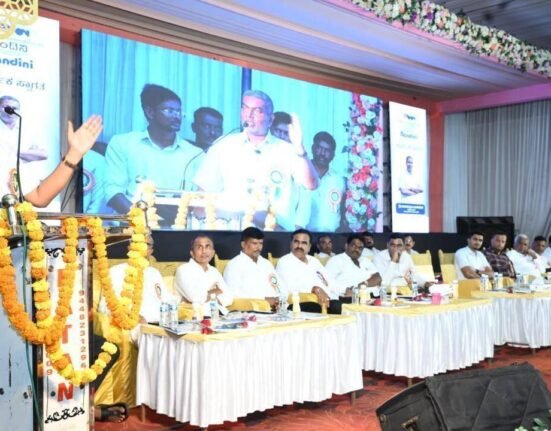
In a landmark move to integrate sustainable and circular practices into the Indian dairy sector, Union Home Minister and Minister of Cooperation Amit Shah has announced the formation of three new multi-state cooperative societies. The announcement was made during a meeting in New Delhi focused on “Sustainability and Circularity in the Cooperative Dairy Sector.”
These cooperatives are set to revolutionise the dairy value chain by focusing on three critical domains:
- Animal feed production, disease control, and artificial insemination—aimed at enhancing dairy productivity and herd health.
- Cow dung management models—to promote the use of bio-energy, organic fertilisers, and reduce methane emissions.
- Circular utilisation of dead cattle remains—fostering eco-friendly processing, reducing waste, and enabling biogas generation.
The initiative aligns with Prime Minister Narendra Modi’s vision of “Sahkar se Samriddhi” (Prosperity through Cooperation), marking a significant step towards White Revolution 2.0. Minister Shah emphasised that the future of Indian dairying lies in expanding milk output and building a circular, farmer-centric ecosystem.
Shah also highlighted the role of carbon credits and the need for scientific, farmer-friendly implementation to ensure financial returns directly reach rural producers. He stressed that integrated cooperative models—production, processing, waste reuse, and market linkage—are key to doubling farmer incomes while improving environmental sustainability.
Recognising the pivotal role of dairy cooperatives in women’s empowerment, rural livelihoods, and food security, Shah praised institutions like NDDB, NABARD, and NCDC for their leadership. He noted that the NDDB’s biogas and dung-based projects are now being scaled nationwide, creating new opportunities for green energy and rural employment.
“These new cooperatives will lay the foundation for a sustainable, circular dairy ecosystem. With the support of institutions and policymakers, the dairy sector will not only boost rural incomes but also help India lead in eco-friendly agriculture,” Shah asserted.
This integrated approach—combining dairy nutrition, animal health, waste valorisation, and cooperative synergy—sets a new benchmark for eco-friendly dairy in India and reflects the country’s commitment to a climate-smart rural economy.