Dairy at the Centre of Rural Development Strategy
Madhya Pradesh is positioning dairy farming and milk processing as key drivers of rural employment, industrial activity, and higher farm incomes. Chief Minister Dr Mohan Yadav said the state aims to expand milk production, processing, and marketing in an integrated manner across all districts.
Speaking at a state-level review meeting on dairy development, Dr Yadav stressed the need to strengthen the Sanchi brand. He said branding should clearly reflect the role of cattle rearers and dairy farmers, while operations should remain coordinated from the village level to the state level.
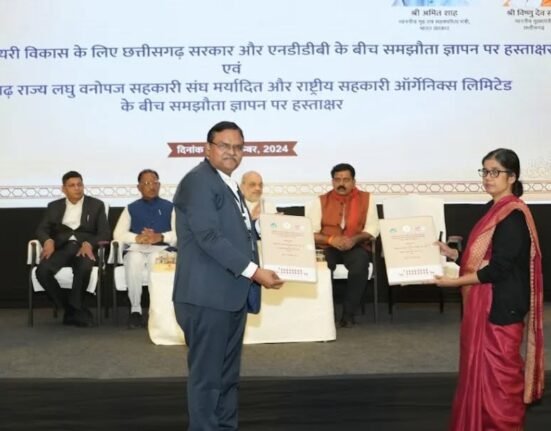
NDDB Partnership Strengthens Cooperative Framework
The review meeting took place under a steering committee formed through an agreement between the Madhya Pradesh State Cooperative Dairy Federation and the National Dairy Development Board (NDDB). Senior state officials, federation executives, and NDDB representatives participated in the discussions.
Officials noted that public confidence in Sanchi products has improved since NDDB assumed operational responsibility. Growing demand has also triggered requests to set up new Sanchi dairies in several locations.
Focus on Farmer Payments and Transparent Procurement
Dr Yadav highlighted dairy farming’s role in improving farm incomes and called for capacity-building programmes at the village level. He emphasised close monitoring of milk collection systems, transparent procurement, and fair pricing for producers.
To ensure timely payments, the state has introduced a 10-day payment roster for milk suppliers. Procurement prices have increased by ₹2.50 to ₹8.50 per litre, depending on the dairy union. Officials said these measures aim to improve farmer confidence and participation in cooperatives.
Public-Private Partnerships and Skill Development
The chief minister also pushed for expanding dairy activities through public-private partnerships. He said combining private investment with cooperative networks could encourage entrepreneurship, create jobs, and support wider economic growth.
Industrial Training Institutes (ITIs) will introduce courses in dairy technology to develop a skilled workforce for processing plants. This move is expected to generate local employment opportunities for rural youth.
Cooperative Expansion and Digitalisation Drive
Since the restructuring programme began, the state has formed 1,241 new dairy cooperative societies and revived 635 inactive ones. Authorities are digitising the entire dairy value chain to improve efficiency and transparency.
Software systems now operate in Bhopal, Gwalior, Ujjain, Bundelkhand, and Jabalpur. In addition, a mobile application launched by the Indore dairy union provides real-time data on milk quantity, quality, and pricing to farmers.
Ambitious Growth Targets Ahead
Looking ahead, Madhya Pradesh plans to expand cooperative dairy coverage to 26,000 villages by 2029–30. The state aims to raise daily milk procurement to 5.2 million kg, increase daily sales to 3.5 million litres, and build processing capacity of 6.33 million litres per day.
Several closed or underutilised dairy plants are also being revived, including facilities in Shivpuri, Jabalpur, Indore, and Gwalior. Officials believe these steps will strengthen the dairy value chain and make dairy a sustainable engine of rural growth.