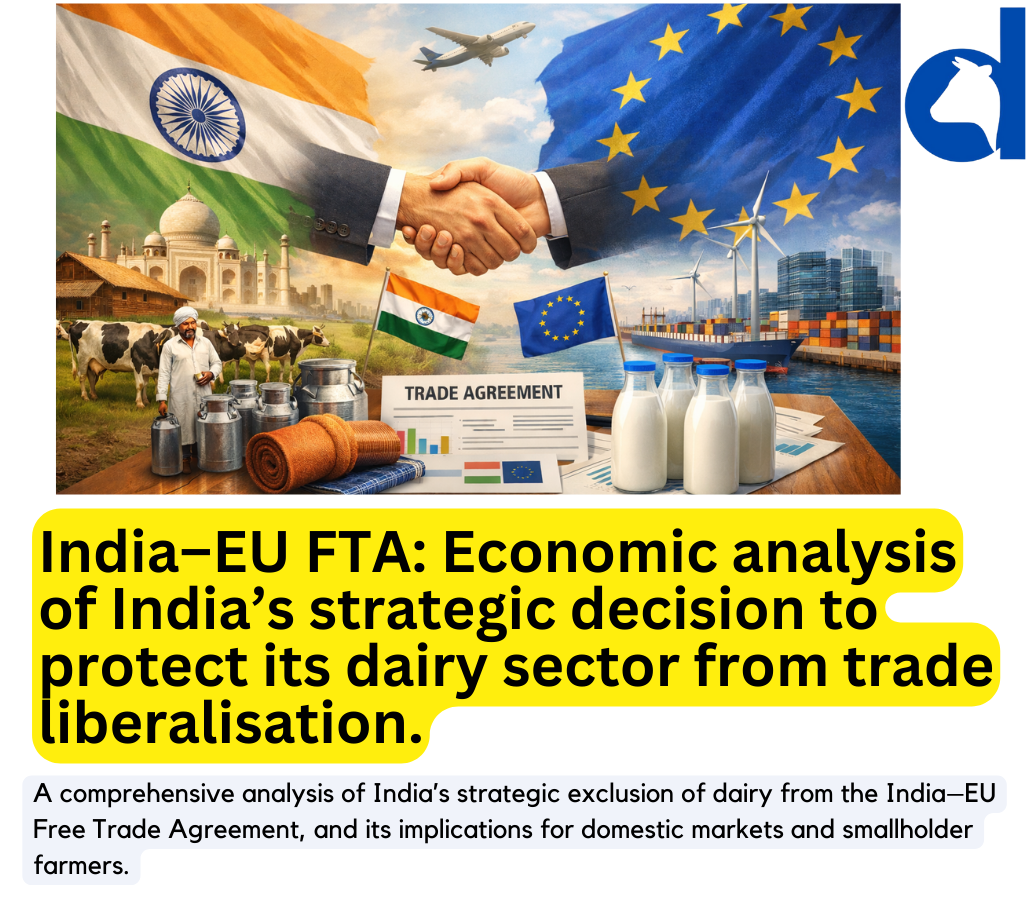
In the landmark India–European Union Free Trade Agreement (FTA) finalised on 27 January 2026, New Delhi has deliberately placed the dairy sector outside the ambit of tariff concessions, reflecting a deliberate and analytically informed economic strategy. This decision, emphasised by senior officials from the Ministry of Commerce and Industry, underscores that protecting the dairy industry remains a non-negotiable red line for the current government, grounded in socio-economic realities rather than narrow trade negotiating tactics.
A Calculated Exclusion, Not an Oversight
India’s exclusion of dairy products encompassing milk, cheese, butter and other milk derivatives from duty reductions in the FTA was not incidental. It aligns with the longstanding policy precedent that sensitive agricultural sectors should remain insulated from the competitive pressures of liberalised imports. According to commerce ministry sources, no import duty concessions were granted on dairy under this pact with the EU.
This protective stance mirrors India’s treatment of dairy in previous trade arrangements: the sector has consistently been shielded from liberalisation due to its centrality to rural livelihoods and food security. In the EU pact, dairy joins other sensitive agricultural categories such as rice, wheat, pulses, tea and coffee that have similarly been kept outside the tariff-cutting remit.
Safeguarding Smallholders and Rural Economies
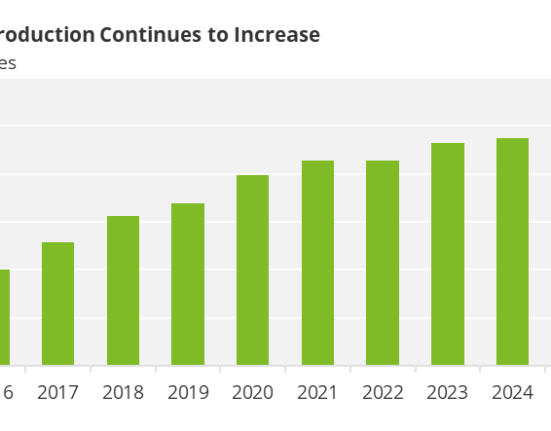
India is the world’s largest milk producer, with output measured in hundreds of millions of tonnes annually. The dairy ecosystem is overwhelmingly composed of smallholder producers whose economic viability hinges on stable domestic markets rather than exposure to subsidised imports from highly mechanised European competitors. The exclusion of dairy thus functions as a bulwark against competitive pressures that could disrupt local price structures, jeopardise cooperative networks and undermine livelihoods.
European dairy exporters have historically eyed the Indian market for its burgeoning demand, yet regulatory and market access hurdles have persisted. The stringent quality, safety and traceability standards enforced by the EU further complicate access for Indian dairy products. These non-tariff measures, coupled with the absence of tariff concessions, effectively maintain the status quo in dairy trade flows between the two regions.
Balancing Trade Liberalisation with Domestic Resilience
From a macroeconomic viewpoint, the India-EU FTA represents an ambitious effort to broaden market access for Indian exports, notably in textiles, engineering goods and processed foods, while selectively shielding sectors deemed socio-politically sensitive. The careful calibration of concessions reflects an understanding that trade agreements must balance liberalisation with domestic resilience. Sensitive agricultural categories, including dairy, are insulated to protect food security and buffer smallholders from volatility in international commodity markets.
This strategy further aligns with India’s broader trade philosophy of targeted engagement, wherein offensive market access is pursued in globally competitive sectors, and defensive postures are maintained where domestic vulnerabilities exist. Dairy, with its deep rural linkages and limited capacity for scale efficiencies vis-à-vis European conglomerates, falls squarely into the latter category.
Implications for the Dairy Sector and Beyond
By exclusion rather than inclusion with protective measures, India’s approach has several immediate and longer-term implications:
- Domestic stability: By maintaining high tariffs on dairy imports, policy certainty is provided to small and marginal farmers, strengthening cooperative structures and local food systems.
- Trade negotiations precedent: The dairy exclusion sets a clear negotiating marker for future trade dialogues with the EU and other partners, reaffirming political commitment to agricultural safeguards.
- Export diversification: While dairy remains protected domestically, India can channel export-oriented efforts into value-added agri-food segments where quality compliance and market dynamics are more favourable.
In sum, India’s exclusion of dairy from the India-EU FTA is a strategic policy choice rooted in economic analysis and socio-political calculus rather than purely protectionist instincts. It illustrates an attempt to thread a nuanced needle: embracing global trade opportunities while ensuring that key domestic sectors are not left exposed to external competitive shocks at the expense of rural livelihoods and food security.