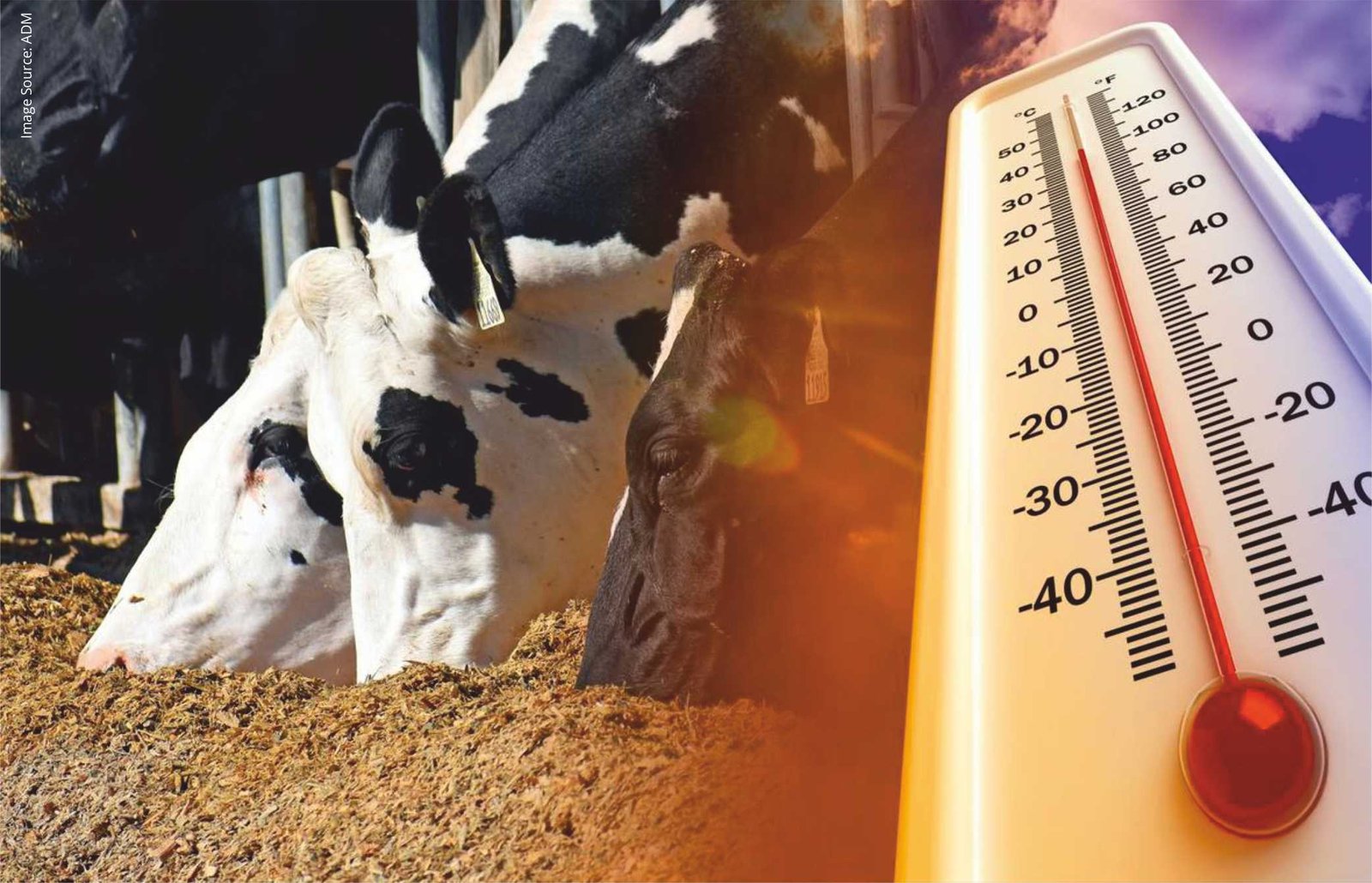
 Hot ambient temperatures have a significant impact on the productive and reproductive performance of dairy cows and buffaloes. In India, the period from 1 March to 15 June is typically characterized by intense summer heat, during which dairy animals are highly prone to heat stress. Crossbred cows such as HF and Jersey cross bred cows can tolerate temperatures up to 27–30°C. Beyond this range, milk yield, milk fat percentage, and milk SNF percentage are adversely affected due to heat stress.
Effects of Heat Stress on Dairy Cattle
Cattle are naturally less efficient at dissipating heat compared to humans. They sweat only about 10% as much as humans, making evaporative cooling essential.
Key effects include:
- Reduced feed intake by 8–12% or more
- Decreased volatile fatty acid production in the rumen
- Reduction in milk yield, milk fat %, and SNF %
- Panting, which can increase maintenance energy requirements by up to 20%
- Elevated body temperature and respiration rate
Proper management practices are therefore essential to minimize the impact of summer stress.
Warning Signs of Heat Stress
If the following signs are observed, animals require immediate attention:
- Animals move toward shaded areas
- Increased water intake with reduced feed intake
- Preference for standing rather than lying down
- Rapid, shallow breathing
- Increased respiration rate and body temperature
- Excessive salivation
- Open-mouth panting
- Dull skin and red, hot eyes
Consequences of Summer Stress
Heat stress is generally more severe in crossbred cattle and buffaloes, while native breeds are comparatively more tolerant.
Major consequences include:
- 10–40% reduction in milk yield
- Decreased milk fat % and SNF %
- Reduced feed intake
- Increased somatic cell count and higher incidence of mastitis and environmental infections
- Decline in reproductive performance and conception rates
- Increased susceptibility to fever and metabolic disorders
Important Management Tips to Reduce Summer Stress
- Provide Adequate Shade
Trees offer the most effective natural shade. If unavailable, construct thatched roofs with a minimum height of 9 feet. Additional cooling measures include:
- Covering shed roofs with coconut leaves, paddy straw, or grass
- Painting roofs with white paint or slaked lime (sunnambu)
- Installing false ceiling insulation
- Using wet gunny bags to cool overhead water tanks and pipelines
Barriers such as thatched walls or wet gunny cloth can reduce the impact of hot winds.
- Feeding Management
Strategic feeding practices play a crucial role in minimizing the impact of heat stress on dairy animals. Since feed intake naturally declines during hot weather, careful planning of feeding schedules and ration composition is essential to maintain productivity.
Animals should be fed during the cooler parts of the day to encourage better intake and reduce metabolic heat production:
- Early morning: 4:00–6:00 a.m.
- Late evening/night: 9:00–11:00 p.m.
Additional recommendations:
- Offer smaller quantities during daytime
- Increase cattle pellet feed by 1–2 kg per cow per day
- Provide high-quality green fodder, especially for early lactation cows
- Supplement sodium bicarbonate at 50–200 g per cow per day to maintain rumen pH
- Gradually adjust ration formulation before peak summer
Increasing feeding frequency and pushing up feed more often improves dry matter intake (DMI). Raising total mixed ration (TMR) moisture to 45–50% (from the typical 35–40%) enhances palatability and intake.
Increasing the energy density of the TMR is also an effective strategy when dry matter intake is reduced. Supplementing with protected fat is a practical and efficient method to increase energy intake without raising metabolic heat production.
Any changes in diet formulation and feeding procedures should be introduced gradually and preferably before the onset of peak summer. Planned nutritional adjustments, combined with proper feeding management, significantly reduce the adverse effects of heat stress and help sustain milk production during hot weather.
- Ensure Adequate Water Supply
- Provide clean, cool drinking water throughout the day
- Ensure 24-hour access to water
- Cover overhead tanks and pipelines to maintain water temperature
Water is the most critical nutrient during summer.
- Improve Ventilation and Cooling
- Install fans in sheds and feeding areas
- Use sprinklers or fine mist systems between 10 a.m. and 6 p.m.
- Spray animals with water during peak heat (12 p.m.–6 p.m.) and If sprayer is not available, take water in a bucket and pour it over the animal using a mug.
- Use wet gunny or jute bags (gunny cloth or Kithan sakku) over the body during extreme heat
- Run water over shed roofs for evaporative cooling
Cows cooled during the hottest part of the day often show improved evening milk yield.
- Mineral and Nutritional Supplementation
During hot weather:
- Provide mineral mixture at 50 g per cow per day
- Increase potassium (1.5–1.6%), sodium (0.45–0.60%), and magnesium (0.35–0.40%) in rations
- Maintain protein at approximately 18%, with 37–39% rumen undegradable protein
- Provide yeast cultures (Aspergillus oryzae and Saccharomyces cerevisiae)
- Supplement vitamins A, D, and E
- Increase dietary energy density using supplemental fat
- Maintain ADF (minimum 19%) and NDF (minimum 28%) to prevent acidosis
- Health and Sanitation
- Deworm animals regularly
- Disinfect sheds with appropriate acaricides in consultation with a veterinarian
- Improve sanitation and bedding management
- Schedule vaccinations during cooler hours
- Monitor animals closely, as heat stress suppresses immune function
Impact on Reproduction
Heat stress severely affects fertility:
- Delayed ovulation and reduced estrus expression
- Shortened heat duration (up to 50%)
- Reduced pregnancy rates as Temperature Humidity Index rises
- Increased embryo mortality when uterine temperature reaches approximately 104°F
- Decline in pregnancy rates when maximum air temperature exceeds 85°F
Embryos are particularly sensitive during the first one to two weeks after insemination. Cooling measures during this period are critical. Heat stress during the last 60–90 days of gestation may reduce calf birth weight and subsequent milk yield.
Conclusion
Heat stress affects milk production, reproduction, immunity, and overall profitability of dairy operations. However, through timely shade provision, improved ventilation, adequate nutrition, clean water supply, and careful reproductive management, dairy farmers can significantly reduce summer-related losses.
Proactive summer management is not an option—it is a necessity for sustaining productivity and herd health during India’s hot season.
by Dr T M Gowrisankar- Independent Nutritionist and Animal feed consultant