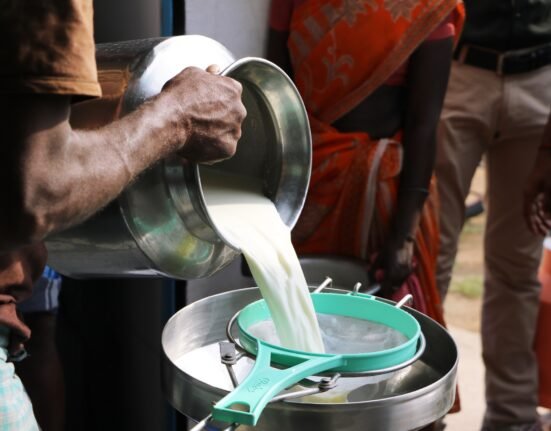
More than 3,000 milk samples supplied to dairies across Karnataka were found to be adulterated during a one-year period between January last year and January this year, the state government informed the legislature on Friday.
The details were shared in the state assembly in response to a question raised by MLC Madhu G. Madegowda during Question Hour. The information was provided by the Leader of the House N. S. Boseraju on behalf of Chief Minister Siddaramaiah.
Large-scale milk testing across dairy unions
According to the government’s statement, authorities tested 15,15,575 milk samples supplied to 19 dairy unions and dairy units across the state during the period.
Out of these, 3,049 samples were found to contain adulteration, indicating ongoing challenges in maintaining milk quality across cooperative supply chains.
District-wise adulteration cases
Among districts, Hassan recorded the highest number of adulterated samples with 788 cases.
Other districts with significant cases included:
- Ballari – 588 samples
- Shivamogga – 434 samples
- Mandya – 418 samples
- Kalaburagi – 315 samples
The government also noted that adulteration was detected in milk supplied by private dairy player Dodla Dairy.
Facilities reporting no adulteration
Officials informed the House that certain districts and dairy facilities reported no adulteration cases during the period. These included Kolar, Chikkaballapur, and Dakshina Kannada.
Similarly, no adulteration was detected at major dairy facilities such as the Nandini Hi-Tech Product Plant, the Nandini Mega Powder Plant, Kanva Ramanagara, and Mother Dairy operations in the region.
No criminal cases registered
Despite milk adulteration being a punishable offence under food safety laws, carrying penalties ranging from three months’ imprisonment to life imprisonment, officials confirmed that no criminal cases were registered against milk suppliers during the period.
Instead, authorities rejected adulterated milk consignments and focused on awareness programmes and inspections to prevent repeat violations. Officials also warned milk producer cooperative societies against repeated offences and conducted regular visits to ensure compliance with quality standards.
Common adulteration practices identified
The minister revealed that the most common adulteration practices involve the addition of salt and sugar to milk supplied by primary milk producer cooperative societies. These substances are often added to alter milk density and composition.
To address the issue, authorities have distributed milk adulteration testing kits to primary milk producer societies so that milk can be tested before acceptance.
Strengthening monitoring under the Nandini brand
Milk procured by cooperatives undergoes additional testing at dairy processing units to ensure quality compliance. Furthermore, a vigilance team has been established within the Karnataka Milk Federation to monitor milk sold under the Nandini label.
Officials stated that if adulterated milk is detected under the Nandini brand, police complaints will be filed against those responsible, signalling stricter enforcement measures in the cooperative dairy sector.