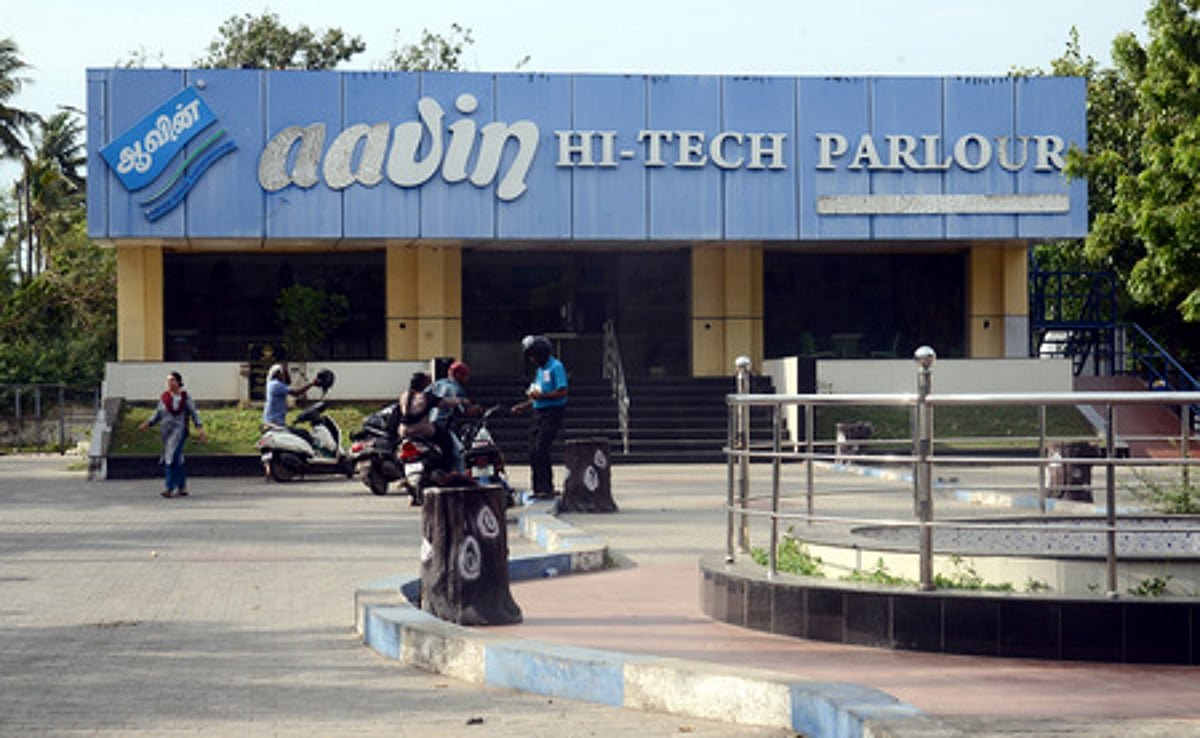
Chennai: Tamil Nadu’s state-owned dairy cooperative Aavin is likely to increase its milk procurement prices by ₹5 per litre for cow milk and ₹7 per litre for buffalo milk, in a move aimed at encouraging dairy farmers to supply more milk and improving procurement levels.
According to reports, the proposed revision would take Aavin’s effective procurement price from the current ₹38 per litre for cow milk to ₹43, while the price for buffalo milk would increase from ₹47 to ₹54 per litre. The current rates include a ₹3 incentive for milk meeting the required quality standards.
The proposed increase comes as Aavin’s daily milk procurement has declined significantly compared with the corresponding period last year.
Aavin’s Milk Procurement Declines
Aavin procured approximately 34.3 lakh litres of milk per day during May–July of the 2025–26 financial year. This fell to around 30.2 lakh litres per day during May–July this year, a decline of about 4.35 lakh litres per day.
The government reportedly aims to increase Aavin’s daily procurement from around 30 lakh litres to approximately 39 lakh litres.
Officials also plan to increase the quantity collected from village milk producers’ cooperative societies. Tamil Nadu has around 9,500 village milk producers’ cooperative societies, and increasing procurement from these societies could help add nearly 9 lakh litres of milk per day to Aavin’s supply over the coming weeks.
Around 3.6 lakh dairy farmers who supply milk to Aavin are expected to benefit from the proposed price revision.
Higher Prices Could Improve Competition for Milk
The proposed increase would bring Aavin’s procurement rates closer to those offered by private dairy companies.
Private dairy companies are currently reported to pay approximately ₹42–₹45 per litre for cow milk and ₹50–₹55 per litre for buffalo milk. The higher Aavin procurement price could therefore improve its competitiveness when sourcing milk from farmers.
Officials have also indicated that the move could encourage private dairy companies to increase their own procurement prices as competition for raw milk intensifies.
Focus on Milk Quality and Adulteration
The procurement-price revision is also expected to address concerns surrounding milk quality.
Aavin officials believe that offering better prices could encourage farmers to supply higher-quality milk and reduce practices such as suspected water mixing.
The issue comes at a time when milk production in some parts of Tamil Nadu has also been affected by weather conditions. In Madurai, for example, Aavin’s daily procurement fell from around 1.7 lakh litres in the first week of July to 1.39 lakh litres by August 5, with farmers citing heat, limited pasture and water shortages as factors affecting cattle productivity.
Impact on Aavin’s Annual Expenditure
The proposed procurement-price increase is expected to add approximately ₹580–₹590 crore to Aavin’s annual expenditure.
However, the government has not yet taken a final decision on whether the higher procurement cost will result in an increase in retail milk prices.
Aavin’s standardised milk is currently sold at ₹44 per litre, while toned milk is priced at ₹40 per litre. The cooperative’s milk remains significantly cheaper than many private dairy brands, with the difference reportedly around ₹20–₹22 per litre for comparable products.
Aavin’s Retail Prices Have Remained Largely Unchanged
Aavin last increased the retail price of standardised and toned milk by ₹6 per litre in August 2019. Following the change of government in May 2021, retail prices were subsequently reduced by ₹3 per litre.
On the procurement side, Aavin last increased the base price in November 2022, when the cow milk procurement price was raised from ₹32 to ₹35 per litre and buffalo milk from ₹41 to ₹44 per litre.
From December 2023, the Tamil Nadu government introduced an additional ₹3 per litre incentive for milk meeting the required quality benchmark of 4% fat and 8% solids-not-fat (SNF). This took the effective procurement prices to ₹38 for cow milk and ₹47 for buffalo milk.
What the Proposed Hike Means for Dairy Farmers
For dairy farmers, the proposed increase could provide some relief amid rising costs of feed, labour, cattle maintenance and other farm inputs.
A higher procurement price may also encourage farmers to continue supplying milk through the cooperative network instead of shifting to private buyers offering more competitive rates.
The proposal comes against a backdrop of increasing pressure on milk producers. In parts of Tamil Nadu, farmers have also reported declining milk yields due to heat and shortages of pasture and water.
Outlook
The proposed procurement-price increase represents an attempt to strengthen Aavin’s milk collection network while improving its competitiveness among dairy farmers.
If implemented, the ₹5–₹7 per litre increase could benefit thousands of milk producers and potentially help Aavin raise procurement towards its target of 39 lakh litres per day.
The key question now is whether the higher procurement cost will eventually be reflected in consumer prices. For Aavin, maintaining affordable milk for consumers while offering competitive returns to farmers will remain an important balancing act.