Higher procurement incentives for farmers trigger retail price increases among independent milk vendors
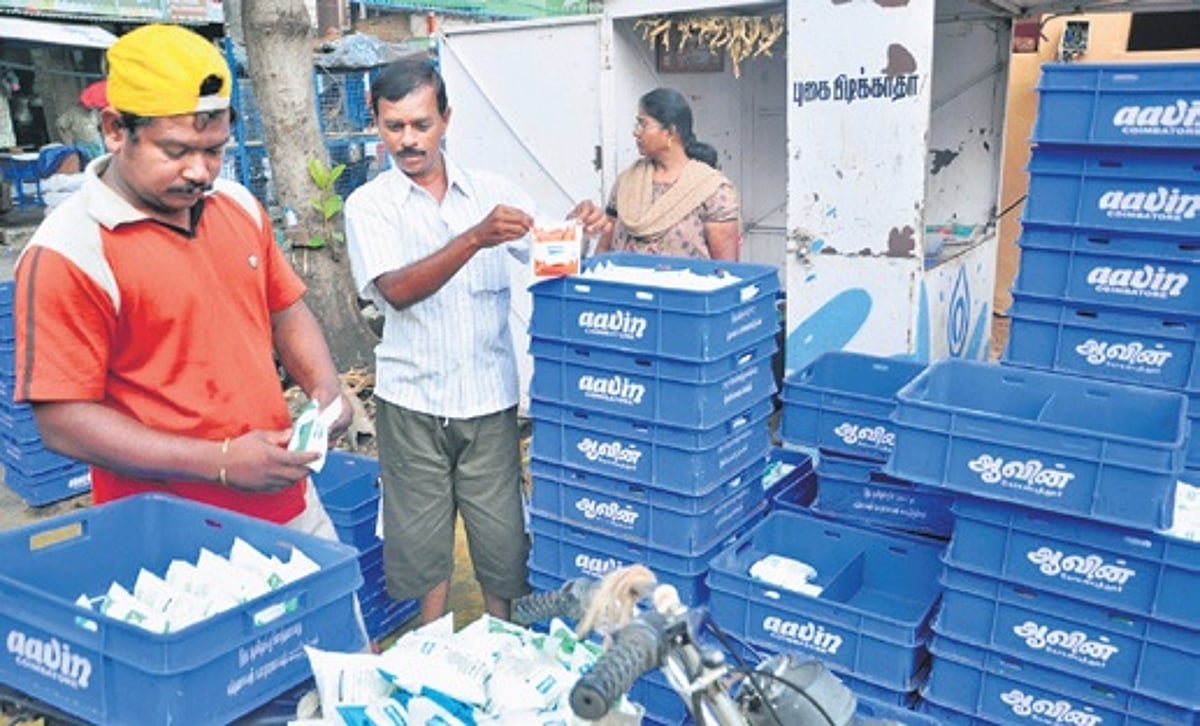
Private milk vendors in Coimbatore have increased their retail prices by Rs 6 to Rs 10 per litre, adding pressure on household budgets as the dairy sector adjusts to higher milk procurement incentives.
The revision follows the government’s decision to increase the incentive available to dairy farmers supplying milk through Aavin cooperative societies. The previous government had already provided an incentive of Rs 3 per litre, while the latest increase is aimed at encouraging more producers to channel their milk through the cooperative network.
Despite the higher incentive, many farmers continue to supply private dairy companies, which currently offer procurement prices ranging between Rs 38 and Rs 48 per litre.
Private Vendors Pass Higher Costs to Consumers
The increase has been particularly visible among households that purchase milk directly from neighbourhood or door-to-door vendors.
Before the latest revision, private vendors in several parts of Coimbatore were charging approximately Rs 60 per litre. Following the increase, some consumers are now paying Rs 66 per litre, while prices in certain localities have reached Rs 70 per litre.
For families purchasing milk every day, even a small increase per litre can significantly affect monthly household expenditure.
One consumer, A Jayanthi, said her doorstep milk vendor informed her that the price would rise by Rs 6 per litre. She purchases one litre every day, meaning her monthly expenditure would increase from around Rs 1,800 to Rs 1,980.
Milk Prices Across Different Channels
| Milk channel | Earlier price | Revised/Reported price |
|---|---|---|
| Aavin society unpackaged milk | Rs 48/litre | Rs 48/litre |
| Private doorstep vendor | Rs 60/litre | Rs 66/litre |
| Some private vendors | Rs 60/litre | Up to Rs 70/litre |
| Private dairy procurement | Rs 38–48/litre | Rs 38–48/litre |
Prices cited in the source report; actual retail prices may vary by locality and supplier.
Government Seeks to Strengthen Aavin Cooperatives
The increase in farmer incentives is intended to make Aavin societies more attractive to milk producers. A larger volume of milk entering the cooperative system could strengthen procurement and improve the availability of milk for processing and distribution.
Aavin, Tamil Nadu’s state-run dairy cooperative network, relies on milk procurement from farmers through cooperative societies. Increasing farmer participation is therefore important for maintaining the cooperative’s procurement base.
However, the continued preference among some producers for private dairy companies highlights the competitive pressure faced by cooperative procurement systems.
Private dairies can offer competitive procurement rates and may provide farmers with alternative marketing channels. The difference between procurement prices, farmer incentives and consumer retail prices also demonstrates the complexity of the dairy value chain.
Impact on Middle-Class Households
The latest retail increases are likely to be felt most directly by middle-class households that purchase fresh milk daily.
A Rs 6 increase for one litre per day adds approximately Rs 180 to a monthly household bill, while a Rs 10 increase adds about Rs 300 per month.
For households purchasing multiple litres each day, the additional expense would be considerably higher.
The impact could also extend beyond drinking milk. Higher raw milk prices can influence the costs of products such as curd, paneer, sweets and other dairy-based foods, depending on how suppliers adjust their margins.
Procurement Incentives Versus Retail Prices
The developments in Coimbatore underline a broader challenge for dairy policymakers: ensuring that higher milk prices benefit producers without placing excessive pressure on consumers.
The government’s incentive programme seeks to encourage farmers to supply Aavin societies and strengthen the cooperative dairy system. However, the continued presence of private buyers means farmers can compare procurement prices and choose the channel that provides the most attractive return.
For consumers, meanwhile, the growing gap between cooperative and private retail channels can influence purchasing decisions.
The latest price revision therefore reflects more than a simple increase in the cost of milk. It highlights the interconnected relationship between farmer procurement prices, cooperative incentives, private dairy competition and household food expenditure.
As Tamil Nadu seeks to strengthen its dairy cooperative network, the ability to balance farmer incomes, cooperative competitiveness and affordable consumer prices will remain an important issue for the sector.