Ash Grove Dairy project turns manure from 2,000 cows into pipeline-ready fuel
A dairy farm in rural Minnesota is transforming livestock waste into renewable natural gas (RNG), demonstrating how dairy operations can combine waste management, renewable energy production and additional farm revenue.
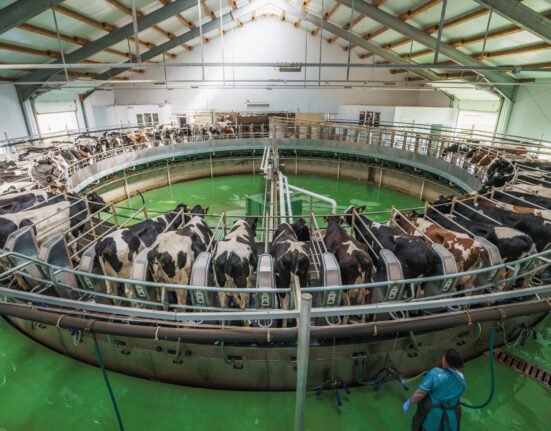
The renewable gas facility at Ash Grove Dairy near Lake Benton processes manure from more than 2,000 milking cows. The project can handle up to 60,000 gallons of manure each day and is expected to produce approximately 480,000 gasoline-gallon equivalents of renewable fuel annually at full capacity.
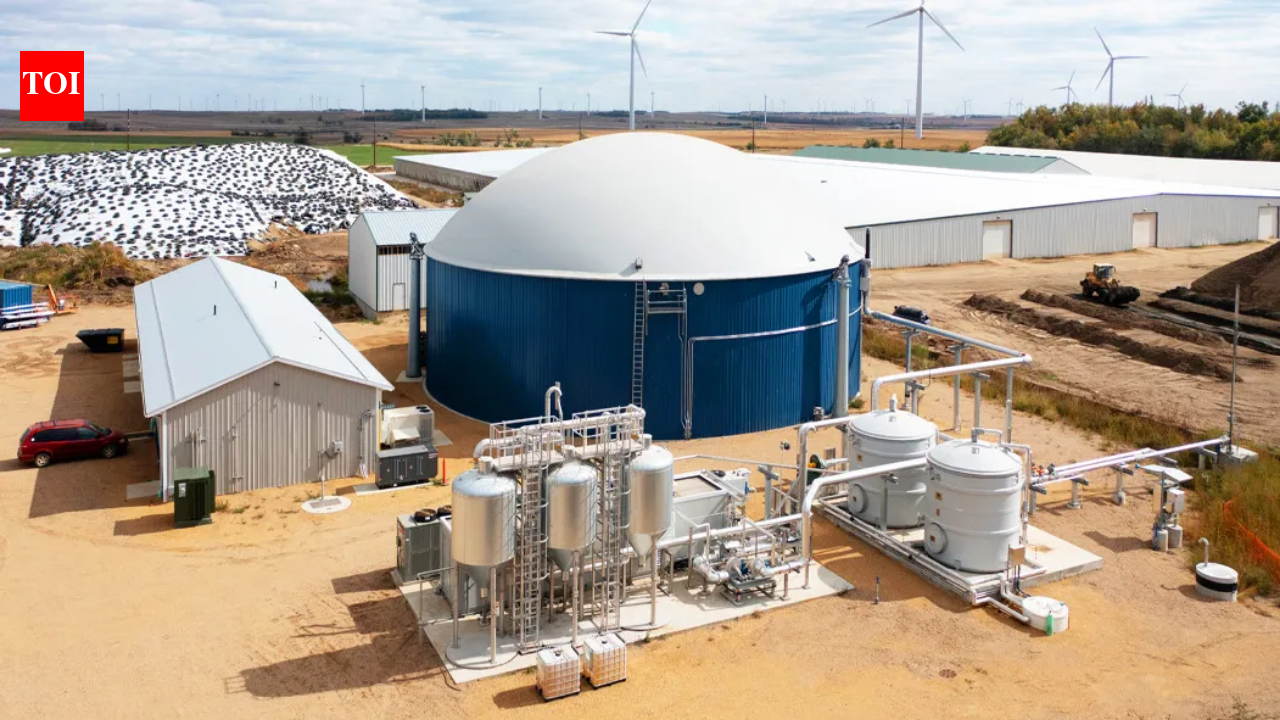
The facility was developed by Dynamic Renewables and supported through a US$22 million joint venture led by Clean Energy Fuels Corp. The plant has now connected to the interstate natural gas pipeline network, allowing the upgraded biomethane to enter commercial fuel infrastructure.
From dairy manure to pipeline-ready biomethane
Dairy manure naturally produces methane as it decomposes. Instead of allowing much of this methane to escape into the atmosphere, the Ash Grove facility captures it through anaerobic digestion.
Manure collected from the dairy is pumped into sealed digesters where microorganisms break down the organic material without oxygen. The resulting biogas contains methane along with water, carbon dioxide, hydrogen sulphide and other impurities.
The facility cleans and upgrades this biogas to produce biomethane with properties comparable to conventional natural gas. The renewable gas is then compressed and injected into the commercial pipeline network.
| Project Feature | Details |
|---|---|
| Location | Ash Grove Dairy, Minnesota, US |
| Dairy herd | More than 2,000 milking cows |
| Manure processed | Up to 60,000 gallons/day |
| Annual fuel potential | Around 480,000 gasoline-gallon equivalents |
| Project developer | Dynamic Renewables |
| Joint-venture investment | US$22 million |
| Fuel type | Renewable natural gas |
| Distribution | Interstate natural gas pipeline |
Supporting lower-carbon transportation
The renewable gas will be supplied through Clean Energy Fuels’ network, which serves commercial transportation customers including transit operators, municipal fleets and long-haul vehicles.
The Ash Grove project is reportedly the fifth RNG facility brought online by Clean Energy Fuels within nine months, highlighting growing interest in renewable gas as an alternative fuel for heavy-duty transportation.
RNG derived from dairy manure can achieve particularly low, and in some regulatory frameworks negative, lifecycle carbon-intensity scores because the process captures methane that otherwise could have entered the atmosphere.
Clean Energy Fuels senior vice president Clay Corbus said the company expects the facility’s RNG production to help reduce transportation-related carbon emissions as demand for lower-carbon fuels grows.
Creating value from dairy waste
Beyond its environmental benefits, anaerobic digestion can create economic opportunities for dairy farms. Converting manure into RNG provides another potential revenue stream while improving manure management.
The digestion process also leaves behind digestate, which can be separated into solid and liquid components. Solids may be reused as animal bedding or processed into soil amendments, while the liquid fraction can be applied to agricultural land as a fertiliser.
This creates a circular model in which manure from dairy production becomes both an energy resource and an agricultural input.
A model for sustainable dairy production
The Minnesota project illustrates the increasing connection between dairy farming, renewable energy and climate-focused agriculture. Rather than treating manure solely as a waste-management challenge, farms can use anaerobic digestion to recover methane and create commercially valuable energy.
For dairy producers, such projects could offer a combination of environmental benefits, improved nutrient management and diversified income. For energy and transportation companies, agricultural waste provides a locally generated source of renewable fuel.
As demand for lower-carbon transportation fuels increases, dairy manure-based RNG could become an increasingly important part of the renewable energy landscape, particularly in regions with large concentrations of livestock.
The Ash Grove facility therefore represents more than a renewable fuel project: it demonstrates how dairy farms can integrate waste management, energy production and agricultural resource recovery into a single circular production system.