₹10 Starting Price Signals Aggressive FMCG Expansion Strategy
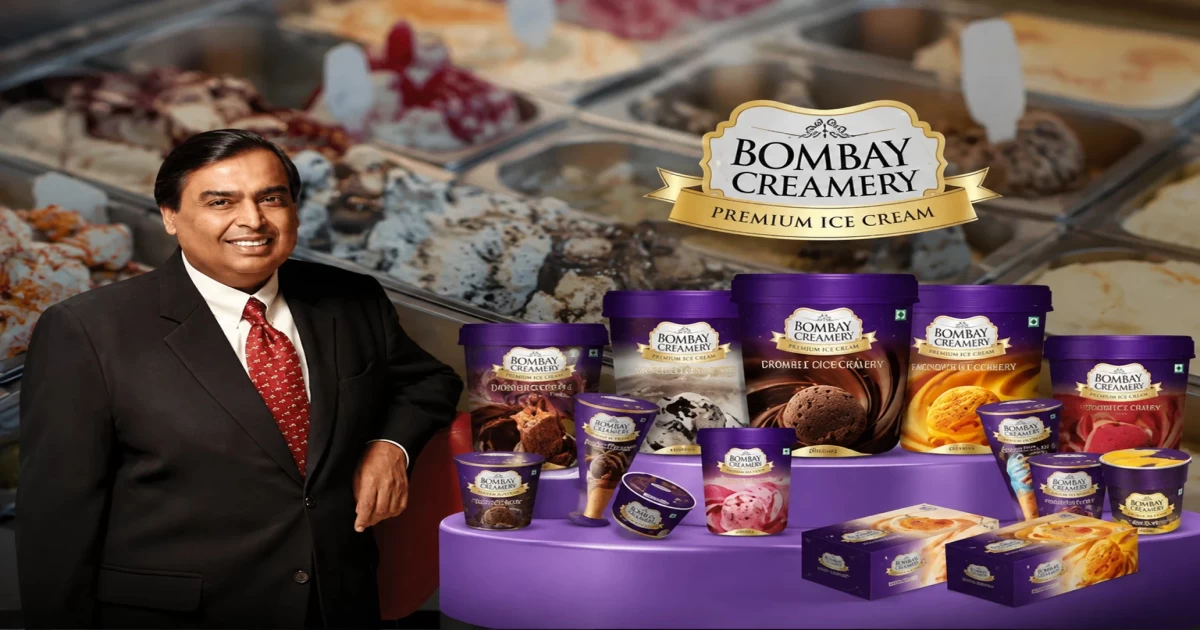
Reliance Consumer Products Limited (RCPL), the FMCG arm of Reliance Industries, has entered India’s growing ice-cream market with the launch of Bombay Creamery. Positioned as an accessible premium dairy-ice-cream brand, Bombay Creamery is made with real dairy cream and offers products starting at ₹10.
The brand was launched on September 1, with the initial rollout focused on western India. Reliance plans to expand the brand across the country in subsequent phases. Its product range includes cups, cones, tubs, bars and sticks, allowing the company to target both impulse purchases and family consumption.
The ₹10 entry price is central to Reliance’s strategy. It reflects the company’s broader approach of entering large consumer categories with competitive pricing, leveraging scale and distribution, and gradually encouraging customers to explore a wider portfolio of products.
India’s Ice-Cream Market Offers Significant Growth
India’s ice-cream industry is expanding beyond its traditional image as a seasonal indulgence. Rising disposable incomes, urbanisation, improved cold-chain infrastructure and changing consumption habits are encouraging consumers to purchase ice cream more frequently throughout the year.
One market estimate values India’s ice-cream industry at approximately ₹27,166 crore in 2026 and projects it to reach nearly ₹63,941 crore by 2034. Although market studies differ in their definitions and estimates, the overall outlook remains positive.
The category also benefits from rising individual consumption. Consumers are increasingly purchasing single-serve products for personal indulgence instead of limiting ice-cream purchases to family occasions. This creates opportunities across multiple price points, formats and consumption occasions.
For Reliance, ice cream is attractive because it combines high visibility, frequent consumption and a broad product ladder—from low-priced impulse products to premium flavours, tubs and family packs.
A Fragmented Competitive Landscape
Reliance is entering a market that is not dominated by one national brand. India’s ice-cream sector includes national companies, powerful regional players, premium brands and digital-first businesses.
Amul remains one of the strongest names in the category, supported by extensive distribution and consumer trust. Kwality Wall’s has a significant presence in the organised market, while Vadilal and Havmor have developed strong positions through their western Indian roots.
Mother Dairy is an important player in northern India, while Arun has a strong presence in the south. Naturals has built a premium identity around fruit-based ice creams. Hocco has also emerged as an ambitious challenger, expanding beyond its western India base.
Newer brands such as Go Zero are targeting consumers seeking differentiated, health-oriented and premium products. International brands, including Baskin-Robbins, continue to operate at the higher end of the market.
This diversity gives consumers a wide range of choices, including mass-market dairy ice creams, regional favourites, premium products, fruit-based offerings, impulse formats and health-conscious alternatives.
Why the ₹10 Price Point Matters
The ₹10 starting price could help Bombay Creamery attract first-time buyers in a category driven heavily by impulse consumption. A low entry price can encourage consumers to try a new brand without making a significant financial commitment.
The move also reflects Reliance’s recent strategy in other consumer categories. Its beverage brand Campa reportedly crossed ₹4,700 crore in gross sales in FY26, while the Independence brand recorded sales of ₹2,600 crore. RCPL has also been targeting a major expansion of its consumer-products business, with revenue reaching ₹22,000 crore in FY26.
The initial product may serve as an entry point, but the larger opportunity lies in moving customers towards premium flavours, cones, bars, tubs and family packs. Therefore, the immediate competition may focus on pricing, while the long-term contest will involve taste, innovation, availability and brand loyalty.
Distribution Could Be Reliance’s Key Advantage
Producing ice cream is only one part of the business. Maintaining product quality, ensuring availability and managing temperature-sensitive distribution across thousands of outlets are more complex challenges.
Reliance’s existing ecosystem could provide an advantage. The company has a large physical retail network, access to modern trade, an expanding FMCG distribution system and a growing digital-commerce presence.
Ice cream is particularly suited to impulse-led retail and quick commerce. Consumers can now order frozen products when a craving arises and receive them within minutes. This has changed ice cream from a product purchased mainly during supermarket visits into an immediate-consumption category.
Reliance’s retail outlets, freezer placements, distribution infrastructure and digital channels could help Bombay Creamery reach consumers more efficiently. However, maintaining cold-chain consistency will remain essential to protecting product quality and customer experience.
Established Brands Remain Strong
Reliance’s entry does not automatically weaken existing players. Established brands possess decades of consumer familiarity, regional loyalty and manufacturing experience.
Amul benefits from strong trust and extensive distribution. Vadilal and Havmor have deep regional connections, while Kwality Wall’s has a recognised portfolio of impulse products. Mother Dairy remains influential in northern India, and Naturals has developed a distinct premium identity that cannot be replicated through pricing alone.
Regional challengers such as Hocco are also expanding their manufacturing and distribution capabilities. This means Reliance will compete not only against large national companies but also against agile regional brands with strong local relationships.
A New Test for Reliance’s Consumer Ambitions
Bombay Creamery fits into Reliance’s wider plan to build a large FMCG business covering beverages, packaged foods, staples, personal care and household products.
Ice cream offers the company a category with multiple price points, frequent consumption occasions and strong potential across retail and digital channels. It also allows Reliance to use its integrated ecosystem of stores, distribution networks and quick-commerce platforms.
The brand’s long-term success will depend on more than its ₹10 price point. Reliance will need to deliver consistent taste, reliable availability, product innovation and strong consumer engagement.
Bombay Creamery may not immediately displace established names such as Amul, Vadilal or Havmor. However, it could become an important test of whether Reliance can replicate its aggressive pricing and distribution-led strategy in a category where regional loyalty, cold-chain economics and product quality are critical.
For consumers, the entry could bring more choices and sharper competition. For established brands, it signals that a major new challenger has entered India’s ice-cream market.
Source: Bureaucrats India