In under a year, ten farmer-run Rural Marts have reached more than 7,250 smallholder dairy farmers across Tamil Nadu. The model combines local access to quality inputs with advisory and veterinary services, while demonstrating the potential for a viable rural enterprise.
Ask a smallholder dairy farmer in rural Tamil Nadu what often stands between a healthy, high-yielding animal and one that merely gets by, and the answer may come down to access. India’s dairy economy rests on the shoulders of roughly 80 million smallholder farmers, but quality cattle feed, mineral mixtures, veterinary care and reliable technical advice are not always available close to the farm, or at a price and frequency that farmers can easily manage.
When the right inputs and services are difficult to access, farmers tend to depend on what is locally available. This can affect animal health, milk productivity and ultimately household income.
Bridging this gap between scientific recommendations and what farmers can access locally is the idea behind the Rural Mart model.
Since September 2025, an initiative led by Kumaraguru Institutions, with support from the National Dairy Development Board (NDDB) and the Environmental Defense Fund (EDF), has established ten Rural Marts across seven regions of Tamil Nadu. In less than a year, the network has reached more than 7,250 farmers and recorded combined monthly turnover of over INR 24 lakh. Farmer footfall has also increased substantially during the period.
The underlying proposition is straightforward: improving dairy productivity requires more than knowledge. Farmers also need convenient access to quality inputs, services and practical advice. Rural Marts attempt to bring these elements together at the village level.
More Than a Feed Shop
A Rural Mart differs from a conventional input outlet by combining retail with services and advisory support. Each mart is operated by a trained local entrepreneur, creating a model in which farmers can access several requirements from a single, familiar point.
Inputs: Quality cattle feed, nutritional supplements, mineral mixtures and essential animal-health products are stocked locally, reducing the need for farmers to travel to distant towns.
Services: Doorstep delivery is offered, while equipment such as chaff cutters, cow mats and milking machines provides farmers with access to basic mechanisation.
Advisory: Entrepreneurs, supported by visiting experts, provide guidance on feeding, animal health and ways to improve milk productivity.
Training: Animal health camps and veterinarian-led sessions provide farmers with practical information on why particular interventions are required, rather than simply promoting a product.
This combination is important because the value of the model extends beyond a retail transaction. A farmer visiting to purchase feed may also seek advice about a sick calf, mineral supplementation or feeding a recently calved animal. Repeated interactions can gradually build trust and encourage farmers to adopt improved practices.
The model is particularly relevant for peri-urban dairy farmers, who may be geographically close to cities but still have limited access to specialised dairy advisory services. Since Rural Mart entrepreneurs have themselves adopted several of the recommended practices on their farms, their advice is based on practical experience. This farmer-to-farmer credibility can help accelerate the adoption of new practices.
The Economics of a Rural Mart
The strongest case for the model may ultimately come from its economics.
Experience from the Pariyur Rural Mart in Erode indicates that the initial investment required to establish a mart can be relatively modest, potentially making the model suitable for government- or institution-supported rural entrepreneurship programmes.
| Setting Up a Rural Mart | |
| Fixed assets (shop advance, laptop, | |
| printer, furniture) | 2,00,000 |
| Initial working capital | 5,00,000 |
| Total initial investment | 7,00,000 |
An initial investment of approximately ₹7 lakh was sufficient to establish the Pariyur mart, including basic infrastructure and working capital.
Six months into operation, the mart recorded monthly revenue of ₹5,91,302 against monthly costs of ₹5,44,004. Product procurement accounted for the overwhelming share of expenditure at ₹5,34,731, while rent was ₹8,000 and electricity costs ₹1,273.
The resulting monthly surplus of ₹47,298 represents a margin of approximately 8–10%. While this is not a high-margin retail business, the figures demonstrate the potential for a viable rural enterprise, particularly as sales volumes increase.
The model also provides an opportunity to combine commercial activity with essential animal-health and advisory services at the local level.
“Farmers respond when quality inputs, fair pricing and genuine advice are available close to home, delivered by someone from their own community.”
What Farmers Are Buying
The day-to-day operations of a Rural Mart also provide insights into farmers’ purchasing behaviour.
| Pariyur Rural Mart – Monthly Snapshot | |
| Total Monthly Revenue | 5,91,302 |
| Total Monthly Cost | 5,44,004 |
| Monthly Net Profit | 47,298 |
| Approx. Operating Margin | 8-10% |
| Service Radius | 5-7 km |
High-volume products such as commercial pellet cattle feed, rice bran, cattle mash feed, wheat bran and cottonseed-based feed ingredients form the backbone of regular sales. Mineral mixtures, calcium supplements, animal-health products and dairy equipment typically move in smaller volumes but can contribute more significantly to margins. Demand for some of these products increases following veterinary camps and awareness programmes.
Several patterns have emerged:
- Farmers often prefer raw materials such as rice bran, broken wheat, broken rice and oilcakes because they are cheaper and allow them to formulate their own feed mixtures.
- Doorstep delivery can be an important factor, particularly for farmers who would otherwise need to travel to distant markets.
- Purchases are largely need-based and monthly, while buying frequency can increase as farmers develop confidence in the service.
- Visible improvements in milk yield or animal health can encourage repeat purchases and farmer-to-farmer referrals.
- Price remains a major consideration. For example, when commercial feed prices increased from ₹1,300 to ₹1,500, sales volumes declined and some farmers changed brands.
- Recommendations from veterinarians and extension personnel often carry greater influence than direct product promotion.
These patterns suggest that the Rural Mart’s role is not simply to make products available, but to help farmers make better purchasing and management decisions.
Taking Services Beyond the Counter
The Rural Mart model also extends beyond the shop. Entrepreneurs organise animal-health camps and product demonstrations in villages, creating opportunities to reach farmers who may not regularly visit the outlet.
 More than 20 animal-health camps have been conducted across the network, alongside participation in events such as dairy conferences, startup programmes, agricultural exhibitions and Agri Intex 2026. A quarterly Rural Mart Business Development Meeting is also being used to coordinate activities and share learning across the network.
At the same time, entrepreneurs are being trained to strengthen their technical capabilities. Training has included the use of Rumen8 scientific feed-planning software, silage management, dairy equipment, and advanced dairy nutrition. Programmes have also involved organisations and experts with experience in dairy technology, equipment and sustainable agriculture.
This continuing capacity building is important because the entrepreneur behind a Rural Mart is expected to perform a role that goes beyond conventional retail. The objective is to develop a local last-mile resource for dairy farmers—one that combines access to products with practical knowledge and services.
If the model can maintain both farmer trust and commercial viability, Rural Marts could offer a scalable approach to strengthening the last mile of India’s dairy input and service delivery system.
The Policy Case for Going National
Unlike a conventional input shop, a Rural Mart combines commercial activity with extension services, farmer advisory and community outreach. It functions as a village-level service centre, bringing together inputs, technical guidance and animal-health support that are often fragmented across conventional supply and extension channels.
The model also intersects with several existing policy priorities, including rural entrepreneurship and self-employment, strengthening of the dairy value chain, Farmer Producer Organisations (FPOs), livestock extension, climate-smart dairy development, and greater participation of women and youth in rural enterprises. Its relevance may be particularly strong in underserved rural and peri-urban areas where access to specialised dairy services remains limited.
The Tamil Nadu experience points to several potential levers for scaling the model:
- Capital support: Loan assistance of around ₹5 lakh per Rural Mart, potentially supported by a 30% subsidy under suitable entrepreneurship or rural livelihood schemes.
- Working capital support: Assistance of around ₹2 lakh during the initial establishment phase, when procurement and inventory requirements can be relatively high compared with early turnover.
- Scheme convergence: Linkages with Animal Husbandry and Dairy Development departments, the National Livestock Mission, FPO promotion initiatives and State Rural Livelihood Missions could help integrate Rural Marts with existing programmes.
- Entrepreneur capacity building: Two to three weeks of structured training covering business management, dairy advisory, scientific feed planning and climate-smart livestock practices can help entrepreneurs deliver both commercial and extension services.
- Industry partnerships: Collaboration with dairy cooperatives, private dairy companies and input manufacturers could strengthen supply chains, improve product availability and potentially help stabilise input prices.
- Targeted replication: Priority could be given to peri-urban clusters and rural areas with high concentrations of dairy farmers but relatively limited access to organised input and advisory services.
What Scaling Would Take
The Rural Mart experience suggests that a relatively modest initial investment can support a rural enterprise that combines the sale of dairy inputs with advisory, animal-health and extension services. However, the case for wider replication should be built not only on turnover and farmer reach, but also on independently verifiable profitability and operating performance.
Across the ten marts, farmer reach has reportedly increased four-fold within five months, while average monthly turnover per mart is currently in the range of ₹4–6 lakh. Reported net margins across the marts are around 8–10%.
The experience also points to a consistent behavioural pattern: farmers are more likely to adopt and continue using products and practices when quality inputs, fair pricing and credible advice are available close to their farms and are delivered by a trusted member of the local community.
As the model expands beyond Tamil Nadu, maintaining this local and farmer-oriented character will be as important as achieving scale. At the same time, systematic collection of data on operating costs, margins, farmer retention, service utilisation and productivity outcomes will be essential.
If these indicators continue to demonstrate commercial viability and measurable benefits for farmers, the Rural Mart model could offer a practical framework for strengthening the last mile of dairy input and service delivery. Its larger potential lies not simply in creating more retail outlets, but in developing locally anchored service centres that connect farmers with quality inputs, knowledge, technology and animal-health support.
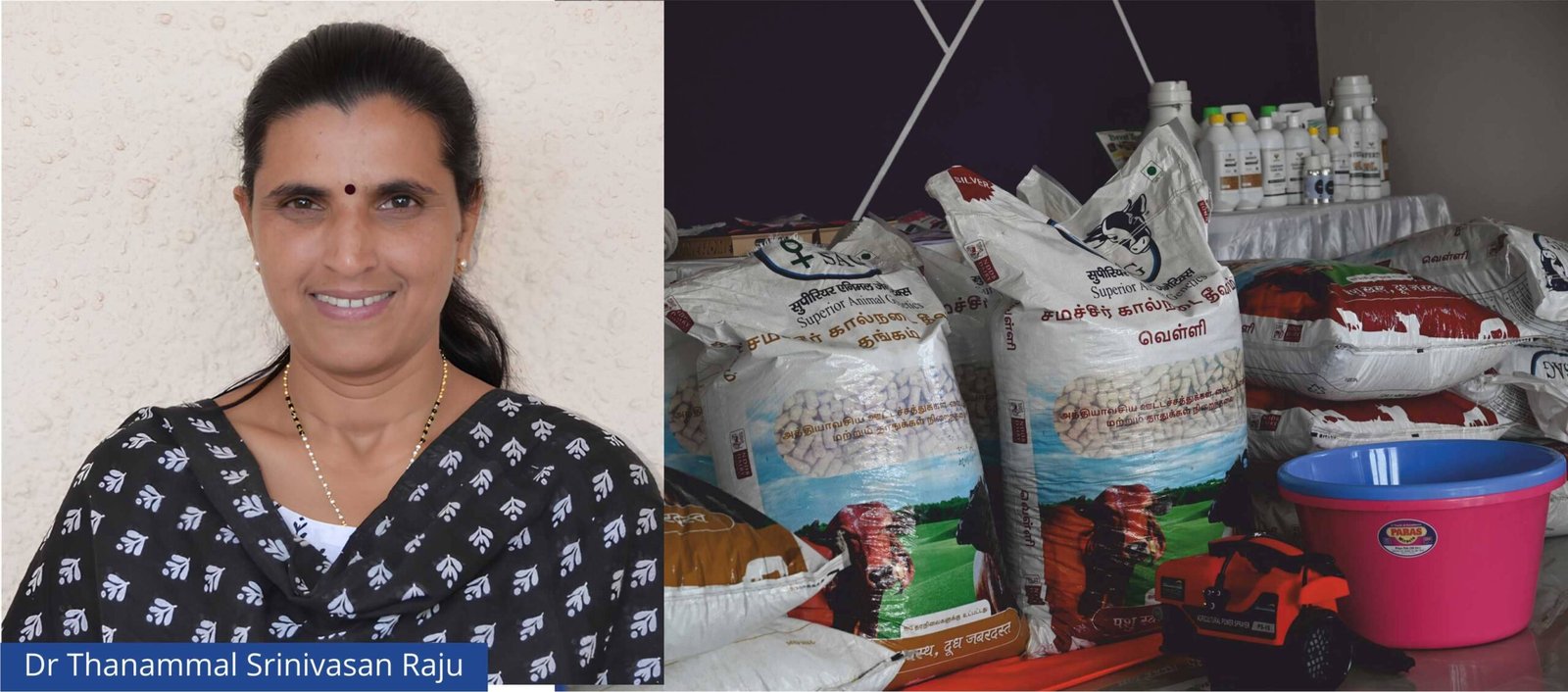
By Dr Thanammal Srinivasan Raju, Kumaraguru Institutions