Dairy farmers in Maharashtra’s Washim district are facing severe financial pressure as deficient rainfall has triggered an acute shortage of fodder and water across parts of Vidarbha. The crisis is threatening livestock businesses and forcing farmers to consider difficult decisions, including selling productive animals to reduce the cost of maintaining their herds.
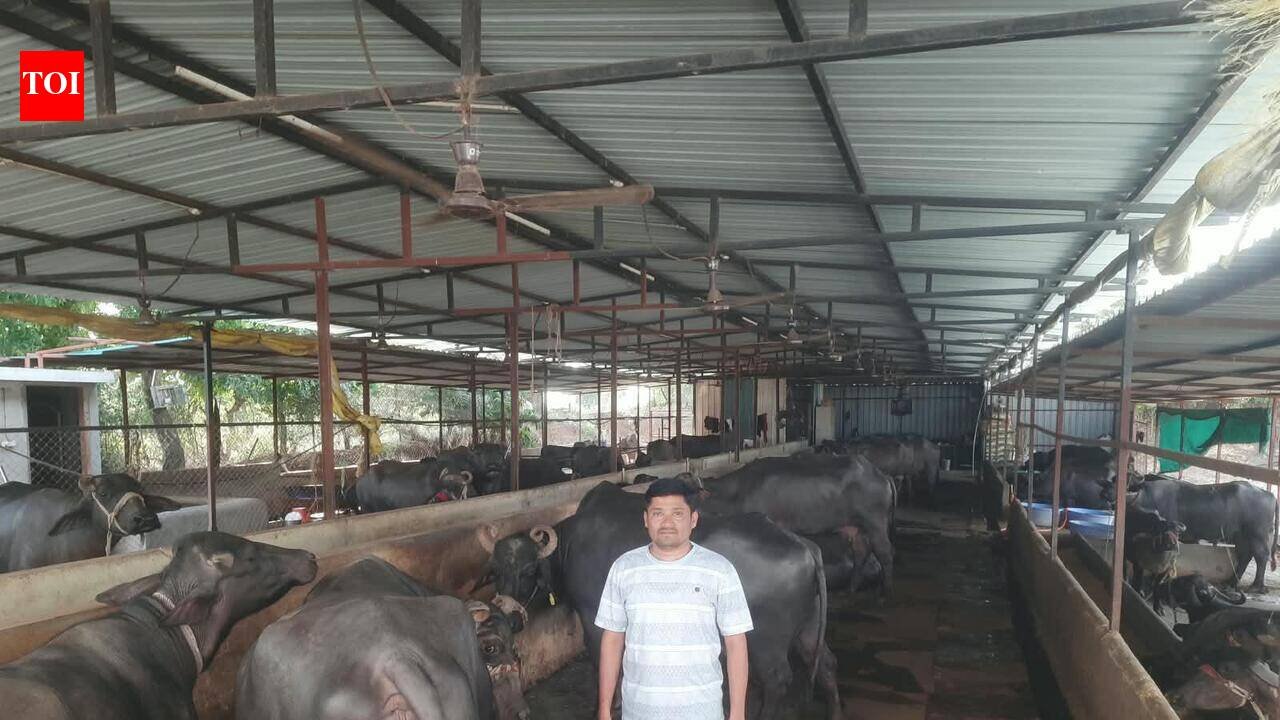
One such farmer is Sharad More from Shendurjana (More) village in Mangrulpir taluka. More has been considering selling nearly 50 buffaloes because of the growing difficulty of securing sufficient fodder and water. His dairy enterprise, established as a supplementary source of income alongside agriculture, has now become increasingly difficult to sustain.
More started his dairy business three years ago after recognizing the growing uncertainty associated with farming. Holding MA and BEd degrees, he had initially sought to diversify his livelihood while also creating employment opportunities for local villagers. The dairy operation gradually expanded and currently comprises 52 buffaloes.
The herd produces more than 200 litres of milk every day and supports the livelihoods of approximately five to six families. However, the shortage of essential resources has placed the entire operation under severe strain.
Rainfall Deficit Drives Fodder Shortage
Inadequate rainfall during the current kharif season has contributed significantly to the shortage of livestock feed in the region. The failure of the rabi jowar crop to meet expectations has compounded the problem, reducing the availability of locally produced fodder and contributing to higher prices.
For dairy farmers, the availability and affordability of feed are critical to maintaining milk production. When fodder prices rise sharply, farmers face higher daily operating expenses at a time when their ability to generate additional income may already be constrained.
More’s dairy farm is particularly vulnerable because of the size of his herd. Each buffalo requires approximately 5–6 kg of cottonseed cake every day, adding substantially to the farm’s feed requirements. Maintaining the nutritional needs of more than 50 buffaloes during a fodder shortage has become increasingly challenging.
Water Crisis Adds to Farmers’ Problems
The fodder shortage has been accompanied by an equally serious water crisis. The well on More’s farm has dried up, making it difficult to meet the daily water requirements of his livestock.
Each buffalo requires around 60–70 litres of water per day. For a herd of 52 buffaloes, this translates into approximately 3,120–3,640 litres of water every day, illustrating the scale of the challenge facing the farm.
The combination of inadequate water and expensive fodder is putting pressure on the farm’s financial sustainability. More’s buffaloes are estimated to have a market value of around Rs 1.25 lakh to Rs 1.5 lakh each, meaning that selling the herd would involve a significant loss of productive capacity as well as a major change in the family’s livelihood.
Farmer Seeks Government Intervention
More has approached the animal husbandry department seeking assistance to overcome the crisis. He has warned that without government intervention, the dairy business could eventually be forced to close.
The potential closure would affect not only More’s household but also the five to six families whose livelihoods are supported by the enterprise. The situation highlights the wider vulnerability of livestock-based rural businesses to weather-related disruptions.
Dairy farming is often used by agricultural households as a means of diversifying income and reducing dependence on crop production. However, the Washim situation demonstrates that dairy operations themselves remain heavily dependent on reliable access to water and affordable feed.
Need for Fodder and Water Support
The crisis underscores the importance of timely interventions during periods of rainfall deficiency. Support measures such as fodder availability programs, affordable feed supplies, livestock water arrangements and assistance through animal husbandry departments could help farmers protect their herds.
For farmers like More, maintaining the buffaloes is not simply a question of protecting livestock assets. The dairy enterprise provides regular milk production and supports several rural families. Without adequate support, prolonged shortages could force farmers to sell animals, reduce herd sizes or discontinue dairy operations altogether.
The situation in Washim therefore highlights a broader challenge for India’s dairy sector: ensuring that small and medium-sized livestock enterprises can remain economically viable when drought-like conditions disrupt the basic resources required for milk production.