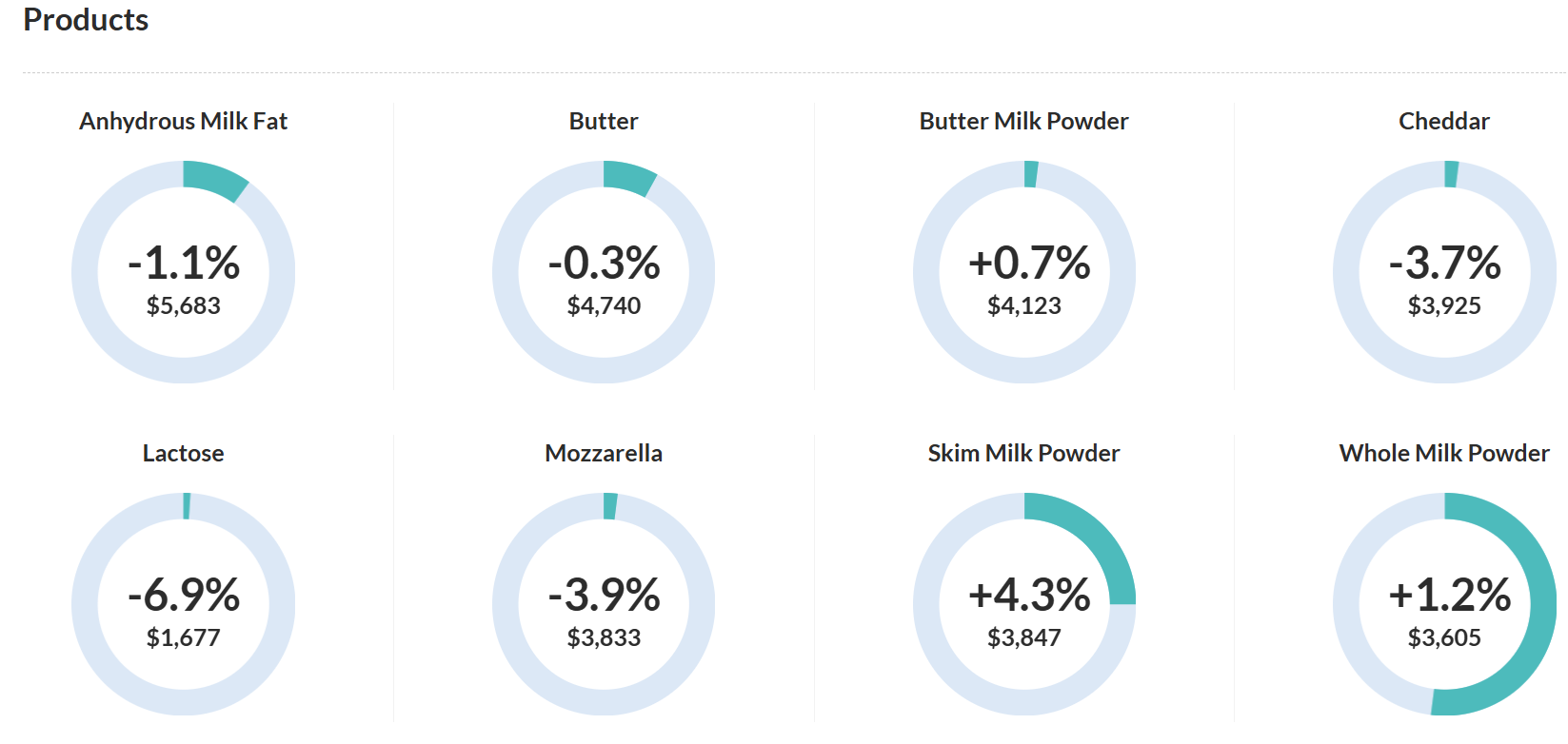
The Global Dairy Trade (GDT) market recorded a 1.2% increase in its latest trading event, providing a positive signal for international dairy markets and raising expectations about the direction of global milk prices.
The latest movement comes as dairy markets continue to be influenced by production levels in major exporting countries, demand from Asian markets and changes in production costs. For dairy farmers, processors and exporters, GDT results remain an important indicator of international market conditions.
Strong Buying Interest at Latest Event
The latest GDT event saw sellers make between 38,210 tonnes and 45,165 tonnes of dairy products available for purchase. A total of 41,692 tonnes was ultimately sold.
The volume sold was within the range offered by sellers and above the midpoint between the minimum and maximum quantities available. This indicates firm buying interest during much of the trading event.
| GDT Trading Indicator | Volume |
|---|---|
| Minimum volume offered | 38,210 tonnes |
| Maximum volume offered | 45,165 tonnes |
| Volume sold | 41,692 tonnes |
| GDT index movement | +1.2% |
The combination of an increase in the GDT index and a relatively strong volume of products sold provides a positive signal for the global dairy market.
Importance for Dairy Producers
GDT results extend beyond the auction itself. International dairy prices can influence expectations among dairy farmers, processors and exporters in major milk-producing and exporting regions.
Higher international prices can improve market sentiment for producers and potentially provide greater support for farmgate milk prices, depending on local market conditions, currency movements, processing costs and the product mix of individual dairy companies.
For dairy processors, international auction prices can also influence decisions about how milk is allocated among products and markets. Changes in prices for globally traded dairy commodities can affect export strategies and sales contracts.
Consumers can also be indirectly affected. International dairy prices may eventually influence wholesale and retail prices in some markets, although the timing and extent of such changes depend on domestic supply chains and other market factors.
Outlook for Global Dairy Markets
The 1.2% increase will now be closely watched at upcoming GDT events to determine whether the latest recovery represents the beginning of a sustained upward trend or a temporary market movement.
Production in the world’s major dairy-exporting countries will remain a key factor. Changes in milk availability can affect the amount of dairy products entering international markets and consequently influence prices.
Demand from Asia will also remain important. Asian countries are major destinations for internationally traded dairy products, meaning changes in purchasing activity can have a significant impact on global dairy markets.
Production costs are another important consideration. Higher feed, energy, labor and other farm and processing expenses can influence producer margins and the prices required to maintain profitable operations.
Implications for the Dairy Sector
The latest GDT result offers a cautiously positive signal for dairy producers and exporters. The 1.2% increase, combined with the volume sold during the event, suggests that buying interest remained relatively strong.
However, the longer-term direction of dairy prices will depend on how supply and demand develop in the coming months. A sustained increase in international dairy prices could strengthen expectations for milk prices in producing regions, while increased production or weaker demand could limit further gains.
For countries such as Argentina, where international dairy prices influence export opportunities and market expectations, future GDT results will remain an important indicator.
The next auctions will therefore be closely monitored by farmers, processors, exporters and dairy market participants. Whether the latest 1.2% increase develops into a broader upward trend will depend largely on global milk production, Asian demand and the evolution of production costs.