The global automatic feeding market is experiencing significant growth as dairy farms and livestock producers increasingly adopt robotics, sensors and digital technologies to improve feeding efficiency, animal nutrition and farm productivity. According to the market report published on October 9, 2026, the market was valued at USD 7.9 billion in 2025 and is projected to reach USD 38 billion by 2035, registering a compound annual growth rate (CAGR) of 17% between 2026 and 2035.
Automatic feeding systems are transforming traditional livestock management by automating feed preparation, weighing, transportation and distribution. These technologies are particularly relevant to the dairy industry, where maintaining consistent feed availability and balanced nutrition is essential for milk production, animal health and operational efficiency.
Dairy Farms Drive Demand for Automated Feeding Technologies
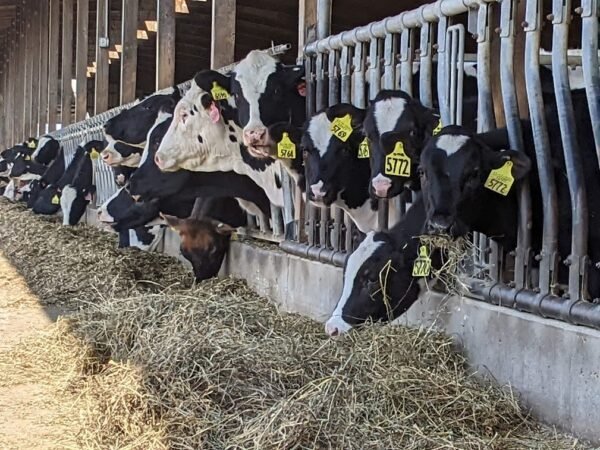
Dairy farms require regular delivery of balanced rations to support milk-producing cattle throughout their production cycles. Conventional feeding practices can involve substantial manual labour, particularly on farms managing large herds and multiple nutritional groups.
Automatic feeding systems, including rail-guided feeders, conveyor-based equipment, self-propelled robots and electronic feeding units, help farmers distribute feed more consistently while reducing repetitive work.
The market report indicates that rail-guided feeding systems accounted for 38% of the market in 2025. Hardware represented more than 61% of the market, reflecting demand for physical equipment such as feeding robots, sensors, weighing systems, controllers and distribution machinery.
Ruminants, including dairy and beef cattle, accounted for more than 44% of the market. Their substantial feed requirements make cattle operations an important application area for automated feeding technologies.
North America Leads as Asia Pacific Presents Growth Opportunities
North America led the automatic feeding market in 2025, accounting for a reported 35% share, equivalent to USD 2.7 billion. Large commercial dairy, beef and swine operations support demand for feeding robots, conveyors and connected farm-management systems.
The United States had approximately 9.57 million milk cows as of January 1, 2026, according to the USDA figures cited in the report. The scale of its dairy sector creates opportunities for technologies that improve feed distribution and reduce labour requirements.
Asia Pacific is identified as the fastest-growing regional market. Expanding commercial livestock production, modernisation of dairy farms and increasing interest in digital agriculture are supporting demand for automated solutions.
For dairy producers across India and other Asian markets, automatic feeding equipment could help address labour constraints, improve feeding consistency and support larger commercial operations. However, adoption will depend on equipment affordability, farm size, infrastructure and access to technical support.
Robotics and Precision Feeding Reshape Dairy Management
Robotics and telemetry accounted for a reported 43% share of the automatic feeding market in 2025. Connected systems increasingly combine sensors, automated machinery, telemetry and livestock-management software to improve control over daily feeding operations.
Autonomous feeding robots can mix, transport and distribute total mixed rations with limited manual intervention. Feed pushers can also bring existing feed closer to cattle, helping maintain access between scheduled deliveries.
Precision feeding represents another important development. Electronic identification, including radio-frequency identification (RFID), can connect individual animals with feeding records and support more detailed nutritional management.
Artificial intelligence and sensor-based monitoring may further help farmers adjust feeding strategies according to livestock activity, growth and nutritional requirements. These capabilities could support more efficient feed utilisation, although results depend on system performance and farm management.
The broader benefits of farm automation are also reflected in research cited in the report. A January 2026 USDA Economic Research Service study found that robotic milking or adoption of at least two precision dairy technologies increased average dairy farm net returns by 13%. This finding relates to dairy automation more broadly and should not be interpreted as the direct financial impact of automatic feeding equipment alone.
Investment Costs Remain a Challenge
Despite its growth potential, the automatic feeding market faces adoption barriers, particularly among small and medium-sized dairy farms. Equipment purchases, installation, software, barn modifications, maintenance and employee training can create substantial upfront expenses.
The report cites an expected average cost of £17,000 for a robotic silage pusher under the UK’s Farming Equipment and Technology Fund 2026, with a potential grant contribution of £6,800 per unit under the relevant scheme.
These costs highlight the importance of evaluating the total cost of ownership against expected labour savings, feed efficiency and equipment utilisation. Shared facilities, cooperative purchasing and suitable financing arrangements may help make automated technologies more accessible to smaller producers.
Industry Outlook
The automatic feeding market is projected to expand substantially over the next decade as livestock producers prioritise productivity, consistent nutrition and digital farm management.
For the dairy industry, the integration of automated feeding with animal identification, precision nutrition and connected monitoring systems could improve operational planning and support more consistent feeding routines.
Although high investment costs remain a challenge, continued technological development and farm modernisation are creating opportunities for equipment manufacturers, dairy cooperatives and livestock producers. The pace of adoption will ultimately depend on affordability, measurable farm-level benefits and the ability to adapt these technologies to different production systems.