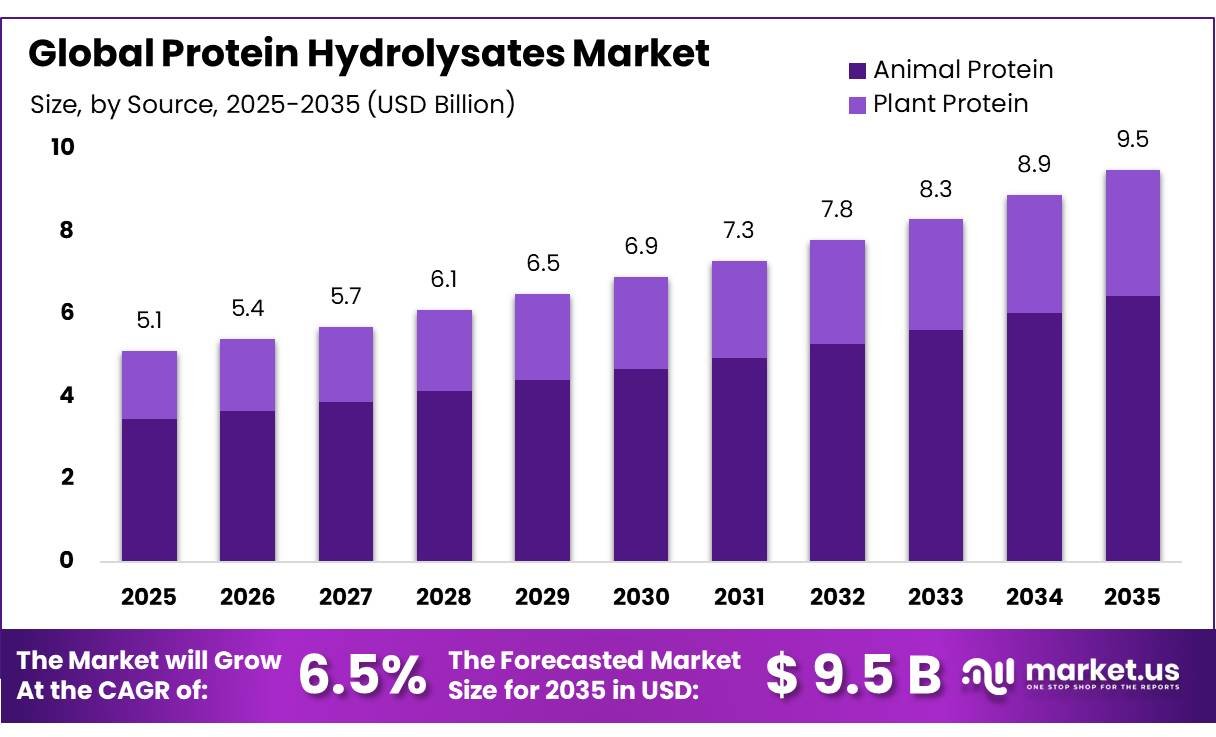
The global protein hydrolysates market is projected to reach approximately USD 9.5 billion by 2035, increasing from USD 5.1 billion in 2025, at a compound annual growth rate (CAGR) of 6.5% during the 2026–2035 forecast period. Dairy-derived ingredients, particularly whey and casein protein hydrolysates, are expected to remain important contributors to market development as food manufacturers increasingly incorporate specialised proteins into nutritional and functional food products.
According to the market report, dairy products accounted for more than 42% of the protein hydrolysates market in 2025, making them the leading application segment. Asia-Pacific held the largest regional share at 38%, representing approximately USD 1.9 billion in revenue. The growing demand for protein-enriched foods, specialised nutrition and functional dairy formulations is supporting the expansion of this ingredient market.
Protein hydrolysates are produced by breaking down intact proteins into smaller peptides and amino acids through enzymatic or chemical hydrolysis. In the dairy industry, whey and casein are important raw materials for producing these specialised ingredients. Their nutritional characteristics, digestibility, solubility and functional properties make them suitable for applications across dairy beverages, infant nutrition, sports nutrition and clinical food formulations.
Dairy Products Lead Application Demand for Protein Hydrolysates
Dairy products represented more than 42% of the global protein hydrolysates market in 2025. Their leading position reflects the increasing incorporation of hydrolysed proteins into yoghurt, milk-based beverages, cheese and specialised dairy formulations.
Whey and casein hydrolysates are particularly relevant to manufacturers developing protein-enriched products. Hydrolysis breaks larger protein structures into smaller peptide fractions, which can offer improved digestibility and solubility depending on the processing method and resulting peptide composition.
According to the United States Department of Agriculture (USDA), milk contains approximately 3.3% protein, primarily comprising casein and whey proteins. These naturally occurring dairy proteins provide an established raw material base for producing specialised protein ingredients.
The growing use of hydrolysates also creates opportunities for dairy processors to diversify their ingredient portfolios beyond conventional milk powders and protein concentrates. Manufacturers can develop differentiated ingredients for nutritional beverages, medical nutrition and other value-added food applications.
Animal Protein and Powder Form Maintain Leading Market Positions
Animal-derived proteins accounted for 67.89% of the market in 2025. This segment includes dairy proteins, gelatin and collagen, supported by their established applications in nutritional formulations and food manufacturing.
Meanwhile, powder-form hydrolysates held a 62.23% market share. Their advantages include convenient transportation, longer shelf life, easier storage and compatibility with large-scale food manufacturing. Spray-drying technology also supports their integration into powdered nutritional products and dry ingredient blends.
Liquid hydrolysates are another developing format, particularly for ready-to-use nutritional beverages and industrial liquid food formulations. Their suitability for direct incorporation into liquid products provides manufacturers with additional formulation flexibility.
| Market segment | 2025 market share |
|---|---|
| Animal protein | 67.89% |
| Powder form | 62.23% |
| Dairy products application | Above 42% |
| Asia-Pacific region | 38.00% |
Medical Nutrition and Specialised Dairy Ingredients Support Growth
The increasing demand for peptide-based medical nutrition is another factor supporting the development of protein hydrolysates. These ingredients are used in specialised formulations designed for individuals who require nutritional products with particular digestion and absorption characteristics.
In November 2024, Arla Foods Ingredients introduced Lacprodan DI-3092, a hydrolysed whey protein ingredient with a reported degree of hydrolysis of 16–22% and low lactose content. The ingredient is compatible with direct and indirect ultra-high-temperature (UHT) processing. Its application prototypes provide 10 grams of protein per 100 millilitres, with low viscosity and reduced bitterness.
These characteristics are relevant to dairy manufacturers developing protein-rich beverages and specialised nutritional formulations. The commercial use of hydrolysed whey also demonstrates how dairy ingredient suppliers are working to improve the functional properties of proteins for specific applications.
Nestlé’s Peptamen portfolio provides another example of hydrolysed whey being used in medical nutrition products, including formulations intended for children with impaired gastrointestinal function.
Asia-Pacific Emerges as a Major Market for Protein Ingredients
Asia-Pacific accounted for 38% of the global protein hydrolysates market in 2025, generating approximately USD 1.9 billion in revenue. China, Japan, South Korea and Australia are among the regional markets supporting demand through established food manufacturing and nutritional ingredient industries.
The region’s expanding dairy processing sector and growing interest in protein-enriched products are creating opportunities for specialised dairy ingredients. Applications in infant formula, sports nutrition, functional beverages and clinical nutrition are particularly relevant to the development of the market.
India also represents an important market to watch because of its substantial dairy production base and expanding value-added dairy segment. The development of specialised whey and casein ingredients could provide additional opportunities for dairy processors seeking to move towards higher-value products.
Processing Technology and Sustainability Create New Opportunities
Enzymatic hydrolysis is gaining industrial preference because it operates under relatively mild processing conditions and allows manufacturers to exercise greater control over peptide composition and product quality.
The market report also identifies opportunities in sustainable protein recovery and the utilisation of underused processing by-products. Research published in Poultry Science in 2024 demonstrated that optimised hydrolysis of poultry processing by-products could achieve protein content of 79–86%. Although this research concerns poultry rather than dairy, it illustrates the broader potential of hydrolysis technology for improving protein resource utilisation.
For dairy manufacturers, continued developments in enzymatic processing, purification and peptide characterisation could support more specialised whey and casein ingredients. However, processing costs, enzyme requirements and the need for consistent peptide profiles remain important considerations for commercial production.
With the global market projected to reach USD 9.5 billion by 2035, protein hydrolysates represent an expanding opportunity for dairy ingredient manufacturers. Continued investment in processing technologies, specialised nutrition and value-added dairy applications is expected to shape the industry’s development over the coming decade.