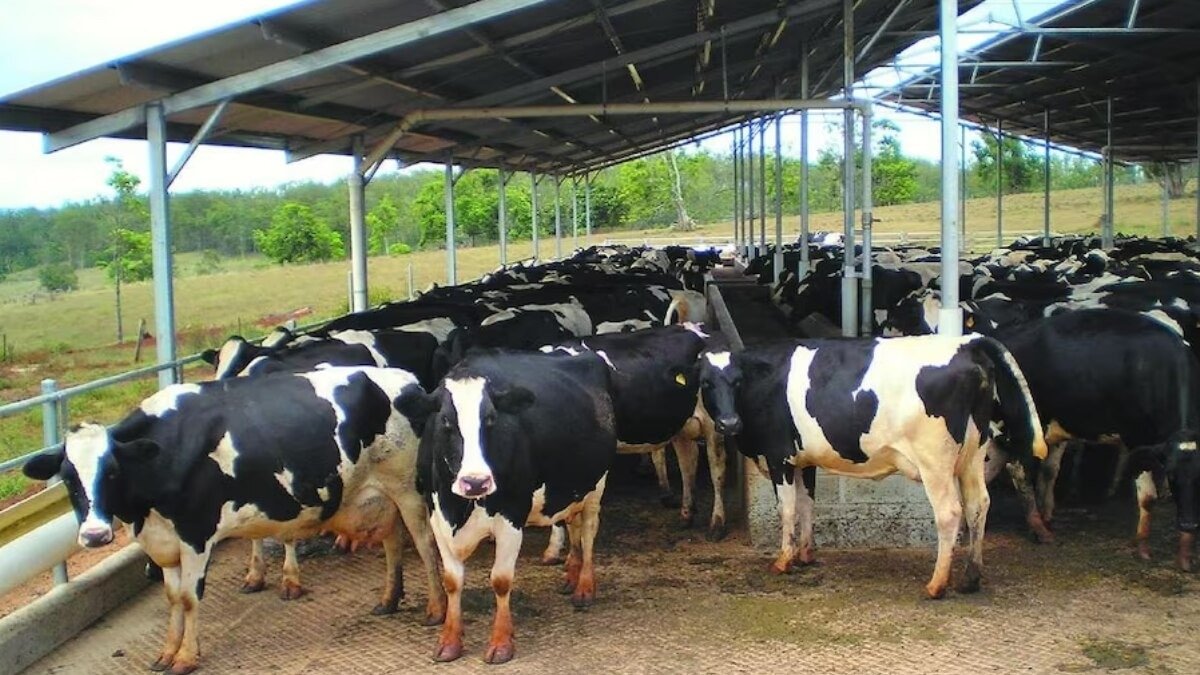
The Delhi Pollution Control Committee (DPCC) has directed all dairy farms and gaushalas operating in the national capital to apply for mandatory pollution clearances within 15 days, warning of regulatory action against establishments that fail to comply with the requirements.
The directive aims to strengthen environmental compliance across Delhi’s dairy sector, particularly in the management of solid and liquid waste generated by livestock establishments. The move follows an order issued by the National Green Tribunal (NGT) on May 20, 2020, and guidelines established by the Central Pollution Control Board (CPCB) for managing pollution from dairy farms and gaushalas.
According to a public notice reported by PTI, owners, operators and occupiers of these establishments must obtain the applicable Consent to Establish (CTE) and Consent to Operate (CTO) under the Water (Prevention and Control of Pollution) Act, 1974, and the Air (Prevention and Control of Pollution) Act, 1981.
Dairy Farms Classified According to Pollution Potential
The CPCB categorised dairy farms and gaushalas according to their pollution potential on July 10, 2020, under Section 18(1)(b) of the Water Act and the Air Act.
The classification considers factors including the number of animals maintained at an establishment and its potential environmental impact. The Pollution Index score indicates the pollution potential of an establishment, with higher scores representing greater potential.
According to the classification, gaushalas fall under the green category, while dairy farms are classified under orange or red categories depending on their livestock population.
CPCB Pollution Classification for Dairy Establishments
| Establishment Type | Pollution Category | Pollution Index |
|---|---|---|
| Gaushalas | Green | 41.5 |
| Dairy farms (15–100 animals) | Orange | 73 |
| Dairy farms (101–500 animals) | Orange | 77.5 |
| Dairy farms (More than 500 animals) | Red | 82 |
The classification establishes different regulatory requirements based on the scale and pollution potential of livestock operations.
Waste Management and Environmental Compliance Under Focus
The DPCC directive places particular emphasis on compliance with CPCB guidelines concerning solid and liquid waste management.
Dairy farms generate substantial quantities of organic waste, including cattle dung, urine, wastewater from animal washing and cleaning activities, and other operational residues. If these wastes are not handled and treated appropriately, they can contribute to water pollution, soil contamination and local environmental problems.
Proper manure collection, wastewater treatment, drainage management and responsible disposal practices are therefore important for maintaining environmentally compliant dairy operations.
For the dairy industry, improved waste management can also create opportunities to utilise cattle dung and other organic residues through biogas production, composting and organic fertiliser manufacturing.
Such practices can help dairy establishments move towards more resource-efficient operations while reducing the environmental impact of livestock farming.
DPCC Sets 15-Day Deadline for Applications
The DPCC has instructed all dairy farm and gaushala owners, operators and occupiers in Delhi to submit applications for the required pollution clearances within 15 days of the public notice.
The applicable permissions include Consent to Establish and Consent to Operate, depending on the requirements governing individual establishments.
The committee has warned that necessary action will be taken under the relevant environmental laws against establishments that fail to meet the stipulated requirements.
The CPCB guidelines are available through the DPCC website, while information about the application process can be accessed through the CPCB’s online portal.
Implications for Delhi’s Dairy Industry
The directive highlights the growing importance of environmental compliance in India’s livestock and dairy sectors. As urban dairy operations face increasing scrutiny over waste disposal, water quality and pollution management, regulatory requirements are becoming an important part of operating a dairy establishment.
For dairy farmers, compliance may require improvements in waste collection systems, wastewater treatment facilities, drainage infrastructure and operational record-keeping.
Smaller dairy operators may also need greater awareness and technical assistance to understand the applicable requirements and complete the approval process.
At the industry level, the directive reinforces the need to balance milk production with responsible environmental management. Better waste treatment and resource recovery systems can help reduce pollution risks while creating additional value from dairy by-products.
The DPCC’s 15-day notice marks another regulatory development for Delhi’s dairy sector, placing environmental responsibility and compliance at the centre of livestock farm management.