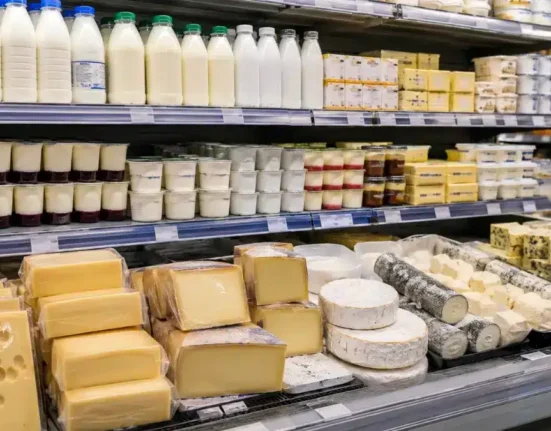
Australia’s dairy industry is facing renewed concerns over imported dairy products being sold through major supermarket chains, with the Australian Dairy Farmers (ADF) criticizing Woolworths’ sourcing and packaging practices.
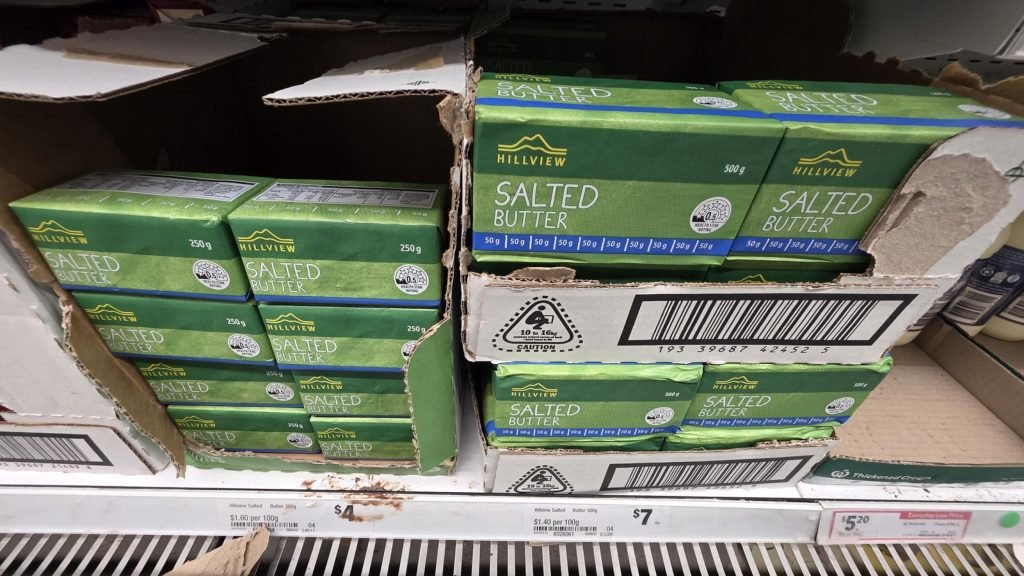
ADF President Ben Bennett has raised concerns about home-brand cheese and butter manufactured in the United States and sold by the supermarket. According to Bennett, some of these products are presented in “Green and Gold” packaging that could give consumers the impression that they are supporting Australian dairy producers, despite the products being imported.
The issue comes as Australian dairy producers face increasing competition from lower-cost imported dairy commodities from North America and Europe. Producer organizations argue that consumers need clearer country-of-origin information at the point of purchase so they can distinguish Australian dairy products from imported alternatives.
Concerns Over Country-of-Origin Presentation
Bennett’s criticism centers on the way imported dairy products are presented on supermarket shelves. While green and gold are strongly associated with Australia, the ADF argues that such visual branding can make it less obvious to consumers where a product was manufactured.
For shoppers who deliberately choose Australian products to support local farmers and processors, clear country-of-origin information is particularly important. The debate therefore extends beyond packaging design to questions about transparency, consumer choice and the role of major retailers in Australia’s agricultural supply chain.
Imported Dairy Adds Competitive Pressure
Australia’s dairy sector operates through an interconnected value chain involving farmers, milk processors, manufacturers, transport operators and retailers. Domestic processors depend on sufficient volumes of milk moving through their facilities to maintain efficient operations.
The increased availability of imported cheese and butter can create additional competitive pressure for Australian manufacturers, particularly in private-label segments where price is an important consideration.
Producer groups argue that when retailers increase their reliance on imported dairy products, demand for locally manufactured products can be reduced. Lower domestic manufacturing volumes may subsequently affect processors and the dairy farming regions that supply them.
However, the precise impact varies according to product category, import volumes, market prices, consumer demand and individual procurement arrangements.
Implications for Australian Dairy Farmers
The concerns come at a sensitive time for Australia’s dairy farming communities. Dairy farms require substantial long-term investment in land, livestock, equipment and infrastructure. Processing facilities similarly depend on reliable milk supplies and sustained commercial demand.
ADF has warned that prolonged pressure on domestic dairy manufacturing could have consequences extending beyond individual farmers. If farms leave the industry or processing facilities close, rebuilding those assets may require significant capital and time.
The organization has therefore emphasized the importance of maintaining a viable domestic dairy manufacturing base as part of Australia’s broader agricultural resilience.
Supermarkets and Food Security
Bennett has argued that Australia’s major supermarket chains have responsibilities that go beyond offering competitive prices to consumers. Their purchasing decisions influence which products receive shelf space and, consequently, the level of demand for Australian agricultural production.
The debate also intersects with wider discussions around food security and Australia’s ability to maintain domestic agricultural and processing capacity.
For supermarkets, imported dairy products can provide access to competitive pricing and additional supply sources. For domestic producers, however, increased import competition can create challenges when local production costs are higher.
The competing considerations highlight the tension between affordable food for consumers and maintaining domestic agricultural production capacity.
What Happens Next?
The dispute places greater attention on how imported dairy products are sourced, labelled and marketed in Australian supermarkets. Greater visibility of country-of-origin information could help consumers make purchasing decisions based on whether products are Australian-made or imported.
For Australia’s dairy industry, the broader concern is whether continued reliance on imported manufactured dairy products could weaken domestic processing capacity and regional dairy communities over the long term.
The ADF’s criticism adds to the ongoing discussion about the role of retailers, local sourcing and agricultural resilience. As Australian consumers increasingly encounter both domestic and imported dairy products, transparency around origin and sourcing is likely to remain an important issue for the country’s dairy value chain.