The Government of Arunachal Pradesh is looking to strengthen its yak-based economy through scientific livestock management, dairy development, value addition and improved livelihoods for yak herders. Chief Minister Pema Khandu chaired a virtual meeting with officials and sector representatives to discuss measures aimed at improving yak husbandry, strengthening milk collection systems and expanding market opportunities for yak-derived products.
The meeting was attended by Dr Sabyasachi Roy, Regional Head (NES) of the National Dairy Development Board (NDDB), along with senior officials from the State Animal Husbandry Department, the Indian Army, ICAR–National Research Centre on Yak, the Yak Federation and district administrations.
The discussions highlighted the potential to connect traditional yak-rearing practices with organised dairy infrastructure and scientific interventions. For remote mountain communities, better collection, processing and marketing systems could help improve the commercial value of milk and other yak products while supporting more stable livelihoods.
Focus on Organised Yak Husbandry and Dairy Infrastructure
Chief Minister Pema Khandu emphasised the need to develop a more organised yak husbandry system, with particular attention to milk collection, processing, value addition and market linkages.
Yak herding is an important livelihood activity in high-altitude areas of Arunachal Pradesh, where difficult terrain, seasonal weather conditions and dispersed settlements can make livestock management and market access challenging. Establishing suitable dairy infrastructure could help address some of these constraints.
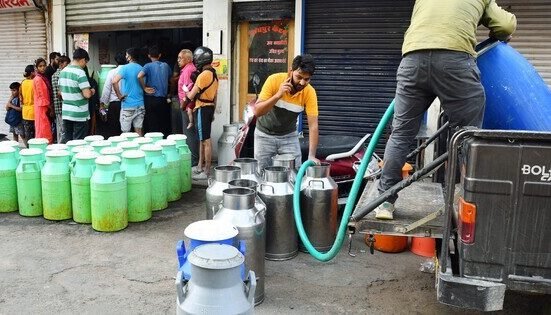
Reliable milk collection arrangements and appropriate chilling facilities are particularly important for maintaining milk quality before processing. In remote regions, infrastructure must be adapted to local geography, accessibility and seasonal production patterns.
Value addition can further strengthen the economic potential of yak milk by enabling the development and marketing of dairy products suited to consumer demand. However, successful implementation will depend on appropriate processing facilities, quality standards, dependable transportation and commercially viable market connections.
The Chief Minister also called for scientific management of seasonal grazing areas. Planned grazing and improved livestock management can help herders respond to changing seasonal conditions while supporting the long-term sustainability of mountain ecosystems.
Four Dairy Development Projects Proposed Across the State
During the meeting, the Chief Minister appreciated NDDB’s support for dairy development in Arunachal Pradesh and acknowledged the approval of four dairy development projects in the state.
Dr Sabyasachi Roy highlighted the proposed projects at Nirjuli, Warjung, Pasighat and Namsai. He also emphasised the importance of support from the State Government to facilitate their timely implementation.
The projects are part of broader efforts to strengthen dairy infrastructure and improve the organisation of milk production and marketing. Their successful implementation could help create a stronger foundation for dairy-related activities, although the specific capacities, timelines and operational details were not provided in the announcement.
Coordination between NDDB, state authorities, local administrations and producer communities will be important for translating project approvals into functioning infrastructure. Planning will also need to account for local production volumes, transportation requirements, power availability, processing capacity and access to markets.
For the state’s livestock and dairy sectors, investments in infrastructure can be more effective when combined with farmer training, cooperative organisation and consistent quality management.
NDDB Supports Dairy Development and Livestock Improvement
NDDB continues to support dairy development in Arunachal Pradesh through several interventions, including dairy cooperative formation, milk processing infrastructure, green fodder cultivation, artificial insemination, breed improvement and farmer capacity building.
These activities address different parts of the dairy value chain. Cooperatives can help producers organise milk collection and improve access to processing and markets. Fodder cultivation and scientific feeding practices can support livestock nutrition, while breeding initiatives and farmer training can contribute to better herd management.
For yak-rearing communities, interventions must be adapted to the species’ particular needs and the environmental conditions of high-altitude regions. Conventional dairy systems cannot always be transferred directly to yak production areas, making local research, technical guidance and consultation with herders important.
Stronger producer organisations may also help herders share resources, coordinate collection and explore opportunities for collective marketing. These arrangements can be especially valuable where individual producers face high transport costs or have limited access to buyers.
Linking Yak-Based Livelihoods with the Vibrant Villages Programme
The Chief Minister stressed the need to align yak economy development with the Vibrant Villages Programme. He also called for a comprehensive roadmap to be developed through consultations with stakeholders at the upcoming Yak Mela.
Such consultations can bring together herders, scientists, government departments, market participants and industry representatives to identify practical priorities. These may include seasonal milk production, grazing management, veterinary support, collection logistics, processing requirements and product marketing.
A coordinated roadmap could help clarify responsibilities, investment needs and implementation priorities across participating institutions. It could also support the identification of local opportunities for value-added products and stronger market connections.
Building a Sustainable Yak Economy
The meeting signals an effort to integrate traditional yak husbandry with scientific livestock management and organised dairy development. For Arunachal Pradesh, progress will depend on infrastructure suited to mountain conditions, effective coordination between institutions and the participation of yak herding communities.
With NDDB’s ongoing support and the proposed projects at Nirjuli, Warjung, Pasighat and Namsai, the state is seeking to strengthen its wider dairy ecosystem while improving the economic prospects of livestock-dependent communities.
The next steps will include stakeholder consultations and the development of a comprehensive roadmap. Effective implementation could help improve milk handling, expand value addition opportunities and support more sustainable livelihoods for yak herders across the region.