Smart collars, automated sorting and 3D camera monitoring are helping a Dutch dairy farm improve milk consistency, detect lameness earlier and manage production costs amid tightening margins and environmental regulations.
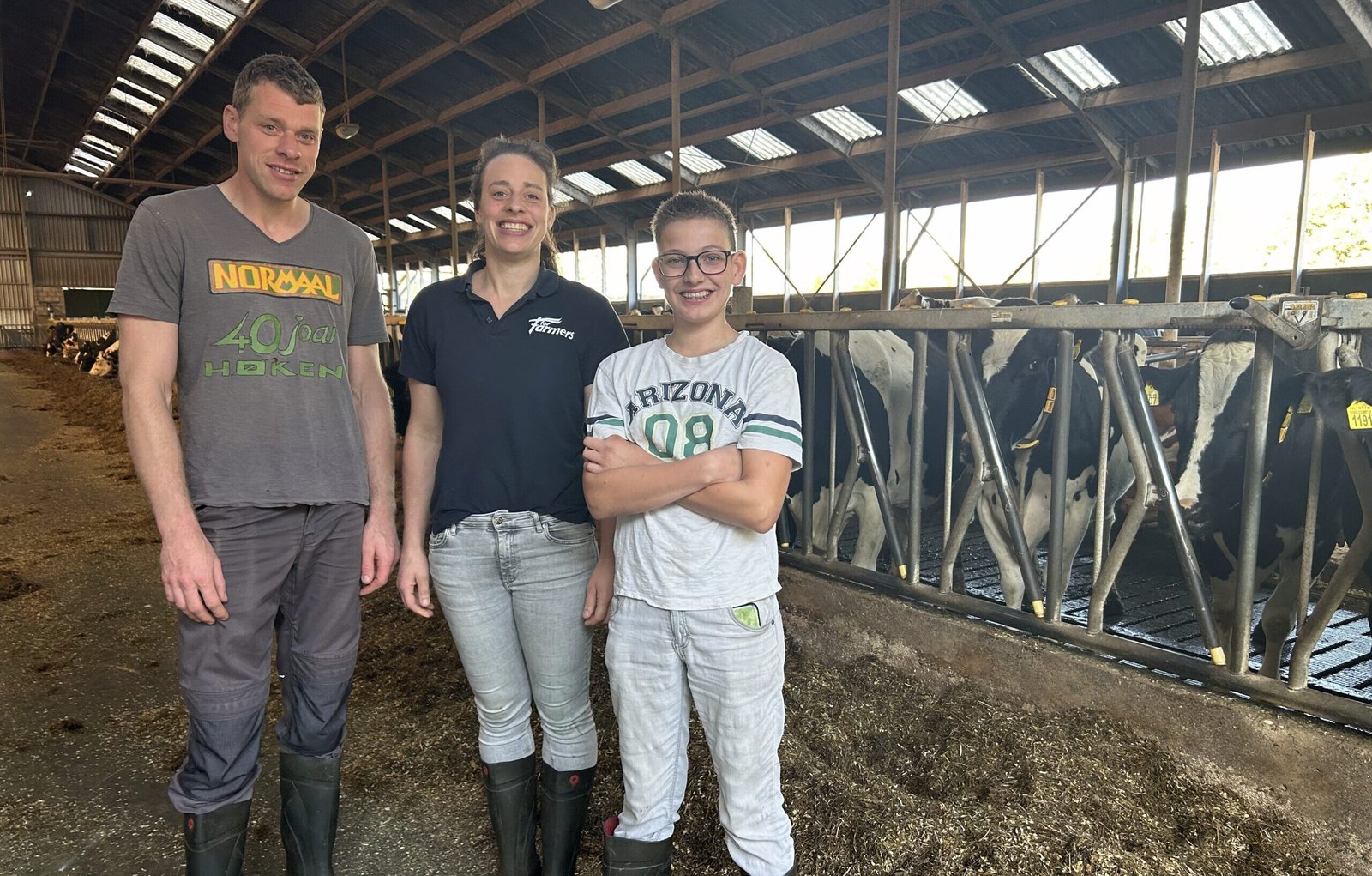
A dairy farm in Groenlo, in the eastern Netherlands, is demonstrating how precision livestock technology can help farmers improve efficiency as production costs rise and environmental regulations constrain expansion. Maarten and Corine Pleiter, fourth-generation dairy farmers managing a 28-hectare property, are adopting digital monitoring and automated systems to improve herd health, milk production and operational profitability.
The family manages approximately 220 dairy cows and produced between 2.1 million and 2.2 million litres of milk last year, with reported milk composition of 3.8% protein and 4.9% fat. Despite this production, the farm faces tight margins, highlighting the economic challenges confronting dairy producers across parts of Europe.
Rising Production Costs Put Pressure on Dairy Farmers
According to the Farmers Weekly report, the Pleiters’ production costs are approximately NZ$0.98 per litre, compared with an estimated Dutch average of NZ$1.04 per litre. Milk prices have also fluctuated considerably, falling from NZ$1.20 per litre in 2025 to around NZ$0.82 in January before recovering slightly.
Such volatility makes it difficult for farmers to plan investments, manage cash flow and maintain profitability. Higher input costs and limited opportunities to expand production have increased the importance of improving efficiency within existing herds.
For the Pleiters, technology offers a way to identify problems earlier, improve feeding decisions and reduce avoidable losses without significantly increasing herd size.
Smart Collars Provide Continuous Herd Monitoring
The farm serves as a testing site for Dutch technology company Nedap and uses several connected systems to monitor individual cows and automate daily operations.
CowControl collars collect information about animal activity, including eating, rumination, resting and walking. The system can also support heat detection and alert the farmer to changes that may indicate health or reproductive issues.
The technology allows the farmer to review alerts on a mobile phone, including notifications generated overnight. This helps prioritise animals that may require attention before problems become more serious.
Early detection is particularly valuable in dairy farming because health disorders can affect milk yield, reproductive performance, treatment costs and the productive lifespan of a cow.
Automated Sorting and Milk Flow Monitoring
The farm also uses Nedap’s SmartSort drafting gate, which relies on individual cow identification to direct animals through the appropriate routes. Automated sorting can help streamline routine herd management and reduce the need for manual intervention.
SmartFlow monitors milk yield and milk flow in the milking parlour. These measurements help the farmer assess production patterns and make adjustments to feed allocation.
The Pleiters use this information to manage concentrate feeding and maintain a more consistent milk yield. By matching nutritional inputs more closely to the herd’s requirements, farmers can seek to reduce unnecessary feed expenditure while supporting production.
Feed management is especially important when margins are tight because feed represents a major operating expense on dairy farms.
3D Cameras Help Identify Lameness Earlier
Another important technology on the farm is SmartSight, a 3D camera system that assesses cows as they leave the milking parlour and looks for signs of potential lameness.
Lameness can reduce feed intake, milk production and reproductive performance while increasing veterinary expenses and the risk of premature culling. Detecting changes in mobility early can allow farmers to investigate and address problems before they become more severe.
Pleiter estimates that lameness has halved since the introduction of SmartSight. He also associates the technology with improved milk production and reduced culling, although these reported farm-level results should not be interpreted as guaranteed outcomes for every dairy operation.
The example illustrates how automated observation can complement routine stockmanship, particularly when farmers manage large herds and cannot continuously monitor every animal.
Environmental Regulations Limit Expansion
The farm’s technology investments also reflect structural pressures in Dutch agriculture. High land prices and environmental restrictions make expansion difficult.
The report notes that local land prices increased from approximately NZ$50,000 per hectare five years ago to NZ$100,000, with prices in western parts of the Netherlands reaching NZ$200,000 per hectare.
Nitrogen application limits and manure management requirements create additional challenges. Farmers may need to pay for surplus manure to be removed, even when they believe their land could benefit from additional nutrients.
These restrictions increase the importance of using existing land, feed and herd resources efficiently.
Balancing Grass-Fed Milk and Sustainability
The Pleiters milk cows throughout the year and maintain a system that combines fresh grass with silage made from pasture, corn, sugar beet and barley.
They can receive milk premiums for meeting specified outdoor-grazing requirements. The farm also seeks to qualify for payments linked to greenhouse gas emissions, as calculated by its milk processor.
Adjusting dietary protein and energy levels is one approach the farmer uses to manage feed efficiency and environmental performance. Such adjustments require careful ration formulation to maintain adequate nutrition, milk yield and animal health.
A Model for Data-Driven Dairy Farming
The Pleiters’ experience demonstrates how connected collars, automated sorting, milk monitoring and computer vision can support more informed dairy management.
Although technology requires investment and appropriate implementation, earlier health detection and better feeding decisions may help farmers control costs and improve herd performance.
As dairy producers face volatile milk prices, rising land costs and tighter environmental requirements, precision livestock farming is becoming an important tool for making better use of existing resources. The long-term value of these systems will depend on reliable data, practical farm management and measurable improvements in animal welfare and profitability.