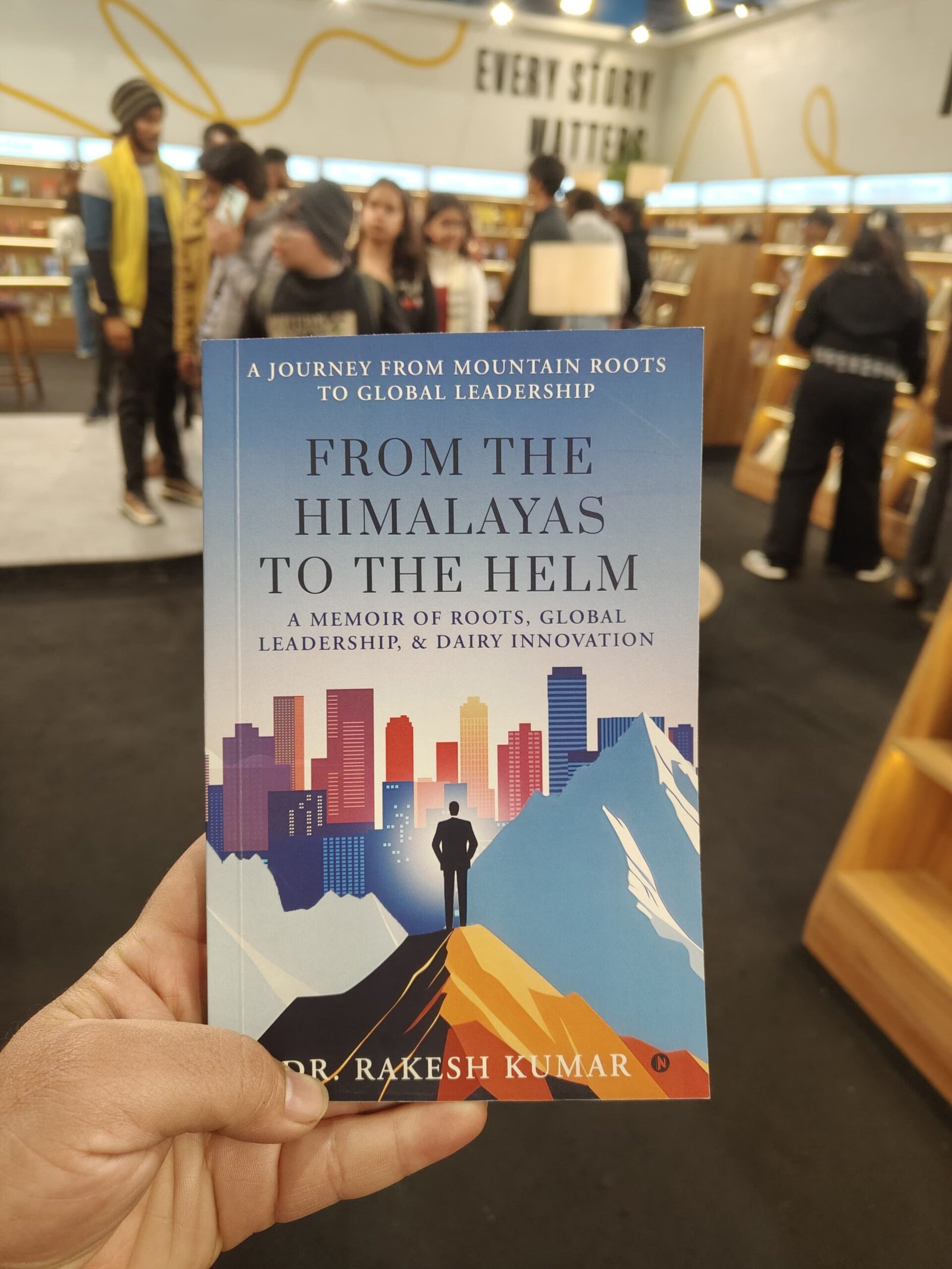
The global dairy landscape is currently navigating a period of profound volatility, characterised by fluctuating input costs, shifting regulatory frameworks, and an urgent mandate for sustainability. In this high-stakes environment, the release of From the Himalayas to the Helm: A Memoir of Roots, Global Leadership, and Dairy Innovation by Dr Rakesh Kumar arrives as more than a personal narrative. It is a strategic manual for the modern dairy executive, tracing a career that spans the distinct market dynamics of India, the Middle East, and New Zealand.
Dr Kumar’s trajectory—from a barefoot child in a remote Himalayan village to the pinnacle of international dairy operations—serves as a microcosm of the industry’s evolution. His tenure across three continents highlights a critical transition in the sector: the shift from volume-driven production to innovation-led, sustainable value chains.
Cross-Continental Synergy: India, the Middle East, and New Zealand
The memoir offers a rare comparative analysis of the world’s most significant dairy clusters. By bridging the gap between the Indian cooperative model and the New Zealand export-led, efficiency-driven model, Dr Kumar identifies the “missing middle” in global dairy management.
- The New Zealand Efficiency: Insight into how the world’s most efficient export nation maintains rigorous quality standards and cost leadership.
- The Middle Eastern Expansion: Navigating the logistics of dairy production in water-scarce environments and the rapid rise of value-added dairy (VADP) in the Gulf.
- The Indian Grassroots: A return to the foundational principles of community-driven procurement and the challenges of scaling innovation in a fragmented market.
Strategic Turnarounds and Sustainability Innovation
A core pillar of the memoir is Dr Kumar’s expertise in reviving loss-making organisations. In a post-pandemic economy where dairy processors face thinning margins, his “Himalayan to Helm” approach emphasises lean operations without sacrificing long-term sustainability.
For the modern processor, Dr Kumar argues that sustainability is no longer a corporate social responsibility (CSR) checkbox but a core driver of profitability. His work in pioneering eco-friendly processing and building bridges across diverse corporate cultures provides a blueprint for managing the ESG (Environmental, Social, and Governance) demands of 2026.
Implications for Investors and Industry Players
- For Investors: The book validates the “human capital” factor in agri-business. Success in dairy is not just about the cold chain; it is about the leadership’s ability to navigate cultural transitions and regulatory shifts.
- For Processors: Dr Kumar’s focus on product premiumization and operational renewal offers actionable insights for firms looking to shift from liquid milk to high-margin categories such as functional dairy and organic products.
- For Exporters: The memoir underscores the necessity of a “glocal” mindset—understanding local farmer roots while adhering to global leadership standards.
The Dairy Dimension Perspective
As the global dairy market moves toward deeper integration, the lessons from Dr Rakesh Kumar’s career are vital. The industry is no longer siloed by geography; a disruption in New Zealand’s yields or a policy shift in India’s cooperative sector now vibrates across the global supply chain.
Dr Kumar’s legacy, as detailed in this memoir, suggests that the leaders of tomorrow will be those who can trek the difficult terrain of organisational change with the same resilience required to climb the Himalayas. For the dairy professional, this is essential reading on balancing traditional roots with global innovation.