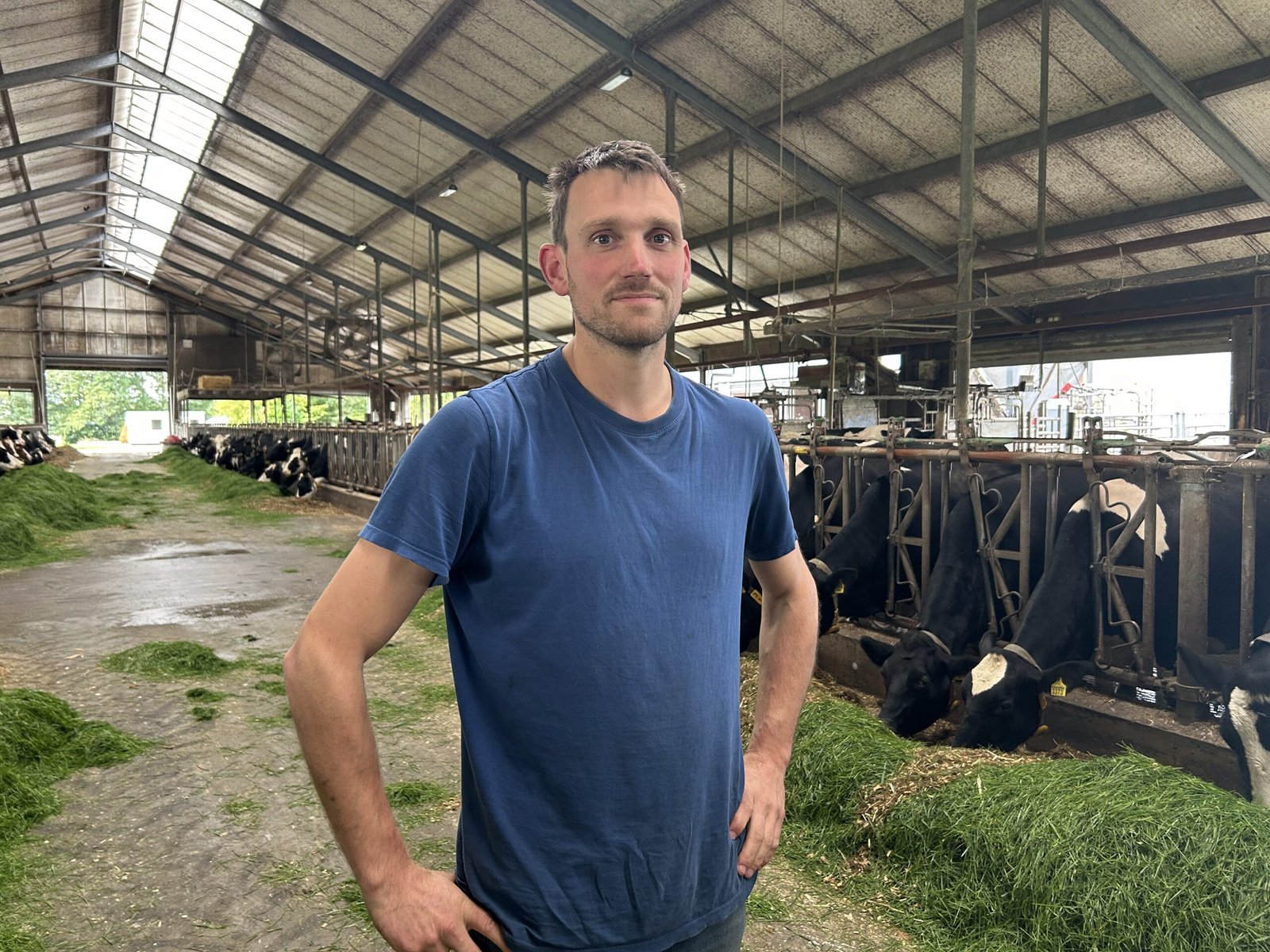
A family-owned dairy farm in the northwestern Netherlands is demonstrating how precision technology, efficient feed management and a focus on animal longevity can improve dairy farm productivity. Mathijs Meiser and his partner Florien Bleijenberg, together with Meiser’s parents, Bennie and Elly, operate a 200-hectare farm housing 350 dairy cows. Their approach centres on reducing losses, improving herd health and achieving sustainable production without compromising the productive lifespan of their animals.
The farm produced approximately four million litres of milk in the previous year, with an average yield of around 11,500 kilograms per cow. Milk contained 4.5% fat and 3.5% protein, highlighting the farm’s focus on both production volume and milk composition.
Precision Technology Improves Herd Management
Technology plays a central role in monitoring animal health and improving operational efficiency. The farm uses GPS-guided tractor systems to ensure machinery follows consistent wheel tracks when harvesting grass and producing silage. According to Meiser, this practice increases pasture yields by approximately 10–15%, helping maximise the productive use of available farmland.
The farm also uses Nedap SmartTag collars and SmartSight camera monitoring to identify animals that may require attention, including cows showing signs of lameness.
Previously, Meiser trimmed the feet of the entire herd twice a year. With targeted monitoring, he can focus on animals that need treatment, reducing unnecessary interventions and saving labour.
These technologies are particularly valuable on larger farms, where continuous individual observation can be difficult. Early identification of health issues can help farmers respond more quickly, improve animal welfare and reduce avoidable production losses.
Meiser believes every technology investment must contribute to measurable improvements, whether through lower operating costs, better animal health or increased productivity.
Balancing Milk Yield with Cow Longevity
The farm’s management philosophy places considerable emphasis on lifetime milk production rather than simply maximising annual yield.
Although Meiser believes individual cow production could rise to 12,000–13,000 kilograms annually, he cautions that pushing yields too aggressively could shorten productive lifespans and increase replacement requirements.
The herd averages approximately 328 days in milk, and cows first calve at around 21 months of age, approximately four months earlier than the national average cited in the report.
Meiser estimates that a cow on the farm produces around 64,000 kilograms of milk over its lifetime, compared with a reported Netherlands average of approximately 36,000 kilograms.
One particularly notable animal has continued producing milk into its 15th year, reaching a lifetime total of approximately 182,000 kilograms.
These results illustrate the potential economic value of combining productive genetics with careful nutrition, health monitoring and reproductive management. Longer productive lifespans can reduce the frequency of replacement purchases and the resources required to rear new heifers.
Feed Efficiency and Ration Management
The farm feeds its cows twice daily using a ration based on grass silage, maize and concentrate feed. The reported daily ration includes approximately six kilograms of dry matter from grass silage, eight kilograms from maize and 5.5 kilograms from concentrates.
Meiser aims to increase roughage from around 60% to 75% of the diet while reducing concentrate use. The concentrate mixture includes ingredients such as waste sugar beet and brewing barley.
His approach reflects an emphasis on rumen health and efficient use of feed resources. However, the optimal balance between roughage and concentrates depends on forage quality, cow production levels, ration digestibility and overall nutritional requirements. Any changes must maintain sufficient energy, protein and fibre for the herd.
For dairy farmers, the broader lesson is that ration efficiency should be assessed alongside milk yield, milk components, animal health and feed costs rather than through concentrate reduction alone.
Heat Stress Management Becomes Increasingly Important
Summer heatwaves have created additional challenges for the Dutch farm. During periods when temperatures reached 36°C, the herd required fans and sprinklers to maintain comfort.
Milk production reportedly declined by approximately one litre per cow during the heat, while reduced movement and softer hooves contributed to additional lameness concerns.
Meiser is considering adding heat-stress alerts to the farm’s monitoring system so that cooling equipment can operate when animals need it most. This could improve the efficiency of energy and water use while helping protect milk production.
The experience highlights the importance of adapting dairy management to changing weather patterns. Effective ventilation, access to water, appropriate stocking conditions and timely heat-stress detection can all contribute to herd resilience.
Managing Feed, Manure and Expansion Costs
The farm also faces financial and regulatory constraints. High land prices and government limits on cattle numbers make expansion expensive. The report cites land prices of approximately NZ$200,000 per hectare and cattle entitlements costing around NZ$30,000 per cow.
Manure management adds further costs. The farm separates solid waste from liquid manure, storing the liquid in a tank with a capacity of 6,000 cubic metres. Restrictions on nitrogen application limit how much manure can be applied to the land, while surplus waste must be transferred elsewhere or processed.
Meanwhile, Bleijenberg oversees calf rearing, providing milk for 114 days. The family believes that investing in young animals supports an easier transition to a grass-based diet and earlier readiness for breeding.
Lessons for the Global Dairy Industry
The Meiser family’s experience demonstrates how precision monitoring, feed optimisation, early-life calf management and a focus on cow longevity can work together to support dairy farm efficiency.
Rather than pursuing maximum milk output at any cost, their strategy prioritises productive animals, reduced losses and technologies that deliver measurable economic benefits.
For dairy farmers worldwide, the case highlights the importance of evaluating technology investments against operational outcomes while balancing milk production, animal welfare, feed efficiency and long-term profitability.