Global butter prices are expected to remain under pressure into 2027 as abundant milkfat supplies, elevated inventories and strong competition between major exporting regions continue to outweigh the slowdown in milk production. Although dairy markets are showing signs of rebalancing, butter is likely to underperform other dairy commodities, particularly milk powders and protein ingredients, which are benefiting from improving Asian demand.
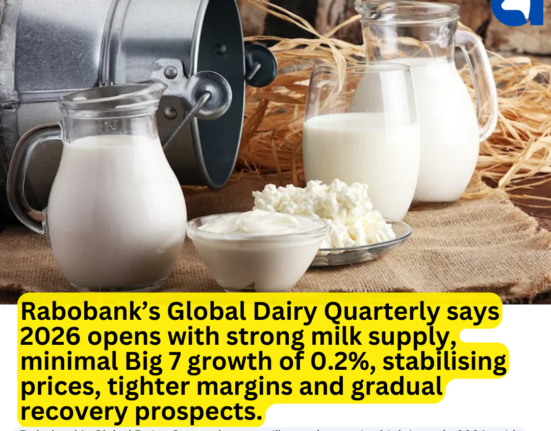
According to Rabobank’s market outlook, milk production across the seven major dairy-exporting regions is projected to decline by 0.2% year-on-year in the fourth quarter of 2026 before stabilising during the first half of 2027. However, the moderation in milk output is unlikely to reduce existing milkfat surpluses quickly, particularly in Europe and Oceania, where butter availability remains relatively high.
European butter prices have experienced significant declines over recent months. November 2026 quotations were approximately 18–25% below levels recorded a year earlier, reflecting ample spot availability and persistent competition among international suppliers. Despite seasonal improvements in retail demand and relatively stable foodservice consumption, buyers continue to benefit from favourable purchasing conditions.
European Butter Prices Remain Under Pressure
European wholesale butter prices have remained within the mid-€3,000s per tonne range in early November, considerably below the previous year’s levels.
A Polish fresh butter quotation from Grudziądz, reported on a Free Carrier (FCA) basis, stood at €3.85 per kg on 9 November 2026, compared with €3.65 per kg previously. Although this represents a modest increase, the movement appears to reflect short-term regional adjustments rather than a sustained recovery in the wider European market.
The availability of competitively priced butter from Europe, the United States and New Zealand continues to limit opportunities for significant price increases. European exporters are therefore facing pressure to offer attractive prices to secure international contracts and clear available volumes.
Regional Milk Production Developments Shape Global Supply
Milk production trends across major exporting regions are becoming increasingly divergent.
In the European Union, milk deliveries are expected to decline during the fourth quarter of 2026 and the first quarter of 2027 before stabilising. Lower farmgate milk prices are also affecting production incentives. The EU average farmgate milk price fell to €45.12 per 100 kg in October 2026, representing a 13.9% year-on-year decline.
Spain recorded a similar decrease of 11.4%, highlighting the financial challenges facing dairy producers and the potential impact on future production investments.
In contrast, the United States is expected to record approximately 2% growth in milk production during 2027. An expanding dairy herd, with around 162,000 more cows than a year earlier, is supporting the country’s production outlook.
New Zealand is also approaching potentially record milk solids production of nearly 2 billion kg by mid-2027. Australia’s dairy sector remains relatively well positioned, although weather conditions, feed availability, fuel costs and financing expenses could influence future output.
These regional differences suggest that reduced European production alone may not be sufficient to tighten global butter supplies.
Asian Demand Supports Dairy Powders More Than Butter
Demand conditions are improving across several international dairy markets, particularly in Asia. China is showing gradual consumption recovery, alongside growing interest in high-protein and functional dairy products.
However, the improvement in demand is primarily benefiting whole milk powder, skimmed milk powder, cheese and specialised dairy protein ingredients rather than butter.
Rabobank expects Oceania whole milk powder prices to strengthen during the first half of 2027 as Asian purchasing activity improves. This divergence between protein-oriented products and milkfat commodities could widen price differences across the global dairy complex.
Butter continues to face the challenge of abundant availability, while other dairy categories are receiving stronger demand support.
Weather Risks and Trading Outlook for 2027
Weather conditions in New Zealand and Australia remain important factors to monitor. Potential El Niño-related dryness could affect pasture growth, increase feed expenditure and restrict milk production later in 2027. Higher diesel prices and financing costs could further influence farm profitability.
In Europe, seasonal declines in milk production and slightly lower butter output may gradually reduce supply pressure. However, comfortable inventories and competition from the United States and New Zealand are expected to limit any immediate price recovery.
For dairy manufacturers and traders, current market conditions offer opportunities to secure competitively priced butter supplies. Buyers may consider extending purchasing coverage into mid-2027 during favourable price movements, while producers should carefully manage exposure to potential further declines.
Overall, the global butter market is entering 2027 with a cautious outlook. Although slower milk production growth could gradually support market rebalancing, elevated milkfat availability and uneven demand distribution are likely to keep butter prices under pressure. The pace at which inventories are absorbed, alongside weather developments in Oceania and production trends in the United States, will be critical in determining the direction of the international dairy market.