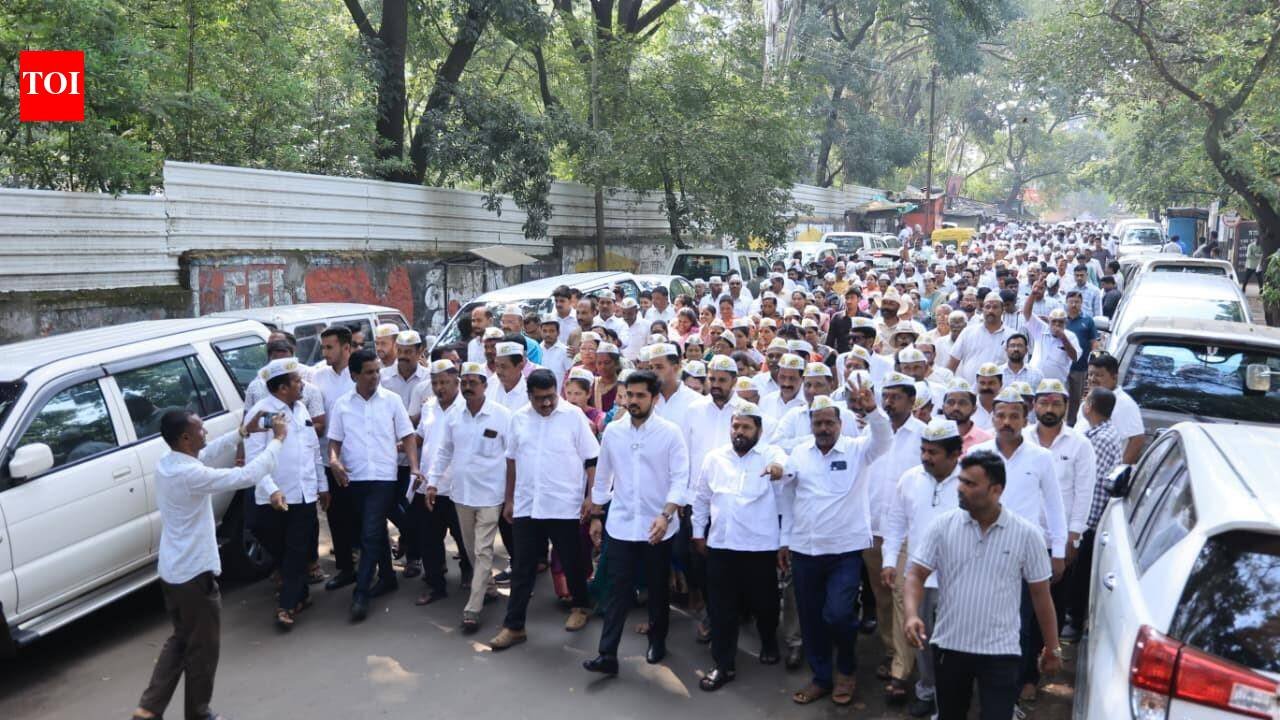
The Kolhapur District Cooperative Milk Producers Federation, popularly known as Gokul Dairy, recorded an exceptional 99.9% voter turnout in its board elections, highlighting the importance of cooperative governance in India’s dairy industry. A total of 5,416 out of 5,418 eligible voters cast their ballots on Sunday, with counting and the announcement of results scheduled for Monday.
High Participation Highlights the Importance of Dairy Cooperative Leadership
Nearly all eligible voters participate
Polling took place across 35 heavily guarded booths in Maharashtra’s Kolhapur district. The election involved 50 candidates representing two competing panels: one backed by the Mahayuti alliance and the other supported by Congress MLC Satej Patil.
Voting was conducted using ballot papers, with each eligible voter permitted to cast up to 25 votes. The top 20 candidates in the general category were set to be declared elected, while five candidates from each panel in the reserved category were to have their votes counted separately.
The counting process was scheduled to take place at the multipurpose hall in Ramanmala. Although initial results were expected within a few hours, a clearer picture of the outcome was anticipated by late afternoon.
The near-total participation demonstrates the significance of board elections for cooperative milk producers, whose representatives help shape the organisation’s leadership and future direction.
Political competition intensifies
The Gokul Dairy election witnessed intense competition between the two panels. Mahayuti leaders sought to contest the election under a unified alliance, while Satej Patil fielded a separate panel.
The political contest also reflected the importance of Gokul Dairy within the region’s agricultural and cooperative landscape. In the 2021 election, a panel led by Satej Patil, Hasan Mushrif and Vinay Kore secured 17 seats, while the remaining seats went to candidates associated with Mahadevrao Mahadik and the late P. N. Patil.
This year’s campaign featured competing claims of victory. Mahayuti leaders, including Hasan Mushrif and Chandrakant Patil, expressed confidence in their panel’s prospects. Satej Patil also maintained that his candidates had received sufficient support to manage the dairy federation effectively over the next five years.
Allegations raise questions about electoral conduct
The final days of campaigning were marked by controversy over allegations that some primary milk society delegates had been pressured to take religious oaths pledging support for the Mahayuti panel.
According to the report, concerns about possible cross-voting contributed to these allegations. Former MLA and Mahayuti leader K. P. Patil made a controversial remark about the consequences of breaking an oath taken in the name of deity Balumama. Satej Patil criticised the reported remarks and called for election authorities to take notice.
These allegations formed part of the political dispute surrounding the election. They should be distinguished from established findings, as the supplied report does not confirm an official determination of wrongdoing.
Why Gokul Dairy matters to the dairy industry
Cooperative milk federations play an important role in connecting dairy farmers with milk collection, processing, distribution and consumer markets. Their management decisions can influence procurement arrangements, operational efficiency, investment priorities and the services available to member societies.
For milk producers, effective cooperative governance can help support dependable milk collection, transparent payment systems, quality control and access to technical assistance. Strong leadership is also important for managing processing infrastructure, maintaining market competitiveness and responding to changes in consumer demand.
The outcome of the Gokul Dairy election therefore carries significance beyond the political contest. The elected board will be responsible for guiding the federation’s operations and representing the interests of its member societies.
Conclusion
Gokul Dairy’s reported 99.9% voter turnout underscores the high level of participation in this cooperative election. With 5,416 of 5,418 eligible voters casting ballots, the contest attracted substantial engagement from the representatives of primary milk societies.
As the results determine the federation’s leadership for the next five years, the priorities for the incoming board will include effective governance, reliable services for dairy farmers, efficient milk procurement and processing, and the long-term development of the regional dairy economy.