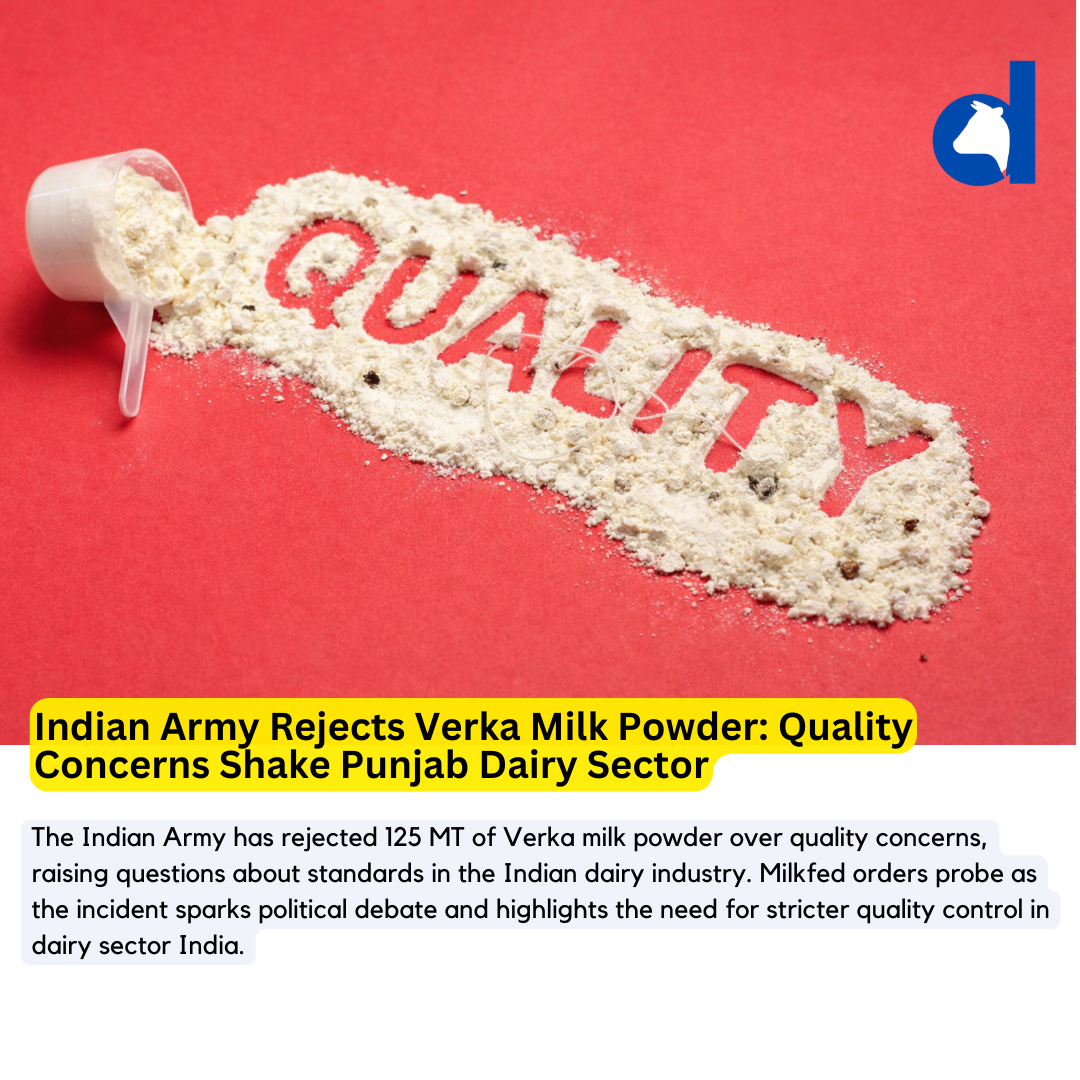
The latest development in dairy news India has brought renewed scrutiny to quality assurance within the Indian dairy industry, after the Indian Army rejected a significant consignment of whole milk powder supplied by Punjab’s Milkfed under its flagship brand Verka.
Approximately 125 metric tonnes of milk powder produced at Milkfed’s Ludhiana unit were deemed non-compliant with Army standards. The rejection, communicated by an Army Service Corps unit based in Jammu, has intensified discussions around milk industry news, dairy production news, and governance in cooperative-led dairy operations.
Details of the Rejection
The consignment included two batches, weighing 58.338 MT and 66.654 MT respectively. According to official communication, the samples were found “not free from extraneous matter”, with reports indicating the presence of a white thread in the product.
The matter was escalated to key defence authorities, including the Food Inspection Organisation, underscoring the seriousness of quality compliance in institutional dairy procurement. Such incidents raise concerns within the dairy sector India, especially when dealing with high-trust consumers like the armed forces.
Political Reactions and Public Health Concerns
The rejection has triggered sharp political reactions. Senior leaders have questioned the state government’s oversight of dairy cooperatives, highlighting potential risks tied to dairy nutrition news and consumer safety.
Concerns were also raised regarding the implications for public distribution. If a product fails stringent Army benchmarks, stakeholders argue it could signal broader lapses affecting retail consumers, thus impacting confidence in dairy cooperative news and food safety systems.
Milkfed Responds, Orders Fresh Investigation
Milkfed Managing Director Rahul Gupta clarified that the cooperative adheres to strict quality control protocols and that this incident may be limited to a specific batch rather than systemic failure.
He stated that Milkfed has initiated a fact-finding inquiry and emphasised its longstanding relationship with the Indian Army. Supplies of other products such as lassi, cheese, and tetra-packed milk continue without issue.
Importantly, the rejected batches had already undergone testing at a NABL-accredited laboratory. A second round of testing will now be conducted at the Centre for Analysis and Learning in Livestock and Food (CALF) in Gujarat to validate findings.
Implications for the Indian Dairy Industry
This episode highlights the growing importance of stringent quality checks, traceability, and transparency in the dairy market updates landscape. As India continues to expand its dairy footprint, including value-added dairy products and institutional supply chains, maintaining consistent standards remains critical.
The incident also underscores the need for enhanced monitoring systems, especially in large-scale cooperative networks like Milkfed, which play a vital role in India dairy trends and rural livelihoods.
With rising expectations from both domestic and institutional buyers, such developments could influence future procurement policies, quality audits, and consumer trust across the dairy policy India framework.