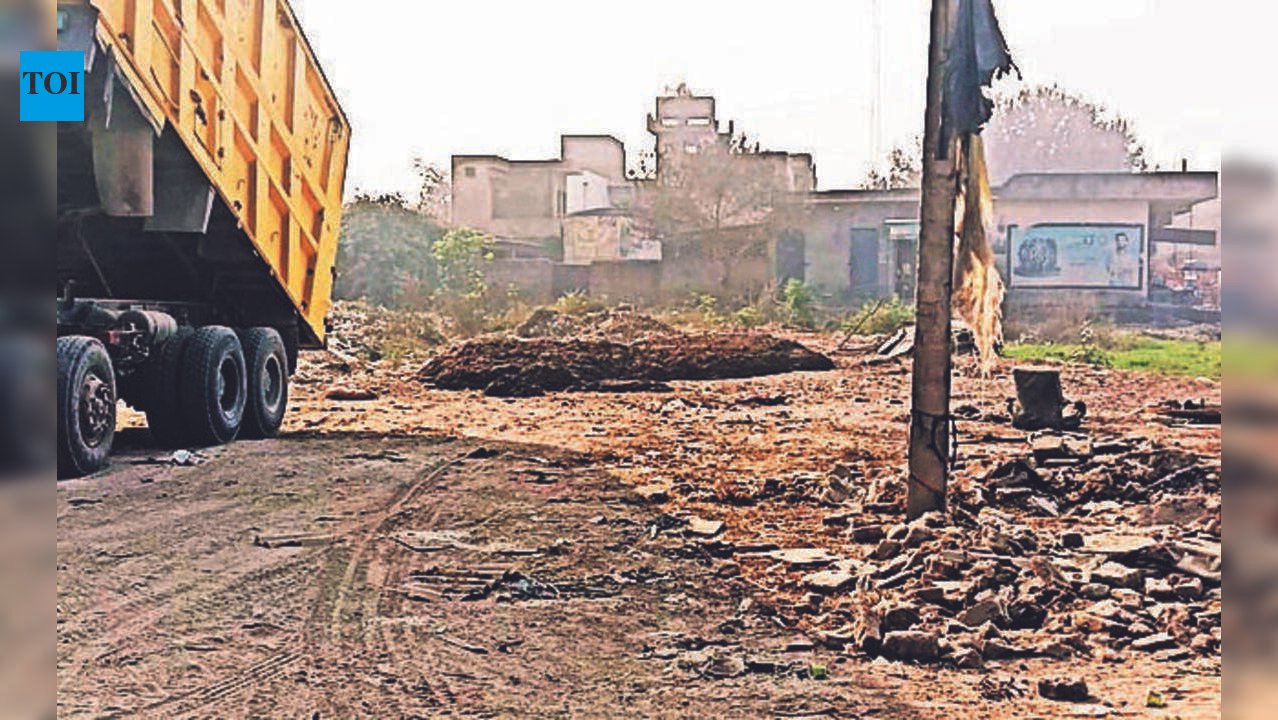
Ludhiana’s Haibowal Dairy Complex is set to receive a second compressed biogas (CBG) plant, ending a nearly four-year delay in expanding the facility’s dairy waste-processing capacity.
Chief Minister Bhagwant Mann is scheduled to lay the foundation stone for the project on Friday. The plant is expected to be completed within 16 months and become operational by December 2027.
Second CBG Plant to Address Dairy Waste Crisis
The expansion is aimed at tackling a major waste-management challenge at Haibowal, where more than 35,000 cattle generate around 400 metric tonnes of dung every day.
The existing biogas plant can process approximately 220 MTPD, leaving nearly 200 tonnes of cattle dung unprocessed each day.
The untreated waste frequently enters and clogs the local sewer system before eventually reaching the Budha Dariya, worsening water pollution in the city.
The new facility is expected to significantly increase the complex’s ability to process cattle waste and convert it into a useful source of renewable energy.
Tajpur Road Dairy Complex Still Without Processing Facility
While Haibowal is moving toward additional waste-processing capacity, the situation at the Tajpur Road Dairy Complex remains largely unchanged.
The complex houses around 14,000 animals, generating approximately 200 MTPD of cattle dung, but currently has no dedicated processing facility.
An initial Memorandum of Understanding (MoU) between the Punjab Energy Development Agency (PEDA) and the municipal corporation was signed in 2014.
A 350-MTPD processing plant has also been proposed, but the project has reportedly remained pending for around three years.
For now, waste management at Tajpur Road largely depends on routine lifting rather than large-scale processing infrastructure.
Decades-Old Dairy Waste Management Problem
The waste-management crisis at Ludhiana’s two major dairy complexes—Haibowal and Tajpur Road—has roots stretching back several decades.
Both complexes were established during the late 1970s and early 1980s under the Ludhiana Improvement Trust. They were developed on the outskirts of the city to relocate dairy operations away from densely populated residential areas.
However, rapid urban expansion eventually surrounded the complexes.
At the same time, the cattle population grew significantly beyond the levels originally anticipated. Waste-management infrastructure failed to expand at a similar pace, creating a persistent environmental challenge.
Dairy Waste Adds to Budha Dariya Pollution
Untreated cattle dung has become an important contributor to pollution in the Budha Dariya, a natural waterway that eventually joins the Sutlej.
Raw cattle dung contains significant amounts of organic matter and can contribute to high biological oxygen demand (BOD) and nutrient loads when discharged into water bodies.
When dairy waste enters streams through stormwater channels and overflowing sewers, it can reduce dissolved oxygen levels and adversely affect aquatic ecosystems.
The accumulation of solid waste and sludge can also contribute to siltation and waterlogging, particularly in low-lying areas during the monsoon season.
NGT and Regulatory Pressure
The continuing dairy waste problem has attracted repeated attention from judicial and regulatory authorities.
The National Green Tribunal (NGT) has previously summoned municipal officials, issued deadlines and imposed environmental compensation on authorities over failures to prevent untreated waste and effluent from entering water bodies.
Municipal authorities have considered several solutions, including:
- Solid-liquid separation systems
- Effluent treatment plants
- Large-scale biogas facilities
- Relocation of non-compliant dairies
- Improved dairy waste collection and processing
However, political opposition, administrative delays and funding constraints have slowed the implementation of several long-term projects.
CBG Could Turn Dairy Waste Into Renewable Energy
The expansion of CBG infrastructure could provide Ludhiana with an opportunity to address two challenges simultaneously—dairy waste management and renewable energy generation.
Instead of allowing cattle dung to enter drains and water bodies, anaerobic digestion can process organic waste to produce biogas. The gas can subsequently be purified into compressed biogas, while the remaining digestate can potentially be used as a source of nutrients.
For Ludhiana’s large dairy clusters, increasing processing capacity could therefore reduce pressure on the city’s drainage and water systems while creating a more productive use for livestock waste.
The Haibowal project will be closely watched as the city attempts to address a dairy-waste problem that has persisted for decades.