New Rule Aims to Strengthen Transparency in the Indian Dairy Industry
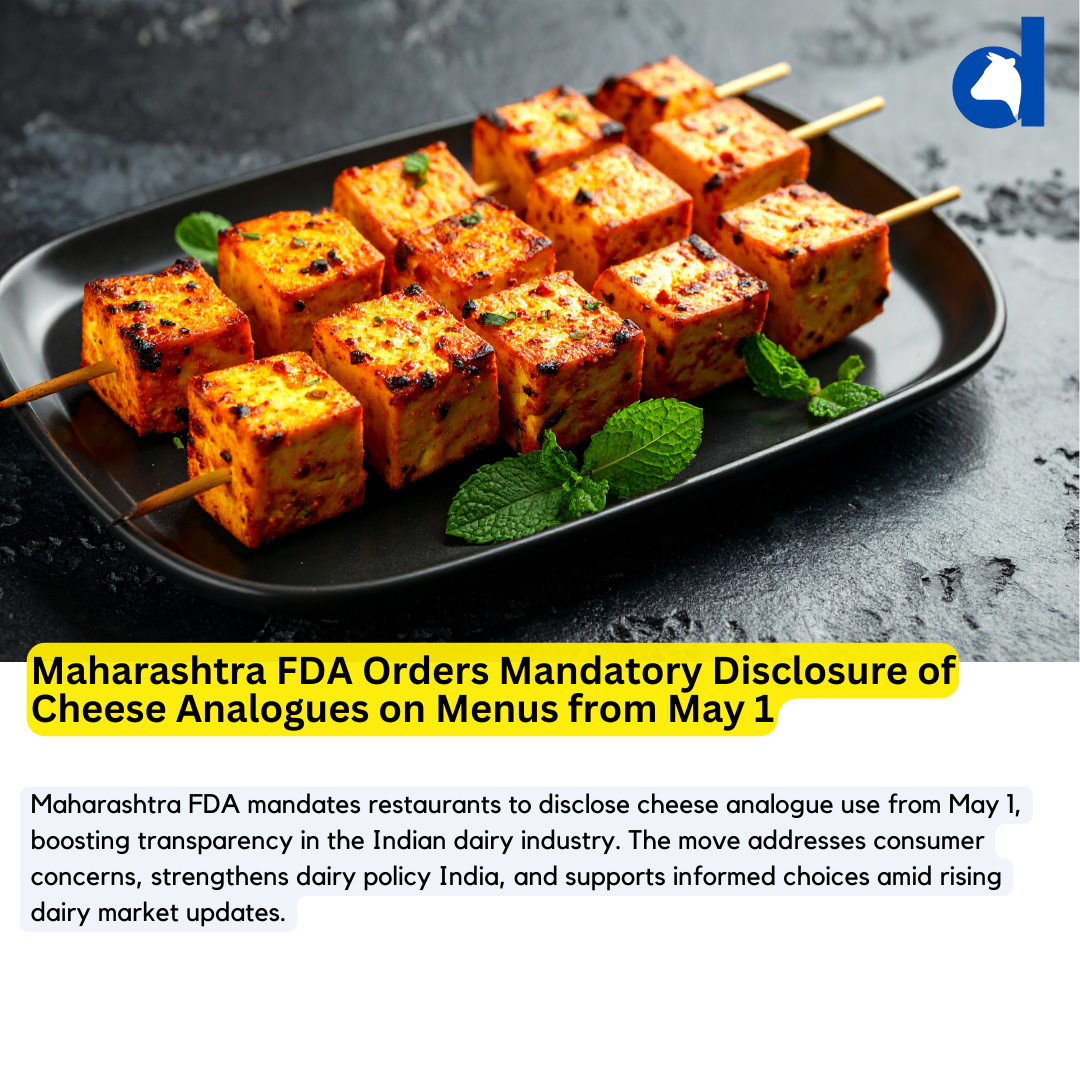
In a decisive step towards improving transparency in the Indian dairy industry, the Maharashtra Food and Drugs Administration (FDA) has mandated that all food service establishments clearly disclose the use of cheese analogues in their offerings. This latest dairy policy development in India reflects growing regulatory attention to food authenticity and consumer awareness across the dairy sector.
The directive applies to restaurants, hotels, caterers and fast-food operators, requiring them to display the information on both printed menus and digital display boards. The compliance deadline is April 30, with strict enforcement beginning May 1.
Why the Move Matters: Rising Concerns Over Misleading Labelling
The decision follows multiple consumer complaints, highlighting that several outlets were serving cheese analogue products without proper disclosure. In many cases, these items were marketed under names that resembled traditional dairy products, such as paneer or cheese, creating confusion among buyers.
This issue has gained prominence in recent dairy news in India, particularly as consumers become more conscious of dairy nutrition news and ingredient transparency. With the rise of value-added dairy products and alternatives, clear differentiation has become essential to maintain trust.
Understanding Cheese Analogue vs Traditional Dairy Products
The FDA has clarified an important distinction:
- Paneer and cheese are derived entirely from milk.
- Cheese analogue, on the other hand, is made using edible oils, starch, emulsifiers and other non-milk ingredients.
While the regulator has stated that these analogue products are not harmful, it emphasised that consumers must have access to accurate information to make informed dietary choices. This aligns with broader Indian dairy trends, where awareness and demand for authenticity are steadily increasing.
Regulatory Backing and Industry Impact
The directive has been issued under the Food Safety and Standards Act, 2006. Non-compliance could invite penalties under existing food safety regulations, signalling stricter enforcement in the milk industry news landscape.
From an industry perspective, this move is expected to:
- Encourage ethical labelling practices
- Strengthen consumer trust in dairy production news
- Potentially boost demand for genuine milk-based products
As dairy market updates indicate increasing competition between traditional and alternative products, such regulatory clarity may significantly influence purchasing behaviour.
Parallel Measure: CCTV Mandate for Medical Shops
Alongside the food labelling directive, the FDA has also ordered the installation of CCTV cameras in all retail and wholesale medical shops across Mumbai. This initiative is aimed at monitoring the sale of Schedule H, H1 and X drugs, especially to prevent unauthorised access by minors.
The authority highlighted the need for stronger surveillance and reporting systems to curb misuse and ensure compliance with existing regulations.
A Step Towards Greater Consumer Empowerment
This regulatory intervention reflects a broader shift within the dairy sector in India towards transparency, accountability and informed consumption. As dairy technology in India evolves and alternative formulations gain traction, clear labelling will play a crucial role in shaping consumer confidence.
For stakeholders across the value chain, from producers to food service providers, the message is clear: transparency is no longer optional. It is central to sustaining growth, credibility and long-term success in the evolving Indian dairy ecosystem.