Rapid population growth, accelerating urbanisation, and climate change are placing unprecedented pressure on global agricultural productivity, thereby posing a serious threat to food security (Calicioglu et al., 2019). The global population is projected to reach nearly 10 billion by 2050, which will significantly increase demand for nutrient-rich foods such as milk, meat, and eggs (Godfray et al., 2010). Meeting this demand will require major advances in agricultural efficiency and sustainability.
Traditionally, animal feed production has relied heavily on resource-intensive terrestrial crops such as soybeans and maize. However, these crops require large areas of arable land, extended cultivation periods, and substantial water and fertiliser inputs (Calicioglu et al., 2019; Tian et al., 2020). Poultry production, in particular, continues to expand due to strong consumer demand driven by affordability and high nutritional value. This growth has intensified the need for non-GMO, chemical-free feed alternatives, especially within organic poultry farming systems (Uguz & Sozcu, 2023).
Microalgae and Cyanobacteria as Sustainable Feed Sources
Microalgae and cyanobacteria comprise a diverse group of photosynthetic microorganisms capable of converting atmospheric carbon dioxide and sunlight into valuable biomolecules, including proteins, lipids, carbohydrates, and bioactive compounds (Saadaoui et al., 2021; Thajuddin, Chithirai, et al., 2024; Thajuddin & Subramanian, 2005). Compared to conventional crops, these organisms exhibit rapid growth rates, high biomass productivity, and exceptional nutrient density, making them promising candidates for animal, poultry, and aquaculture feed (Chisti, 2013; Lum et al., 2013).
Role of Algae in Next-Generation Animal Feeds
Next-generation feeds represent innovative nutritional strategies designed to enhance feed efficiency, animal health, and environmental sustainability. The application of algae in animal feed has expanded rapidly across Asia, particularly in Japan, China, South Korea, and the Philippines, supported by strong research and development initiatives. Countries such as India, Thailand, and Taiwan are also advancing algal feed technologies. In the United States and the United Kingdom, approximately 30% of algal biomass production is currently directed towards animal feed applications (Camacho et al., 2019; Novoveská et al., 2019).
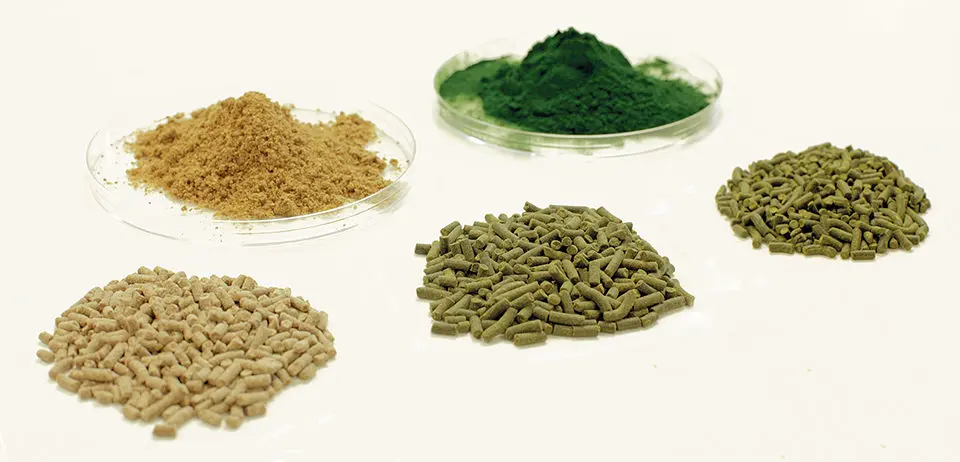
Incorporating algal biomass into feed formulations provides a rich source of polysaccharides, essential amino acids, vitamins, minerals, pigments, fatty acids, and proteins, with protein content ranging from 40–70% on a dry weight basis (Andrade-Bustamante et al., 2025; García-Encinas et al., 2025). These nutritional attributes contribute to improved animal growth, health, and product quality.
Benefits Across Aquaculture, Poultry, and Livestock Systems
In aquaculture, microalgae are directly used as feed for zooplankton, larvae, molluscs, shrimps, and fish, resulting in enhanced growth performance, immunity, and pigmentation (Eissa et al., 2024; Khan & Rahman, 2025). In poultry and livestock systems, even low inclusion levels of algal biomass can deliver significant physiological benefits. These include improved gut health, stimulation of beneficial probiotic populations, enhanced immune responses, and increased resistance to viral and bacterial infections (Madeira et al., 2017).
Overall, algal supplementation has been associated with improved growth and reproductive performance, better weight management, and enhanced feed conversion efficiency. However, several challenges remain, including high production costs, variability in biochemical composition due to strain selection and cultivation conditions, and limited digestibility caused by rigid cell walls (Ahmad et al., 2022; Machado et al., 2022).
Conclusion
This review highlights the exceptional nutritional profile and sustainability potential of microalgae and cyanobacteria as next-generation feed ingredients for aquaculture, poultry, and livestock production. Despite existing challenges, advances in cultivation, processing, and formulation technologies can unlock their full potential. Wider adoption of algal-based feeds could play a critical role in enhancing animal health, reducing environmental impact, and strengthening global food security in the face of future challenges.