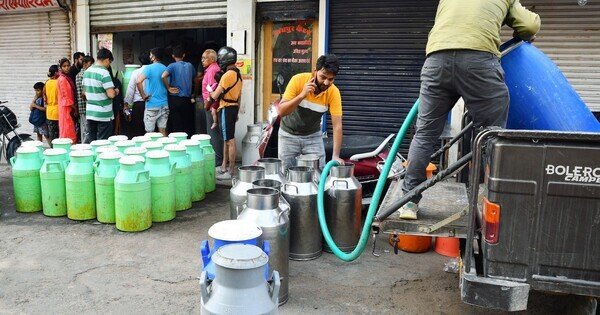
BMPA sets new rate at ₹102 per litre from September
Wholesale milk prices across Mumbai and adjoining metropolitan supply networks are set to increase sharply from September 1, 2026, after the Bombay Milk Producers Association (BMPA) announced a ₹9 per litre increase.
The revised wholesale price will rise from ₹93 to ₹102 per litre, marking one of the steepest single-step price increases announced by the association in recent years. The new rate will remain in effect for six months, through February 28, 2027.
The increase comes just ahead of the festive season, when household and commercial demand for milk and other dairy products typically receives additional support.
Rising cattle costs drive price revision
According to the association, dairy farmers and tabela operators across the Mumbai region are facing increasing operating costs.
The price of essential cattle-feed ingredients, including green fodder, chuni and oil cakes, has risen over the past year. Farmers are also dealing with higher transportation expenses and increased costs associated with livestock maintenance.
These rising expenses have placed pressure on the margins of milk producers and cattle-shed operators, contributing to the decision to revise wholesale prices.
Mumbai milk price revision
| Particular | Details |
|---|---|
| Previous wholesale price | ₹93/litre |
| New wholesale price | ₹102/litre |
| Increase | ₹9/litre |
| Percentage increase | Approx. 9.7% |
| Effective date | September 1, 2026 |
| New rate valid until | February 28, 2027 |
| Announcing organisation | Bombay Milk Producers Association |
Consumers likely to face higher retail prices
The wholesale increase is expected to put immediate pressure on retail milk prices in Mumbai and surrounding markets.
Local milk vendors, neighbourhood dairies and doorstep suppliers may pass the additional procurement cost on to consumers. Depending on individual supply and distribution costs, some retail prices could rise by the full ₹9 per litre or potentially more.
For households that purchase milk every day, even a single-digit increase per litre can translate into a noticeable rise in monthly expenditure.
The impact could be particularly significant for families that consume larger quantities of milk or regularly purchase other dairy products.
Dairy businesses may also face higher costs
The impact of the price increase is expected to extend beyond household milk consumption.
Bakeries, sweet shops, restaurants, tea stalls and other food businesses that use milk as a key ingredient could face higher input costs.
The increase comes ahead of the festive period, when demand for products such as paneer, curd, khoa and traditional sweets generally increases. Higher milk procurement costs could therefore contribute to increased prices for several dairy-based products.
For mithai manufacturers and other dairy-dependent businesses, managing higher raw-material costs could become an important challenge during the upcoming festive season.
Impact across the dairy value chain
The BMPA’s decision highlights the continuing pressure faced by milk producers from rising input costs.
While higher wholesale prices can help producers recover increased expenses, they also create challenges for retailers, food businesses and consumers. The sustainability of the new price will ultimately depend on factors such as feed costs, milk supply, demand and broader market conditions.
The six-month price period provides some stability for market participants, allowing producers and buyers to plan around a fixed wholesale rate through February 2027.
Festive demand adds further significance
The timing of the increase is particularly important because it comes shortly before the festive season.
Higher consumption of milk and milk-based products during festivals could amplify the effect of the wholesale price increase throughout the dairy supply chain. Consumers may see higher prices not only for liquid milk but also for products made using milk as a major ingredient.
For Mumbai’s dairy sector, the coming months will therefore be closely watched as farmers, retailers, processors and consumers adjust to the new pricing environment.
The ₹9 per litre increase represents a significant shift in the city’s wholesale milk market and underscores the growing importance of managing feed, transportation and livestock costs while maintaining affordable dairy supplies for consumers.