New Zealand’s dairy industry has started the new production season with record milk collections for August, supported by favourable pasture conditions and strong early-season production. However, emerging El Niño-related drought risks and changing international dairy commodity prices could influence production levels, export performance and processor margins in the months ahead.
The latest developments highlight the challenges facing New Zealand’s pasture-based dairy sector as it balances strong milk supply with uncertain weather conditions and shifting demand across major export markets.
According to the reported industry update, favourable winter rainfall and mild early-spring temperatures supported pasture growth across key dairy-producing regions, including Waikato, Taranaki and Canterbury. These conditions helped farmers maintain pasture availability and support milk production at the beginning of the season.
Weather Risks and Global Market Changes Shape Dairy Outlook
Despite the positive start, meteorologists have warned that an intensifying El Niño could bring prolonged dry conditions to eastern and northern production areas. For New Zealand’s pasture-based dairy farms, changes in rainfall and soil moisture can have an immediate impact on feed availability and milk output.
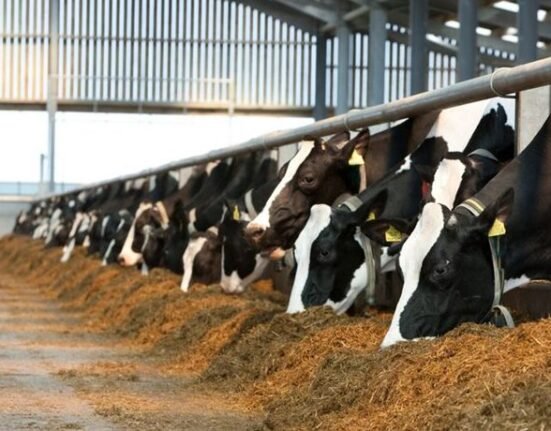
Rotational grazing systems depend heavily on consistent pasture growth to supply dairy cows with sufficient dry matter. When moisture deficits reduce grass production, farmers may need to supplement grazing with silage, purchase additional feed such as palm kernel expeller (PKE), or adjust herd-management practices to protect animal condition.
Extended drought could increase production costs and reduce milk collections, potentially reversing some of the early-season gains. Dairy processors may also face challenges in maintaining factory utilisation if milk volumes decline during periods of peak processing demand.
The weather outlook therefore remains an important factor in determining whether New Zealand can sustain its strong production trajectory throughout the summer months.
Global Milk Supply and Chinese Import Trends
New Zealand’s production performance is unfolding against a backdrop of rising milk output in several major dairy-exporting regions. The reported August figures showed milk production increasing by 1.7% in the United States, 2.2% in Argentina and 1.8% in Uruguay. Western Europe and Australia also recorded positive milk deliveries.
China presented a contrasting picture, with domestic milk production declining by 2.9% amid ongoing herd rationalisation. However, lower domestic production has not translated into uniform growth across imported dairy products.
According to the reported data, China’s overall dairy imports fell by 14.7% year-on-year in August, reflecting weaker purchases of whole milk powder (WMP) and skim milk powder (SMP). In contrast, imports of anhydrous milk fat (AMF) rose by 78%, while butter imports increased by 119%.
This divergence highlights the changing structure of international dairy demand. While Chinese buyers may be reducing purchases of certain commodity powders, demand for specialised milkfat ingredients remains important for food manufacturing, bakery products and foodservice applications.
For exporters, these trends reinforce the importance of diversifying product portfolios and monitoring demand across individual dairy commodity categories rather than relying solely on aggregate import figures.
Global Dairy Trade Highlights Diverging Commodity Prices
The international dairy market is also experiencing different price movements across proteins, powders, cheese and milkfat products. At Global Dairy Trade Event 413, the overall index reportedly increased by 1.2%, supported by stronger prices for milk powders.
Skim milk powder prices rose by 4.3% to an average of US$3,847 per metric tonne, reaching their highest reported benchmark on the platform since July 2022. Whole milk powder prices also increased by 1.2%.
Cheese markets moved in the opposite direction, with cheddar prices falling by 3.7% and mozzarella declining by 3.9%. These differences suggest that growing supply and uneven international demand are influencing dairy product categories differently.
New Zealand’s skim milk powder exports to Southeast Asia reportedly expanded by 68% in August, providing additional support for dairy processors focused on milk-powder production. Stronger protein demand could help offset weaker pricing in some other product categories, although overall profitability will continue to depend on milk procurement costs, processing efficiency and product mix.
Outlook for Farmers and Dairy Processors
New Zealand’s dairy sector enters the new season with encouraging milk collection performance, but sustaining that momentum will depend on weather conditions, feed availability and international market developments.
Farmers may need to prepare for possible summer feed shortages, while processors will have to manage fluctuating milk volumes and differences in commodity prices. At the same time, changing Chinese import patterns and continued demand for milk proteins could create opportunities for exporters able to respond to evolving market requirements.
For the wider dairy industry, the latest developments demonstrate how climate risks and global commodity movements increasingly interact to shape farm economics and international trade. Maintaining production resilience, managing feed costs and diversifying export markets will remain essential as the season progresses.