From feed formulation to farm-level performance, the programme aims to bridge the dairy sector’s knowledge and skills gap.
The growth of the dairy industry depends not only on farmers and milk processors but also on the professionals who connect feed manufacturing, animal nutrition, veterinary services and farm management. Recognising the importance of this link, Innovatief Technologies has launched nKB Konnect, a professional learning and skill development programme designed to strengthen practical knowledge and workplace capabilities across the dairy and animal feed sectors.
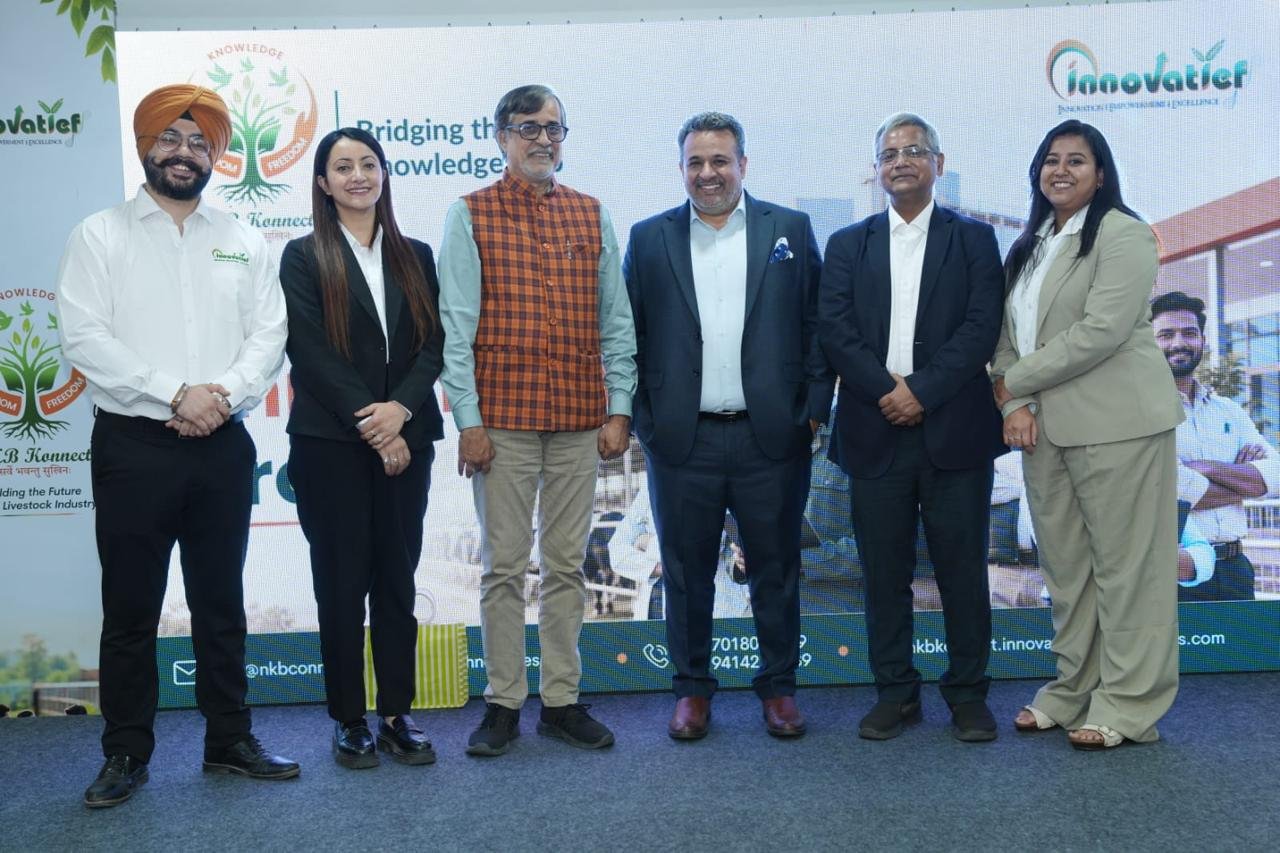
Launched on 25 October 2026 in Chandigarh, nKB Konnect – meaning “New Knowledge Base” Konnect – is built around three principles: Learn, Implement and Grow. The programme aims to connect cattle feed science with business performance and dairy farm outcomes by equipping professionals with the knowledge and skills required to perform their roles more effectively.
The launch attracted more than 100 participants, including dairy feed millers, dairy advisors, feed mill operations managers, milk processors, dairy input companies, and animal nutrition and animal health professionals.
Connecting Scientific Knowledge with Dairy Farm Performance
The programme is designed for dairy farm advisors, veterinarians, entry-level professionals and mid-level managers working in feed milling, animal nutrition and animal health. Its focus is on addressing a persistent industry challenge: the shortage of professionals with sufficient practical knowledge to translate technical information into effective workplace performance.
One of the programme’s distinguishing features is its Online, Offline and On-Farm learning model. Innovatief Technologies describes it as the first skill development programme of its kind in Asia. The approach combines digital self-learning, guidance from experienced national and international industry experts, classroom sessions and practical implementation at dairy farms and feed mills.
Participants are assigned to Basic, Intermediate or Advanced learning levels following a qualification round conducted by the programme’s experts and counsellors. Learning materials include digital lessons, reading resources, audio-visual presentations, live online interactions, practical exposure and follow-up counselling. Mentoring and peer discussions continue after formal coursework, allowing participants to revisit concepts and apply them to real industry situations.
Industry Leaders Highlight the Importance of Professional Development
Speaking about challenges in cattle feed businesses, Dr. Suyash Vardhan, Chief Technology Officer of Innovatief Technologies, highlighted the impact of limited industry know-how on business growth despite increasing demand. He emphasised the need for stronger sales and marketing teams, consistent product quality, improved product portfolios, clear market positioning and a deeper understanding of farmer requirements.
Dr. P. M. Radhakrishna, Managing Director of Chemlife Innovations and Research Advisor to Innovatief Technologies, discussed the evolution of research and development in India’s cattle feed industry over the past two decades. He highlighted the importance of product innovation, quality assurance, field trials and customer understanding. He also stressed that feed formulations should be supported by evidence demonstrating their usefulness, including an understanding of the chemical interactions between raw materials and feed additives.
He further explained the relationship between feed manufacturing and milk processing, outlining lessons that dairy feed millers can draw from milk processing companies.
Mr. Sujay, Managing Director of Innovatief Technologies, presented the company’s vision for continuous learning and industry development. He discussed the complementary relationship between Indian agriculture and the animal feed industry, emphasising that developing human resources is essential to unlocking the potential of the rural economy.
Dr. Partha Pratim Das and Ms. Akanshya Dutta of Delhi Technological University (DTU) presented on knowledge partnerships for rural entrepreneurship and skill development. Their session explored how design thinking, practical problem identification and continuous feedback can improve learning outcomes and encourage meaningful changes in workplace behaviour.
Digital Learning and Industry-Wide Access
The programme also demonstrated its digital learning platform and organisational capabilities. Ms. Ankita Chauhan, Manager – Marketing and Capacity Building, introduced the learning modules, while Mr. Rahul Sharma, Marketing Executive, explained the platform’s digital architecture and learning process.
Organisational enrolment and participant progress tracking are intended to help companies plan employee development, while individual learning pathways support continuous professional growth. This approach could be particularly valuable for smaller enterprises that may not have dedicated training resources or access to specialised industry experts.
By combining shared learning resources with expert guidance, Innovatief Technologies aims to make structured professional development more accessible across the sector. The broader objective is to improve employees’ understanding of their responsibilities and help them provide better support to dairy farmers.
Dr. Simrandeep Singh and Ms. Aishwarya S. P. moderated the programme, while Mr. Sandeep Saraswat delivered the vote of thanks. The organising team included professionals from Innovatief Technologies, supported by event managers. International messages from global feed milling experts and professionals in market research and analytics added broader industry perspectives.
The programme concluded with discussions and networking among participants. Through nKB Konnect, Innovatief Technologies is seeking to establish a continuing learning framework that connects professional development with farmer confidence, business performance and the wider growth of India’s dairy feed and milk processing industries.