New Zealand biotechnology start-up Daisy Lab has been acquired by British industrial biotechnology company Mycofeast in a deal that could accelerate the commercial production of dairy proteins without cows. The acquisition brings Daisy Lab’s precision fermentation technology and research team into a larger biotechnology group with established industrial fermentation infrastructure in Europe.
The financial terms of the transaction have not been disclosed. While Daisy Lab’s research and development team will remain in Auckland, New Zealand, large-scale manufacturing is expected to take place at Mycofeast’s European facilities.
Precision Fermentation Targets High-Value Dairy Proteins
Founded in 2021 by Irina Miller, Nikki Freed and Emily McIsaac, Daisy Lab developed a technology that uses genetically modified yeast to produce proteins naturally found in milk. The process, known as precision fermentation, introduces genetic instructions for a target protein into microorganisms, which then produce that protein inside controlled fermentation systems.
The company initially focused on beta-lactoglobulin, a major whey protein, before shifting its attention in early 2024 to lactoferrin. This iron-binding protein occurs naturally in milk and colostrum and is valued for its functional properties, particularly in infant nutrition and dietary supplements.
Lactoferrin is present in cow’s milk at relatively low concentrations, making conventional extraction resource-intensive. Precision fermentation offers a potential alternative by producing the protein in fermentation vessels without requiring milk as the direct raw material.
Daisy Lab Demonstrates Promising Production Potential
In 2025, Daisy Lab reported that its production strain could generate multiple grams of bovine lactoferrin per litre of fermentation broth. The company suggested that scaling up the process could substantially reduce production costs compared with conventional lactoferrin supplies.
However, laboratory performance does not automatically translate into commercially viable production. Manufacturers must demonstrate consistent yields, product purity, process efficiency, regulatory compliance and competitive operating costs at industrial scale.
Daisy Lab had received approval from New Zealand’s Environmental Protection Authority in 2024 to scale up fermentation within a contained facility to 5,000 litres. The company subsequently installed a 500-litre fermenter at its Parnell laboratory.
Despite raising approximately NZ$1.75 million by 2025, further expansion required significant additional capital. The acquisition gives the technology access to a larger industrial platform, potentially reducing the financial and infrastructure challenges associated with building a standalone production facility.
Mycofeast Provides Industrial Manufacturing Capacity
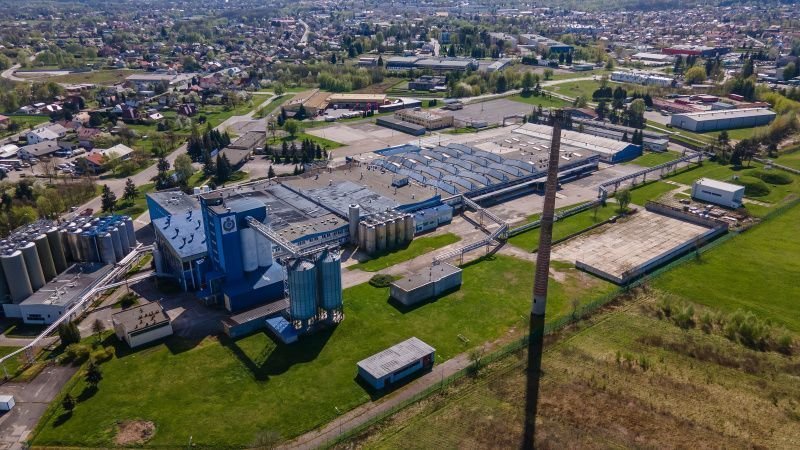
Mycofeast, founded in 2023 and headquartered in Oxford, United Kingdom, has expanded through acquisitions and biotechnology investments. Its operations include Evolutia Bio, a research arm based in California, and a fermentation facility in Poland with a reported capacity of 16 million litres.
Daisy Lab adds a dairy protein platform to Mycofeast’s existing fermentation capabilities and strengthens its presence in the Asia-Pacific region. The partnership is expected to combine Daisy Lab’s protein technology with Mycofeast’s expertise in process development, industrial manufacturing and commercialisation.
The founders will take on roles across the wider group while continuing to support the New Zealand business. The lactoferrin programme will also be developed in collaboration with Evolutia Bio.
The companies have stated that the acquisition will not result in layoffs. Over the coming year, priorities include process optimisation, further scale-up, regulatory submissions, customer trials and transferring production processes to Mycofeast’s manufacturing facilities.
Implications for the Dairy Industry
The acquisition highlights growing interest in precision fermentation as a way to manufacture selected dairy proteins for specialised applications. High-value ingredients such as lactoferrin may offer more immediate commercial opportunities than replacing conventional milk production at scale.
For established dairy companies, the technology could create opportunities for new ingredient portfolios, partnerships and alternative production methods. At the same time, conventional dairy producers retain advantages in existing infrastructure, established supply chains, consumer familiarity and the production of bulk milk and dairy commodities.
Regulatory requirements remain important because Daisy Lab uses genetically modified microorganisms during fermentation. Production scale-up and market entry require appropriate approvals, even where the final purified ingredient does not contain the production organism.
The acquisition also illustrates the difficulty faced by early-stage food biotechnology companies in securing the capital and infrastructure needed to move beyond laboratory research.
Daisy Lab’s technology and team will remain in New Zealand, but commercial-scale production is expected to occur in Europe. The arrangement could help bring precision-fermented lactoferrin closer to market while highlighting the challenges smaller innovation hubs face in retaining industrial manufacturing activity.
As precision fermentation advances, its likely role is not the immediate replacement of conventional dairy farming, but the development of complementary production methods for specific, high-value ingredients.