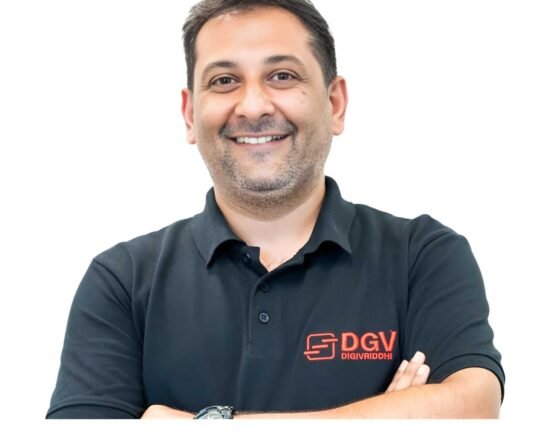
Tamal Chatterjee — Chief Growth Officer, Sid’s Farm
Your career spans more than two decades across marketing, business development and growth leadership. How has this journey shaped your approach to building brands, and what has kept you closely connected to the dairy sector over the years?
My career has moved through very different worlds — consumer durables, B2B eCommerce, media and content, rural digital access, and dairy before Sid’s Farm. On the surface these look unrelated, but each one taught me a version of the same lesson: you cannot build a brand from the outside in. You have to understand the product, the supply chain and the customer’s real, unglamorous daily life before you build your GTM strategy.
Dairy has stayed with me because it sits at an unusual intersection. It is deeply emotional — milk is often the first thing a mother gives a child, and trust in it is almost inherited — yet it is also one of the most operationally unforgiving categories there is. There is no margin for error between the farm and the doorstep. That combination of emotional weight and operational precision is what has kept me here. It rewards marketers who are willing to get close to procurement, quality and logistics, not just to campaigns. To top that, is the satisfaction of going to bed happy every night knowing that I’ve contributed towards putting good food on people’s plates.
Your role at Sid’s Farm has evolved from marketing leadership to Chief Growth Officer. How has this transition changed the way you think about marketing—not merely as communication, but as a driver of revenue, profitability and long-term enterprise growth?
The shift from CMO-style thinking to Chief Growth Officer has been less about acquiring new tools and more about changing what I hold myself accountable for. As a marketer, my scorecard was reach, engagement and brand recall. As CGO, my scorecard is acquisition cost against lifetime value, subscription retention, channel-wise contribution margin and how efficiently every rupee of spend converts into a repeat household, not just a one-time buyer.
Practically, this means marketing decisions now sit in the same room as decisions about pricing, pack sizes, delivery economics and channel mix. When we look at something like a new price point or pack format, we are not asking ‘will this get attention’ — we are asking how it moves acquisition cost, how it affects churn six months out, and what it does to unit economics at scale. Growth leadership means treating marketing as a lever on the P&L, with the same discipline you would apply to procurement or manufacturing, rather than as a cost centre that sits apart from the business.
Milk is an everyday necessity, but consumers often find it difficult to independently judge its quality. How can a dairy company translate technical attributes such as testing, traceability and food safety into a brand proposition that consumers can understand and trust?
The honest starting point is admitting that most consumers are not going to read a lab report before pouring milk into their child’s glass. So the job isn’t to publish data — it’s to translate rigour into something a household can feel and verify in ten seconds. Also, the true test of a brand’s ethics lies in how rigorously they follow every step in the SOP even while knowing that most customers would probably never take a look at the test reports.
At Sid’s Farm, every batch goes through a multi-parameter testing process before it reaches a doorstep, and every pack carries a QR code that traces the test reports of that particular batch. The QR code matters more than any claim we could make in an ad, because it hands the proof to the consumer instead of asking them to take our word for it. The brand proposition isn’t ‘we test rigorously’ — it’s ‘you don’t have to trust us blindly, you can check for yourself.’ That reframing, from claim to verifiable fact, is what makes technical quality legible as a brand promise rather than jargon.
Transparency has become central to the Sid’s Farm brand. What does genuine transparency mean in practice, and how can a company ensure that it does not become merely another marketing claim?
Transparency stops being a marketing claim the moment it costs you something operationally. If a company only ever shares good news — the certifications, the awards, the glowing testimonials — that isn’t transparency, that’s curation. Genuine transparency means being willing to show the parts of the process that are unglamorous or invisible: the daily discipline of quality testing that no consumer sees, the traceability that could just as easily expose a problem as confirm a strength.
In practice, we treat transparency as an operating standard first and a communication strategy second. The farmer-traceability system and the testing regime exist because Dr. Kishore Kumar Indukuri built the company on the conviction that dairy in India needed a fundamentally more honest supply chain, not because they made for good content. My job is simply to not let the storytelling get ahead of what the operations can actually stand behind. The test we apply to any transparency-led message is: could a customer independently verify this? If the answer is no, it doesn’t go out, however good it sounds.
Transparency is a core value that we try and imbibe in every small thing that we do at Sid’s Farm. Take for example our farm & factory visits open to anyone interested, every weekend. We take the visitors (who are mostly our customers) through nuances of our process that makes them pause & reflect on the importance of asking the right questions. Or say our personalized communications to each D2C subscriber every time we are forced to raise prices, in which we clearly lay out what input costs changed at our end and how that added to the pricing.
Dairy purchasing is highly habitual, and convincing a household to change its milk brand can be difficult. What have you learnt about customer acquisition, the first product experience and building long-term loyalty in such a frequently purchased category?
Milk is probably the most habit-locked category in Indian FMCG. A household’s milk brand is often inherited from parents and rarely questioned, so the acquisition moment is really a trust transaction, not a mere commercial transaction. You are not selling a product trial, you are asking someone to override a habit that touches their child’s health.
What I’ve learnt is that the first delivery matters disproportionately more than any campaign that preceded it. If that first pack arrives on time, tastes as promised and the app or subscription experience is frictionless, you’ve done more to earn loyalty than a month of advertising could. Beyond that, loyalty in this category compounds through consistency, not novelty — the same reliable quality, the same trustworthy sourcing, delivery after delivery. We’ve also found that acquisition strategy has to be tailored by city maturity: in a market where we’re well established, the priority is deepening retention; in a newer market, it’s about smoothing the first few weeks of trial so habit has a chance to form before a competitor’s discount pulls the household away.
The brands that endure will be the ones that treat trust as infrastructure, not messaging.”
There also are these small gestures from our end like visiting a long standing customer with a surprise bag of goodies, or special privileges to existing customers of a housing society when we are doing BTL activations there, which are our quiet ways of saying that every customer is special to us.
Discounts and introductory offers may attract consumers, but they do not necessarily create loyalty. How can dairy brands move beyond price-led marketing and build lasting differentiation around quality, experience and purpose?
Discounts are excellent at buying attention and terrible at buying loyalty, because anyone who joins you for the price will leave for a better price. In a category people buy almost every day, a purely price-led relationship is one of the most fragile things you can build. However, I do admit, that when you’re chasing GMVs in a very fast-moving category like ours, discounting seems extremely tempting most of the times.
The differentiation that lasts is the kind a competitor can’t copy overnight — traceability infrastructure, testing discipline, a founder-led purpose that predates the marketing department. Purpose only works as differentiation when it’s operational rather than rhetorical: Sid’s Farm exists because our founder wanted farmers to be paid fairly and consumers to know exactly what they were drinking, and that conviction shows up in decisions made long before a customer ever sees a rupee off. We use price to get someone to try the product, but what earns the renewal is the experience — a good delivery, a trustworthy pack, transparency they can act on — because that is what a discount alone can never manufacture.
Sid’s Farm is expanding into markets with different consumer behaviours, retail structures and competitive environments. How do you determine which elements of the brand should remain consistent and which need to be adapted for each city?
The non-negotiables travel unchanged everywhere: the quality testing standard, the farmer traceability, the core brand promise of transparency. Those are the reasons someone chooses us over an established local player, and diluting them in a new market to move faster would undercut the very thing we’re trying to build a reputation on.
What changes is the go-to-market shape — the channel mix, the messaging emphasis, even which product format leads. In a mature market like Hyderabad, our priority is retention and deepening subscription behaviour among households who already know us. In Bengaluru, a lot of our growth work is about converting other online buyers into app subscribers. In a newer market like Pune, we lean on e-Com first entry rather than trying to directly fight for mind share immediately, and in a corridor-dense market like Mumbai’s western suburbs, density and premium formats matter more than broad reach. The discipline is separating brand truth, which is fixed, from market tactics, which should flex to how each city actually shops.
Direct subscriptions helped several new-age dairy brands establish close relationships with consumers. As the business scales, how do you see the future balance between D2C subscriptions, quick commerce, modern retail and traditional distribution?
I don’t think of these as competing channels so much as different stages of the same relationship. Quick commerce is very often where a new household first encounters us — low commitment, instant availability, easy to try. The app-based subscription is where that trial converts into habit, because it’s where we can offer the freshest experience, the most direct relationship, and the richest traceability. Modern retail and traditional distribution extend our reach into households that may never download an app just for milk but still deserve the same product standard.
As we scale, I expect quick commerce to keep growing as the discovery layer, subscriptions to remain the core of retention and lifetime value because that is where the relationship is deepest, and modern trade and general trade to matter for footprint and brand visibility for customer cohorts in which digital penetration is still catching up. In fact, we also supply to premium cafes where, with the right branding interventions, we often softly pique the customer’s curiosity. The balance isn’t static — it shifts by market maturity or new product context, which is why our growth strategy is built market by market rather than as one national channel mix.
Milk may bring a household into the brand, while products such as curd, paneer, butter, ghee and functional dairy offerings can deepen that relationship. How should consumer insight guide product innovation, and how do you distinguish a meaningful opportunity from a passing trend?
Milk earns the trust; the rest of the portfolio is where that trust gets to compound. Once a household relies on us for something as sensitive as milk, they’re far more open to buying curd, paneer, butter or ghee from us too, because we’ve already cleared the hardest bar — quality they don’t have to think about.
On distinguishing real opportunity from trend, we start from need states rather than category buzz. Before we move into a new category, we spend real time understanding distinct consumer cohorts and what functional benefit each was actually seeking, rather than launching something because the format was fashionable. A trend is something a category is talking about; a meaningful opportunity is something a specific, identifiable group of your existing customers is already asking for, in language you can trace back to a real problem in their day — digestion, immunity, a habit they’re trying to build. If we can’t name that customer and that problem specifically, we treat it as noise, not a brief. We keep our ears on the ground listening closely for indicators from across channels, brands, and consumers alike.
Rapid growth in dairy places pressure on procurement, manufacturing, cold-chain logistics and quality assurance. How can growth and marketing teams ensure that the brand promise does not move faster than the organisation’s ability to deliver it consistently?
This is the discipline I worry about most, because it’s the failure mode that’s invisible until it isn’t. A brand promise that outruns operational capacity doesn’t fail loudly — it fails quietly, one disappointed household at a time, and by the time you notice it in the retention numbers, real damage has already been done to trust that took years to build.
The guardrail we use is simple: growth and marketing don’t get to promise anything the supply chain hasn’t already proven it can deliver at the scale we’re promising it to. Before we expand delivery radius, launch a new pack size or push into a new city, the operational question — can procurement, cold chain and quality assurance sustain this reliably, not just on day one but on day ninety — gets answered first. Any go-to-market plan we build, whether for a new pack format or a new city, is grounded in unit economics and delivery-model realities from the outset, not bolted on afterward. Growth that quality assurance can’t keep pace with isn’t growth, it’s borrowed trust.
A thought here for growth stage companies like ours – it is extremely easy to spread oneself too thin in an attempt to go all out and procure from vastly far apart geographies just to support growth, but the bigger question to ask oneself is whether there is a clear route to profitability in sight at any volume when we take this path. The smarter, more sustainable way is to make your existing clusters denser to bring about greater optimization.
As Sid’s Farm enters its next stage of development, what are its most important growth priorities over the next three to five years, and what role could partnerships, new markets or acquisitions play in that journey?
Our priorities over the next few years centre on three things: deepening our position in the markets we’re already in rather than spreading thin, building out the parts of our portfolio — like functional and value-added dairy — that extend the relationship beyond milk, and getting the underlying delivery and subscription infrastructure ready to support that scale efficiently.
Partnerships have a real role to play here, particularly with organisations that bring FMCG operating depth and distribution muscle rather than capital alone. We’ve been in conversation with players in the broader FMCG and dairy and beverages space precisely because the right partner can compress years of infrastructure-building into a much shorter timeline, and can help us extend Sid’s Farm’s model of transparency and traceability to more households faster than we could alone. Any such partnership, for us, has to protect the founding promise of the brand — it’s a multiplier on our model, not a dilution of it.
While we are concentrating on the above, a significant part of our bandwidth shall also be utilized for development of more functional products in dairy as well as adjacent categories.
Looking at the Indian dairy market over the coming decade, what will distinguish the brands that build enduring consumer trust from those that achieve only short-term visibility? What advice would you offer young marketers and entrepreneurs seeking to build the next generation of dairy brands?
The brands that endure will be the ones that treat trust as infrastructure, not messaging. Visibility can be bought with media spend and discounting; trust in a category this intimate has to be earned through consistency that a consumer can verify for themselves, delivery after delivery, year after year. Over the next decade, as Indian consumers become more discerning about food safety and sourcing, the gap between brands that can prove their claims and brands that only assert them is only going to widen.
My advice to young marketers and entrepreneurs in this space would be to resist the temptation to lead with a campaign before the operations can support it. Spend time in the supply chain before you spend time in the boardroom writing brand decks. Build the traceability and the quality systems first, because no amount of storytelling can substitute for a product that consistently does what you say it does. And stay close to the category’s emotional weight — you are not selling a beverage; you are being trusted with something that goes into a child’s body every single day. If you build with that seriousness, the brand takes care of itself. Lastly, while traditional diary products will act as the sheet anchor for your brand, do not forget to keep your feelers out for changing consumer needs. The future belongs to those that understand a consumer’s real-life functional needs and creates a solution before the others do.