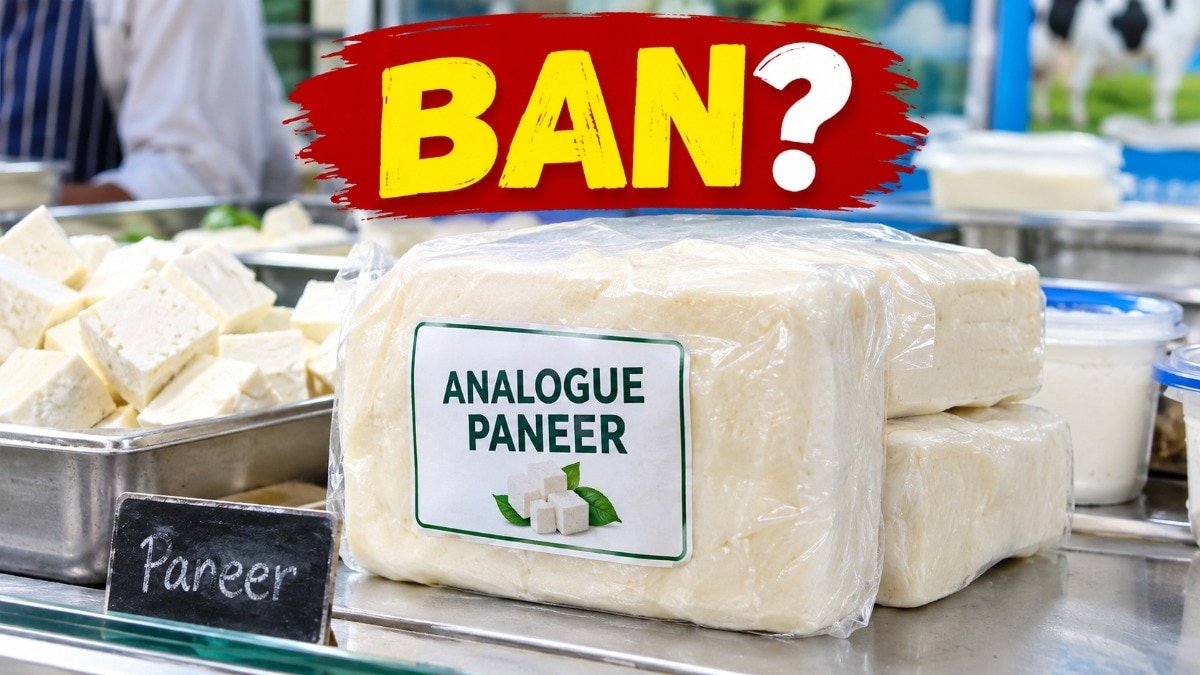
The Food Safety and Standards Authority of India (FSSAI) is considering a nationwide ban on analogue paneer, following restrictions already introduced by several states. FSSAI chief Rajit Punhani said the food regulator is scheduled to hold a meeting with states to seek their feedback on the issue. A nationwide ban could follow if there is consensus among the states, he told NDTV.
Analogue paneer has become a growing food-safety and consumer-information concern because products sold or presented as paneer may contain non-dairy ingredients instead of being made entirely from milk. The discussion is therefore focused not only on the composition of such products but also on how they are manufactured, labelled and sold to consumers.
Nationwide Ban Still Depends on State Feedback
Punhani said the FSSAI is seeking feedback from states before deciding whether analogue paneer should be prohibited across the country. According to the report, eight states have already taken action against analogue paneer, with Maharashtra, Chhattisgarh, Karnataka and Gujarat among those mentioned.
This means that a nationwide prohibition has not yet been announced. The next stage involves consultation with states and consideration of whether there is sufficient consensus for a countrywide restriction.
The issue has also been under discussion within FSSAI for some time. Earlier regulatory discussions considered whether dairy analogues that do not have specified standards should be restricted, while standardized products such as processed cheese and frozen desserts were treated separately.
What Is Analogue Paneer?
Analogue paneer is a paneer substitute in which some or all milk components are replaced with non-dairy ingredients. These may include vegetable fats or oils, starches, stabilisers, thickeners and other permitted food ingredients, depending on the formulation.
The key regulatory concern arises when such products are represented to consumers as conventional milk-based paneer. FSSAI’s consultation paper had proposed clearer declarations for dairy analogues, including the use of terms such as “Non-dairy” or “Analogue” when these products are used as ingredients in prepared foods.
Existing Action on Cheese Analogues
FSSAI has already taken action concerning the use of cheese analogues in foods. A public notice issued by the FSSAI West Region in April 2026 stated that selling cheese analogue as paneer constitutes a violation of food-safety requirements and directed food businesses to ensure accurate product naming.
The notice also highlighted the requirement for food businesses to provide appropriate information about the nature and quality of food products supplied to vendors.
Potential Impact on Restaurants and Food Businesses
A nationwide ban or stricter restrictions could affect restaurants, caterers, street-food vendors and other food-service establishments that use lower-cost dairy substitutes.
Businesses using analogue products may need to review their procurement practices, supplier documentation and ingredient declarations. Restaurants could also face higher input costs if they are required to replace non-dairy substitutes with conventional milk-based paneer.
The impact would depend on the final regulatory framework, including whether the government chooses a complete prohibition, stricter labelling requirements or other controls.
Why Paneer Matters in India
FSSAI chief Rajit Punhani highlighted paneer’s importance as a source of food and protein in India while explaining the rationale behind state-level restrictions. The regulator’s broader focus is on ensuring that consumers receive accurate information about the nature of the food products they purchase and consume.
For now, the proposed nationwide action remains under consideration. The outcome of consultations with states will determine whether India moves towards a countrywide prohibition of analogue paneer or adopts another regulatory approach.