The global dairy sector has entered 2026 under the shadow of a significant supply-demand imbalance. Following a year of aggressive production expansion across the “Big 7” exporting regions in 2025, the market is now undergoing a painful but necessary price correction. While lower feed costs initially bolstered farmgate margins, the resulting deluge of milk has outpaced lacklustre global demand, particularly from China. For the Indian dairy ecosystem—currently the world’s largest producer—this global volatility provides a strategic window to observe shifts in the “protein-to-fat” price ratio and recalibrate domestic processing priorities.
Production Dynamics: From Surge to Stagnation
The breakneck production growth of 2.6% witnessed in 2025 is forecast to evaporate, with the “Big 7” exporters expected to manage a mere 0.2% increase in 2026.
-
European Union & UK: The region is currently the epicentre of the supply glut. A 6% production surge in late 2025 led to a massive buildup of butter and Skimmed Milk Powder (SMP) stocks. However, the “margin squeeze” has arrived. Falling milk prices, coupled with escalating regulatory costs—specifically nitrogen emission caps in the Netherlands and Ireland—are expected to trigger a 0.9% production contraction by Q3 2026.
-
United States: The US remains the global outlier. With dairy herd numbers reaching their highest levels since the mid-1990s and superior yield per cow, US production is slated to grow by 2% in 2026. The US is successfully pivoting toward high-value cheese and whey exports, buoyed by expanding domestic processing capacity.
-
Oceania: New Zealand continues to demonstrate resilience with a forecast 2% lift in milk collections, supported by excellent pasture conditions. Conversely, Australia’s industry is retrenching; a 1.2% seasonal decline driven by soil moisture deficits is limiting its export surplus, forcing a focus on high-margin domestic functional proteins.
The Great Price Divergence: Fat vs. Protein
The most striking feature of early 2026 is the decoupling of dairy components.
-
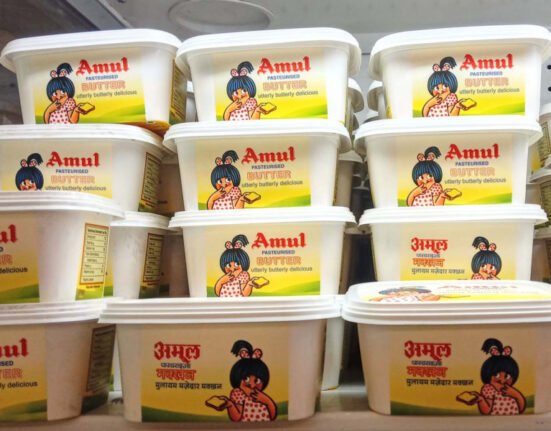
The Fat Crash: Butter prices, which peaked in 2025, plummeted by over 40% through February 2026. This collapse reflects a saturated market and a shift in consumer purchasing power.
-
The Protein Floor: In contrast, the protein complex is showing remarkable tenacity. While Whole Milk Powder (WMP) is down 30%, high-end proteins like whey and SMP have seen price firming since January. This is driven by a global structural shift toward sports nutrition, clinical supplements, and fortified foods.
The India Angle: Strategic Decoupling
While India remains largely insulated from direct global milk trade due to its self-sufficient structure, it is not immune to these macro-trends.
-
Import Parity and Fat Inflation: India has historically struggled with “fat inflation” (Ghee and Butter). The 40% drop in global butter prices could provide a temporary reprieve for Indian confectionery and HoReCa (Hotel, Restaurant, and Cafe) sectors if the government allows selective imports to cool domestic peaks.
-
The Whey Opportunity: Australia’s 76% surge in whey imports highlights a trend India is beginning to mirror. As the Indian middle class pivots toward protein-heavy diets, the reliance on imported whey remains a vulnerability. Indian cooperatives like Amul and private players like Parag Milk Foods face a clear strategic imperative: invest in advanced membrane filtration to capture the “Whey Value” currently being lost in traditional paneer and cheese production.
-
Global Competitiveness: With EU production set to contract, Indian exporters of SMP may find brief windows of opportunity in Southeast Asian markets, provided domestic procurement remains stable and prices competitive against Oceania.
Analyst’s View: Strategic Takeaways
The market is currently “sideways.” While recent Global Dairy Trade (GDT) auctions hint at a bottoming out of prices, a sustained recovery is unlikely until European inventories are cleared.
For Investors and Processors: 2026 is not a year for volume-based strategies. The focus must shift to component value. The resilience of the protein complex suggests that capital expenditure should be directed toward fractionation technologies rather than simple drying capacity. In the Indian context, the primary risk remains the disconnect between high domestic procurement costs and a softening global commodity floor.