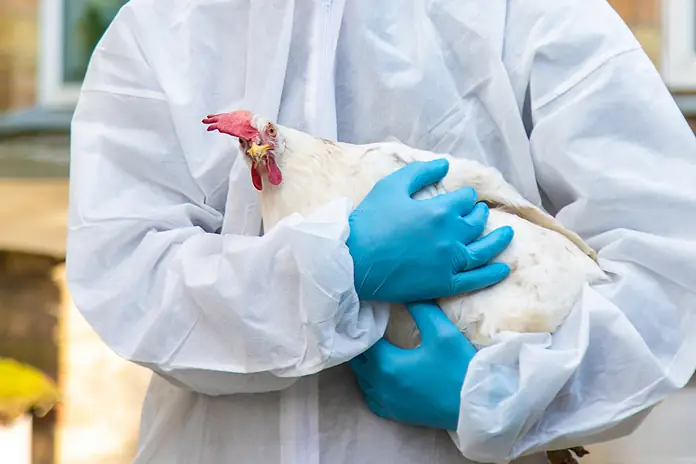
India is set to take an important step towards strengthening its poultry disease management capabilities with the launch of its first indigenous vaccine against highly pathogenic avian influenza (H5N1), developed specifically for chickens. The vaccine has been developed by the ICAR-National Institute of High Security Animal Diseases (ICAR-NIHSAD), marking a significant achievement in the country’s animal healthcare research and biotechnology sector.
Union Minister of Agriculture and Farmers Welfare Shri Shivraj Singh Chouhan is scheduled to dedicate the vaccine to the nation on 20 November 2026. The development reflects India’s growing focus on indigenous veterinary vaccines, disease prevention and strengthening domestic capabilities in animal health management.
Although the vaccine is designed for the poultry sector rather than dairy cattle, its development has wider implications for India’s livestock industry, including dairy farming, animal disease surveillance and integrated livestock biosecurity.
Indigenous Vaccine Targets a Major Poultry Disease Threat
Highly Pathogenic Avian Influenza (HPAI), commonly known as bird flu, is among the most serious infectious diseases affecting poultry populations. The disease can cause mortality of nearly 100% among infected birds, resulting in substantial economic losses through mass culling, movement restrictions and disruptions to domestic and international poultry trade.
India has reported more than 500 combined outbreaks involving H5N1 and H5N8 subtypes since the disease was first detected in the country in 2006. The 2006 outbreak alone resulted in estimated direct and indirect economic losses of approximately ₹2,200–3,000 crore, highlighting the financial vulnerability of the poultry sector to major disease outbreaks.
According to the Ministry of Agriculture and Farmers Welfare, a major bird flu outbreak could potentially reduce India’s GDP growth by up to 1.5%, while more than 20% of the country’s poultry population could be at risk if the disease spreads without effective control measures.
The newly developed vaccine specifically targets H5N1 Clade 2.3.2.1a, a viral strain identified as responsible for most bird flu outbreaks in chickens. The availability of a vaccine targeting this particular strain represents an important development in India’s domestic veterinary vaccine research capabilities.
Why the H5N1 Vaccine Matters for India’s Livestock Sector
The significance of the development extends beyond poultry farming. India’s livestock economy is closely interconnected, with dairy farming, poultry production and other animal husbandry activities contributing to rural employment, agricultural income and food security.
Avian influenza has also attracted attention because infections involving the H5N1 Clade 2.3.2.1a strain have been detected in several animal species, including mammals. Three human infection cases have also been reported in connection with this strain, according to the government’s announcement.
For the dairy industry, this development reinforces the importance of integrated animal disease surveillance and farm-level biosecurity. Dairy farms operating alongside poultry units or within mixed-livestock farming environments need effective hygiene protocols, controlled animal movement and appropriate separation between different animal populations.
However, the newly developed vaccine is specifically intended for chickens and should not be considered a vaccine for dairy cattle or a direct intervention against bovine diseases. Its relevance to the dairy sector lies primarily in the broader objective of strengthening disease prevention across India’s livestock ecosystem.
Strengthening Domestic Veterinary Research and Disease Preparedness
The vaccine has been developed by ICAR-NIHSAD, Bhopal, an institution working in the area of high-security animal disease research. Its development addresses a significant gap in India’s veterinary healthcare infrastructure, as no specific commercial vaccine was previously available against the H5N1 Clade 2.3.2.1a virus.
Indigenous vaccine development can strengthen the country’s ability to respond to locally circulating disease strains while supporting domestic research, veterinary biotechnology and animal healthcare manufacturing capabilities.
The announcement also highlights the importance of scientific institutions operating under the Indian Council of Agricultural Research (ICAR) in addressing emerging animal health challenges.
Implications for Farmers and the Wider Agricultural Economy
The economic consequences of avian influenza can extend across multiple stages of the agricultural value chain. Large-scale poultry losses can affect farmers, feed suppliers, processors, distributors and retailers. Disease-related restrictions can also disrupt market access and create uncertainty for agricultural businesses.
The dairy industry can draw an important lesson from this development: investment in preventive veterinary healthcare, scientific research and early disease detection is essential for maintaining livestock productivity and protecting farmer incomes.
According to the World Health Organization figures cited by the Ministry, 1,003 human H5N1 infection cases, including 479 deaths, had been reported across 25 countries since 2003. These figures underline the importance of coordinated animal and public health surveillance.
With the vaccine scheduled for dedication on 20 November 2026, India is advancing its efforts to strengthen poultry disease control through indigenous scientific innovation. Further details regarding commercial availability, vaccination protocols and field-level implementation will be important in determining its eventual impact on poultry farmers.
For India’s broader dairy and livestock ecosystem, the development represents another step towards building a more resilient animal agriculture sector through domestic research, preventive healthcare and stronger biosecurity practices.