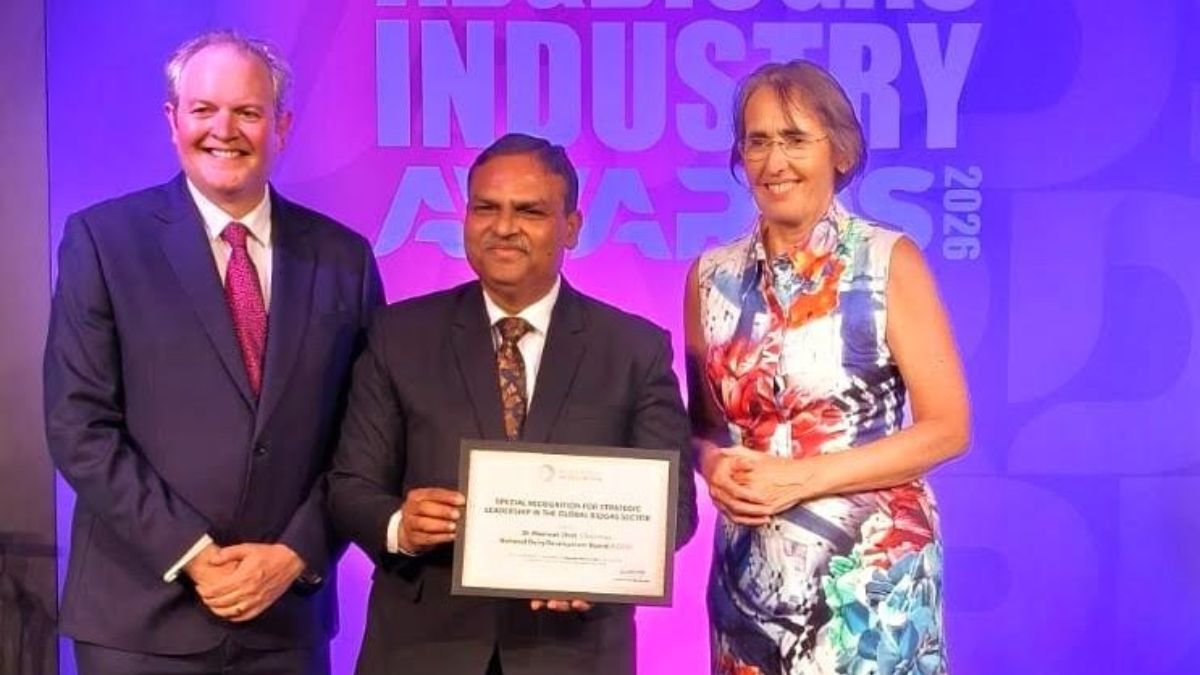
Anand, Gujarat: Dr Meenesh Shah, Chairman of the National Dairy Development Board (NDDB), has been honoured with the inaugural Strategic Leadership in the Global Biogas Sector Award by the World Biogas Association (WBA). The prestigious recognition was presented during the AD & Biogas Industry Awards 2026, held on 8 July at The Vox, NEC Birmingham, United Kingdom.
The award marks a significant milestone for both Dr Shah and the Indian dairy industry, recognising his leadership in advancing sustainable dairy development through innovative circular economy initiatives. As the first-ever recipient of this newly instituted honour, Dr Shah’s recognition highlights India’s growing influence in promoting renewable energy solutions through the dairy cooperative sector.
The Strategic Leadership Award was established by the World Biogas Association to acknowledge exceptional vision and leadership in accelerating the growth of the global biogas industry. Dr Shah’s selection reflects NDDB’s sustained efforts to integrate clean energy production, sustainable manure management and climate-focused solutions into dairy operations across the country.
The AD & Biogas Industry Awards, jointly organised by the World Biogas Association and the Anaerobic Digestion and Bioresources Association (ADBA), are regarded among the most prestigious honours in the international anaerobic digestion and biogas sector. Presented annually during the World Biogas Expo, the awards celebrate organisations and individuals driving innovation, sustainability and leadership in renewable energy.
Speaking after receiving the honour, Dr Meenesh Shah, Chairman, NDDB, said:
“I am deeply honoured to receive this recognition from the World Biogas Association. This award belongs to millions of dairy farmers and our cooperative institutions who have embraced sustainable practices and demonstrated that dung and agri-residues are not a waste but a valuable resource if utilised in a proper manner. At NDDB, we remain committed to building a circular dairy economy by transforming cattle dung into clean energy, organic fertilisers, which provides additional income to farmers while contributing to India’s climate commitments and energy security goals.”
Under Dr Shah’s leadership, NDDB has significantly expanded its work in developing sustainable dairy farming models centred on the circular bioeconomy. The organisation has promoted technologies that convert cattle dung into clean cooking fuel, electricity, thermal energy for dairy processing facilities, Compressed Biogas (CBG) and high-quality organic fertilisers. These initiatives also support carbon credit generation, creating additional revenue opportunities for dairy farmers.
NDDB has successfully demonstrated a range of scalable manure management systems, including household biogas units, community biogas plants and large-scale biogas and CBG projects. These initiatives contribute to reducing methane emissions, improving soil health, strengthening rural livelihoods and supporting India’s renewable energy ambitions.
In addition to technology deployment, NDDB has established strategic collaborations with national and international organisations to accelerate the adoption of sustainable manure management practices across the dairy value chain. These efforts continue to position India as a global leader in integrating the circular economy with dairy production.
The World Biogas Association serves as the global trade body representing the anaerobic digestion, biogas and landfill gas industries. It works closely with governments, industry stakeholders, financial institutions and international organisations to promote biogas as a practical solution for clean energy generation, sustainable waste management, climate action and circular economy development. The year 2026 also marks the organisation’s tenth anniversary, celebrating a decade of advancing the global biogas sector.
This international recognition further reinforces India’s leadership in dairy technology, green dairy practices and renewable energy innovation, while showcasing how dairy cooperatives can play a pivotal role in achieving both economic growth and environmental sustainability.