Global Dairy Markets Navigate Record Supply, Weather Risks and Tight Protein Markets
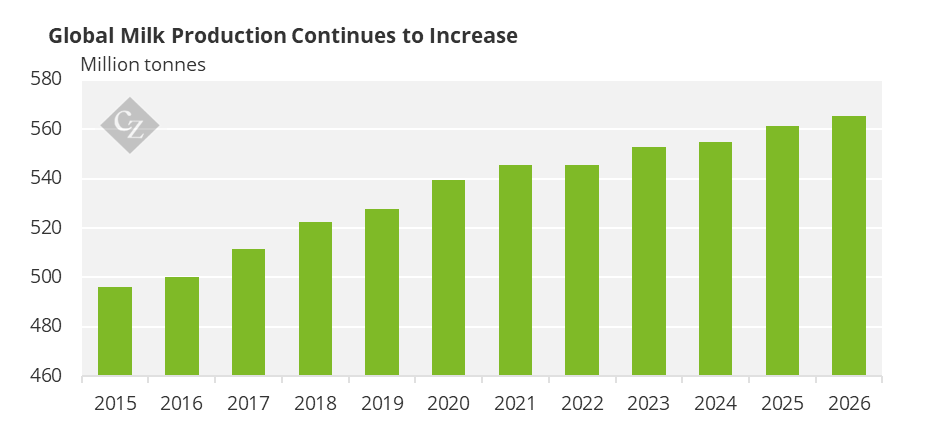
The global dairy industry entered the second half of 2026 with a complex mix of record milk supplies, emerging weather risks, and tightening dairy ingredient markets.
While abundant milk production in New Zealand is exerting downward pressure on commodity prices, heatwaves in Europe and growing concerns over El Niño are creating uncertainty regarding future supply dynamics.
Record New Zealand Production Shapes Global Markets
New Zealand continues to remain the centre of global dairy market attention.
According to USDA projections, the country is expected to produce a record 22.1 million tonnes of milk in 2026, supported by:
- 🥛 Strong farmgate milk prices
- 🌱 Improved productivity
- 🌾 Greater use of supplementary feed
- 💰 Continued on-farm investments
Industry reports indicate exceptionally strong early-season milk flows, with milk being transported between islands to optimise processing capacity.
Additionally, the relatively weak New Zealand dollar continues to enhance export competitiveness and support farmer returns despite softer dairy commodity prices.
El Niño Emerges as Key Supply-Side Risk
Despite the strong supply outlook, weather forecasters are increasingly focused on the potential emergence of El Niño conditions later in 2026.
Meteorological agencies estimate a high probability of El Niño development during the coming months, creating uncertainty for milk production prospects.
Historically, El Niño events have often resulted in:
- ☀️ Drier conditions
- 🌾 Reduced pasture growth
- 🐄 Lower milk yields
- 💰 Increased feed costs
However, unlike previous cycles, elevated milk prices and improved feed inventories may help mitigate some production losses.
For many market participants, weather developments could become the single most important factor influencing dairy markets during the remainder of the year.
European Heatwaves Shift Markets
In contrast to New Zealand’s production strength, Europe is facing significant weather-related challenges.
Record-breaking heatwaves across Western and Central Europe have created considerable stress on dairy herds.
The impacts include:
- 🐄 Lower milk yields
- 🌱 Deteriorating pasture conditions
- 💸 Rising feeding costs
- 📉 Reduced seasonal milk availability
In the United Kingdom alone, milk production is estimated to have declined by approximately 18.5 million litres due to recent heatwaves.
The resulting reduction in supply has temporarily shifted markets from oversupply toward short-term undersupply conditions.
As a result:
- 🧈 Butter prices have strengthened
- 🥛 Cream markets have firmed
- 📦 Skim milk powder prices have stabilised
Nevertheless, sustained price increases could eventually attract additional competitively priced dairy products from Oceania.
Dairy Protein Markets Remain Exceptionally Tight
One of the most significant developments in dairy ingredients continues to be the tightening of protein markets.
Supply constraints have emerged across several key ingredients, including:
- 🧬 Milk Protein Concentrate (MPC70)
- 💪 Whey Protein Concentrate (WPC)
- ⚡ Whey Protein Isolate (WPI)
Strong demand is being driven by:
- 🏋️ Sports nutrition products
- 🥤 High-protein foods and beverages
- 💊 Medical nutrition applications
- ⚖️ Increasing use of GLP-1 weight-loss treatments
As processors allocate more whey toward premium human nutrition products, feed markets are experiencing reduced availability of lower-grade whey ingredients.
This dynamic is also supporting higher prices for:
- Lactose
- Whey permeate
- Whey complexes
Protein ingredients continue to represent one of the tightest segments within the broader dairy market.
China’s Pig Sector Adds Another Layer of Uncertainty
China remains a critical variable for global dairy ingredient demand.
The country’s pig industry has faced prolonged profitability challenges due to oversupply, prompting government efforts to reduce breeding sow numbers and rebalance production.
This is particularly important because:
- 🐖 Sweet whey powder
- 🐖 Whey permeate
are widely used in pig feed formulations.
A sustained reduction in China’s pig herd could moderately reduce feed-grade whey demand.
However, analysts believe that robust growth in human nutrition demand will likely offset much of this impact.
Dairy Commodity Prices Under Pressure
Despite weather concerns and tight protein markets, dairy commodity prices softened during June and July.
Recent Global Dairy Trade events recorded declines in several key commodities:
- 📉 Whole Milk Powder: -4.4%
- 📉 Skim Milk Powder: -7.0%
- 📉 Overall GDT Index: -4.9%
In response, Fonterra lowered its opening milk price forecast for the 2026/27 season, citing softer demand conditions and strong global supply growth.
Outlook: Weather Likely to Drive Markets
Looking ahead, the global dairy market appears increasingly dependent on weather developments rather than immediate supply availability.
Key factors to watch include:
🔹 El Niño developments in New Zealand
🔹 European heatwave impacts on milk production
🔹 Protein ingredient availability
🔹 Chinese demand trends
🔹 Commodity price movements and trade flows
While global milk supplies remain ample, growing climatic uncertainties and structural demand growth for dairy proteins could create increased market volatility during the second half of 2026.