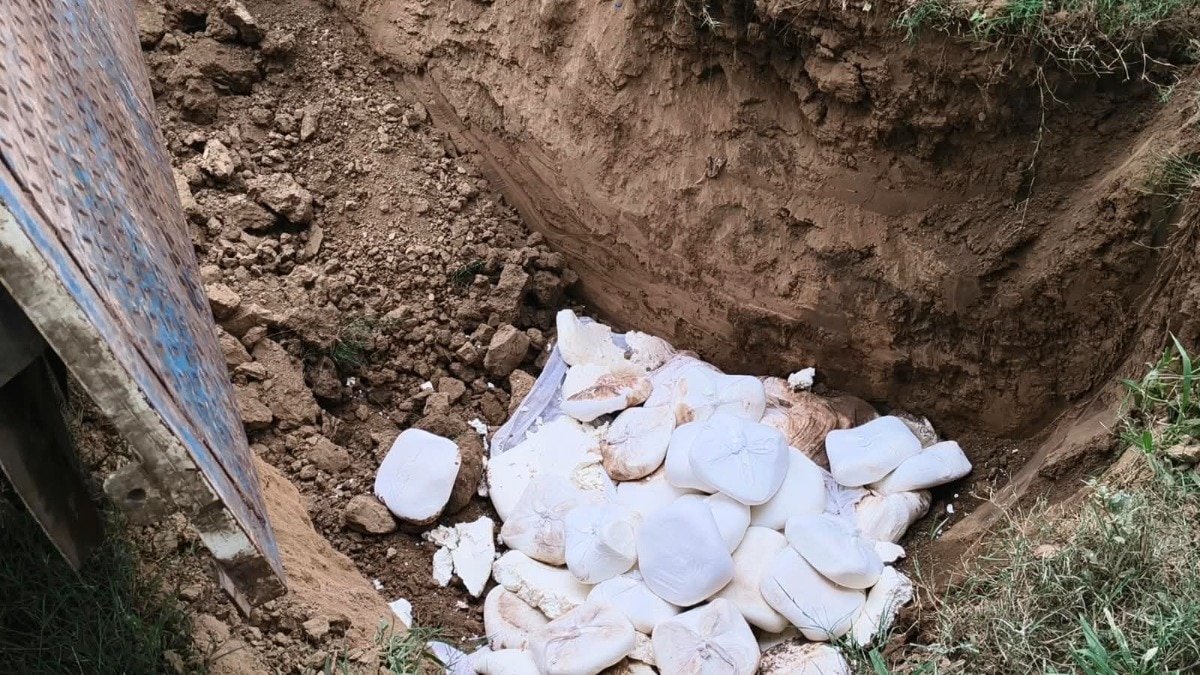
Authorities in Mathura, Uttar Pradesh, have intensified action against adulterated dairy products after destroying 500 kg of contaminated paneer and seizing chemicals and raw materials allegedly being used to manufacture it.
The paneer, valued at around ₹15,000, was destroyed following a raid by the Food Safety and Drug Administration (FSDA) at a paneer manufacturing unit as part of a district-wide food safety campaign.
Chemicals and raw materials seized
During the inspection, officials reportedly seized several substances allegedly being used in the production of adulterated paneer, including:
- Refined soybean oil
- Tinopol chemical
- Ira Sodium Hydrogen
- Other raw materials used in paneer production
Authorities also collected nine samples from the premises for laboratory testing.
In addition, approximately 2,000 litres of milk, valued at around ₹1.25 lakh, were seized during the operation.
Growing scrutiny of analogue paneer
The Mathura action comes amid increasing scrutiny of analogue paneer and dairy substitutes across India.
Analogue dairy products are designed to resemble conventional dairy products but may use non-dairy ingredients to replace some or all milk components. In analogue paneer, vegetable fats, proteins and other ingredients can be used to replicate the product’s appearance and texture.
Traditional paneer, however, is defined under India’s food regulations as a product obtained from milk, with or without added milk solids, through precipitation using permitted acidulants and heating.
Several states tighten restrictions
Concerns surrounding analogue paneer have also prompted regulatory action in several states.
Madhya Pradesh recently became the latest state to prohibit analogue paneer, following similar restrictions in Maharashtra, Gujarat and Chhattisgarh.
The developments reflect growing concerns over consumer safety, product authenticity and the potential misuse of non-dairy ingredients in products sold as traditional dairy foods.
Wider illegal dairy trade under scrutiny
The Mathura raid also comes amid investigations into a broader illegal dairy trade operating across parts of north India.
Recent investigations have pointed to an alleged supply network connecting production units in Mewat, Haryana, and western Uttar Pradesh with markets in Delhi-NCR. The network has also reportedly involved operators dealing in milk and khoya across districts including Shamli and Baghpat.
Food safety remains a key concern
The latest enforcement action highlights the challenges regulators face in monitoring India’s large and fragmented dairy market.
As demand for affordable dairy products continues to grow, authorities are increasingly focusing on adulteration, product labelling, analogue dairy products and food safety compliance.
The Mathura case also reinforces the importance of stronger testing, traceability and enforcement mechanisms to ensure that products sold to consumers as paneer meet established food-safety and quality standards.